

To make a concrete tank the star of Lugana – that's quite an achievement. Marangona, Alessandro Cutolo's estate on the southern shore of Lake Garda, has done just that: the Cemento won Gambero Rosso's Tre Bicchieri in 2025. Thirty hectares on calcareous clay between Pozzolengo and Sirmione, certified organic since 2017 – one of only eight organic estates among 116 Lugana producers. Alessandro's philosophy can be reduced to a single sentence: intervene as little as possible, so that the lake and the soil have the final word.
≈ Aroma: Cherry
In all wines: 2,854 Wines
More about Marangona
The bell of the Lamberti tower
On the Torre dei Lamberti in Verona hangs a bell called Marangona. For centuries it called the city's carpenters, the marangoni in Venetian dialect, to work and back home again. The farm south of Lake Garda that bears its name dates back to the late 17th century: a Lombard farmstead built around a courtyard, where wine, maize and livestock coexisted from the 1950s onwards. The first bottles under the estate's own label went on sale in 1973. The real turning point came in 2007, when Alessandro Cutolo, an oenologist and the fourth generation, took over the management together with his sister Laura. What changed after that was no mere cosmetic exercise: a move away from solid regional wine towards one of the most distinctive expressions the appellation knows today.

Calcareous clay and lake breezes
Thirty hectares stretch across the municipalities of Pozzolengo, Sirmione and Peschiera, in the historic heart of the Lugana DOC, less than eight hundred metres from the lake. The soil is calcareous clay, heavy and rich in minerals, the classic subsoil of the best Lugana sites. Lake Garda acts as a thermal buffer: by day it reflects warmth, and at night cool air flows down from the mountains. Turbiana, the local form of Trebbiano and related to the Verdicchio of the Marche, repays this with a combination that is rare in the world of wine: ripe fruit with taut acidity. The oldest vines on the estate are more than fifty years old, with roots that reach deep into the calcareous clay. Double-arched training, dense cover crops between the rows, around 100,000 bottles a year, made exclusively from the estate's own grapes.
Concrete, clay and the art of leaving things out
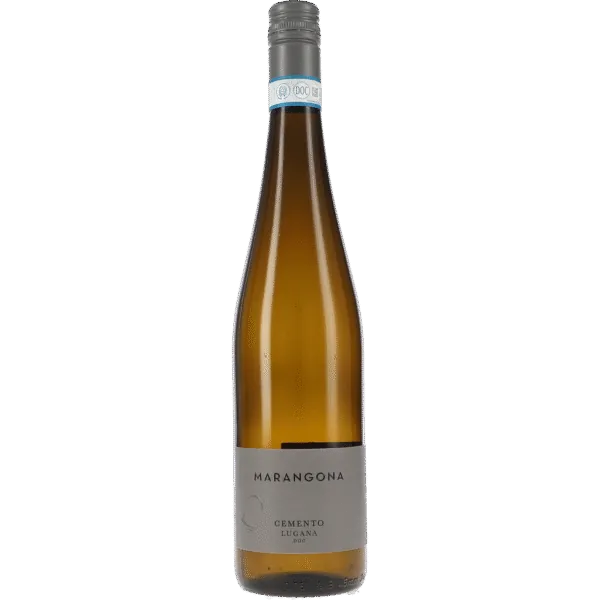
Alessandro sums up his philosophy in one sentence: "I want to do as little as possible to express my idea of the wine." In practice this means spontaneous fermentation with wild yeasts, no malolactic fermentation, no oak, no residual sugar for balance, minimal sulphur. The wines are aged in stainless steel and concrete, and it is precisely the concrete that changed everything. The Cemento ferments on its skins in unlined concrete tanks, matures for ten to twelve months on the fine lees and rests for a further six months in bottle. The result, textured and mineral with notes of white peach, sage and crushed chalk, won Gambero Rosso's Tre Bicchieri in 2025. Alessandro is also experimenting with terracotta amphorae for an orange wine from Turbiana that is given three months of skin contact, an approach that Elisabetta Foradori has perfected for her Nosiola at the northern end of Lake Garda.

Eight out of a hundred and sixteen
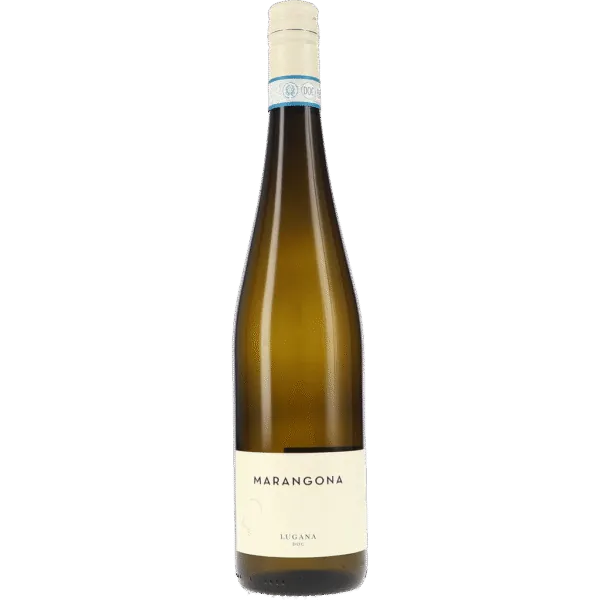
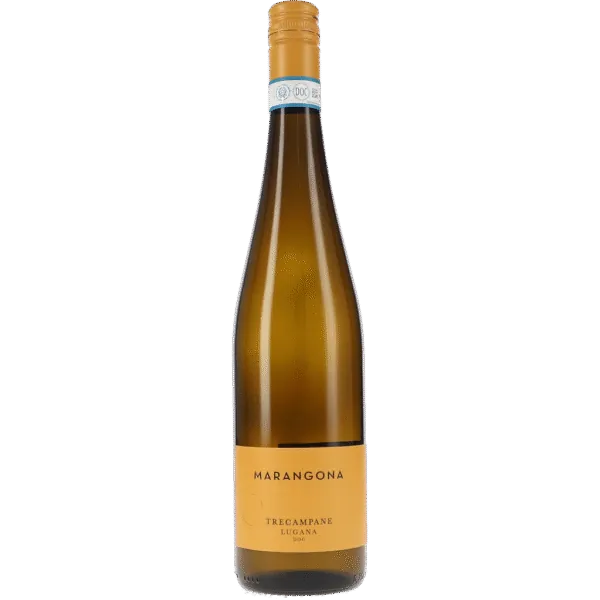
Of the 116 producers in the Lugana DOC, just eight are certified organic. Marangona has been one of them since 2017, after Alessandro had experimented from 2012 onwards and found that grape quality rose as he gave up synthetic products. Tall grass between the rows keeps disease pressure low, and recycled materials and lighter bottles complete the concept: ecology as a holistic approach, not a marketing label. The TreCampane, named after the three bells of the Lamberti tower, brings together early- and late-picked Turbiana from thirty-five-year-old vines, with six months on the lees in stainless steel. It shows what Lugana can be beyond an everyday wine: complex, age-worthy, with a drinking window of ten years and more. As the entry point, the Marangona Lugana captures the soul of the estate: almond, citrus, herbs and a salty minerality that calls for another glass.