
 EN
EN  DE
DE  FR
FR  IT
IT Biodynamic Viticulture
Wines Full of Vitality
The vineyard as a living organism, connected to soil, plant and the rhythms of the year. Our biodynamic winemakers work with nature, not against it – and you can taste it.


What is Biodynamics?
Biodynamic viticulture understands the estate as a closed organism: soil, vines, animals and the people who work there form a cycle that is largely self-sustaining. Healthy soils teeming with life are at the centre – not as an exercise in abstinence, but as the active cultivation of fertility.
The foundations were laid by Rudolf Steiner in 1924 in his “Agricultural Course” in Koberwitz, Silesia. This makes biodynamic farming the oldest organic farming movement there is, decades before the word “organic” was even coined.
The method came to viticulture in the 1980s, when winemakers such as Nicolas Joly on the Loire converted their vineyard sites. Today, many of the world’s most renowned estates work biodynamically, from Domaine de la Romanée-Conti in Burgundy to Zind-Humbrecht in Alsace – and even in Bordeaux the great châteaux are rethinking their approach.
The Three Principles
The lunar calendar, preparations and circular economy form the foundation of biodynamic work

Lunar Calendar
- Working in rhythm with the moon and the seasons
- Fruit, root, leaf and flower days
- Harvest and cellar work preferably on fruit days
- More on the lunar calendar ↓

Preparations 500–508
- Horn manure (500): strengthens soil life and roots
- Horn silica (501): promotes photosynthesis and ripening
- 502–507: compost preparations from medicinal herbs
- 508: horsetail tea against fungal pressure
Closed-loop farming
- Own compost instead of bought-in fertiliser
- Animals and cover crops between the vine rows
- Biodiversity as a duty, not decoration
- As few external inputs as possible
The nine preparations
The heart of biodynamics – nine substances made from manure, minerals and medicinal herbs that bring the vineyard into balance.
The preparations are applied in tiny, highly potent quantities. They are not fertilisers but an impulse: they awaken soil life and direct the forces of soil, plant and compost. Some mature for months in animal sheaths in the earth, developing their potency there. For the world’s finest winemakers, they are the very core of their work. They are numbered from 500 to 508.

Horn manure
Cow manure, buried in a cow horn over winter
Diluted, stirred at length and applied to the soil. Awakens soil life, drives roots deeper and builds humus – the preparation of the earth.

Horn silica
Ground quartz crystal, buried in a cow horn over summer
Sprayed as a fine mist onto the foliage. Sharpens light absorption, drives photosynthesis and ripening, and brings aroma and clarity to the grapes – the counterpart to 500, the preparation of light.

Yarrow
Blossoms, matured in a stag’s bladder
Regulates the sulphur and potassium processes in the compost and makes it sensitive to its surroundings.

Chamomile
Blossoms, in a cow’s intestine
Binds nitrogen in the compost and enlivens the calcium processes – for a healthy, stable decomposition.

Stinging nettle
Whole plant, buried directly in the soil without a sheath
Permeates the compost, introduces iron and nitrogen, and brings the soil to life.

Oak bark
Ground, in an animal skull
Supplies calcium and strengthens the plant against fungal diseases.

Dandelion
Blossoms, in a cow’s mesentery
Connects the plant with silica and potassium and makes it receptive to its surroundings.

Valerian
Pressed blossom juice, applied diluted as a spray
Stimulates the phosphorus processes and lays a warm mantle over the compost.

Horsetail
Field horsetail, as a tea or cold infusion
Applied to the foliage and the soil. Its silica strengthens the vines against fungal pressure such as mildew and keeps the vineyard healthy – plant strengthening from nature.
Cover Crops & Companion Plants
Between the vine rows, the soil is rarely left bare – the second pillar of the closed nutrient cycle.

Mixtures of legumes – clover, vetch, lupin – are sown, which fix atmospheric nitrogen and make it available to the vines, along with deep-rooting plants and herbs that loosen compacted soils and nourish soil life. What is fought as a weed elsewhere is a tool here: companion plants and flowering species attract beneficial insects, protect against erosion and build up humus.
In dry years, the cover crop also serves as a means of yield regulation: it competes in a controlled manner with the vine for water, resulting in smaller, more concentrated berries. Mown and left in place, it becomes a mulch layer; worked in, it becomes green manure. In this way, the cycle that biodynamics envisions is closed – the vineyard nourishes itself as far as possible from within.
Organic vs. Biodynamic: the Difference
Both forgo synthetic sprays and artificial fertilisers. Biodynamics goes further – here is an overview of the key differences.
| EU Organic | Biodynamic | |
|---|---|---|
| Core idea | Avoidance of synthetic pesticides and artificial fertilisers | The farm as a closed organism; active cultivation of soil life and fertility |
| Regulations | EU Organic Regulation, state-controlled | Private associations (Demeter, Biodyvin, respekt-BIODYN) – stricter guidelines, EU organic certification is the minimum requirement |
| Preparations | Not applicable | Mandatory: horn manure, horn silica and compost preparations made from medicinal herbs |
| Lunar calendar | Not applicable | From recommended to mandatory: work follows the rhythm of the moon and celestial bodies |
| Copper use | Upper limit set by the EU Organic Regulation | Significantly lower upper limits set by the associations |
| Biodiversity | Encouraged, but rarely mandatory | Mandatory: cover crops, hedgerows, livestock or compensatory areas |
The Biodynamic Lunar Calendar
A working calendar that brings the forces of the moon and stars into the vineyard.

The foundation is the sowing calendar by Maria Thun, published annually since 1963. It classifies each day according to which constellation the moon is passing through, assigning four qualities: fruit, root, leaf, and flower days. For viticulture, fruit days are particularly significant – on these days, aroma and fruit expression come through most distinctly.
In practice, this means that many biodynamic winemakers deliberately schedule the harvest, racking, or bottling on fruit days, and avoid leaf days for anything that shapes the wine. Vine pruning and soil work also follow the calendar. Some sommeliers even take it into account when tasting – major houses have already scheduled press tastings to coincide with fruit days.
The calendar gives the work its rhythm and the winemaker a close connection to the vine: one intervenes at the right moment, harvests and bottles when fruit and aroma are at their most expressive, and allows the wine its time on the quieter days. This attentiveness to the right moment can be tasted – in wines with greater tension and clarity.
The Three Certifications
Biodynamic is not a protected term – these three organisations certify and monitor it.
Demeter
The world’s oldest organic certification and its most stringent: it certifies the entire operation, including cellar work, with mandatory preparations and tight limits on sulphur and copper.
Among our producers: Nikolaihof, Foradori, Peter Jakob Kühn, Odinstal, and Meinklang.
Biodyvin
The growers’ association of France’s great names: around 200 estates, almost exclusively wine. The certification examines biodynamic work in the vineyard – many Grand Cru icons carry this seal.
Among our producers: Zind-Humbrecht, Christmann, and Domaine Vacheron.
respekt-BIODYN
The youngest of the three associations, founded by leading Austrian winemakers. Pragmatic and quality-driven, with a strong presence in Austria, Germany, and South Tyrol.
Among our producers: Heinrich, Loimer, Fritsch, and Sattlerhof.
Our biodynamic wineries
Pioneers who have proved that biodynamics and top quality go hand in hand

Nikolaihof
Certified to Demeter standards since 1971 – Austria’s oldest biodynamic winery.
Discover
Zind-Humbrecht
Grands Crus of crystalline purity – biodynamic since 1997, Biodyvin-certified.
Discover
Trapet Père & Fils
Gevrey-Chambertin Grands Crus – biodynamic since the 1990s, Burgundian elegance in its purest form.
Discover

Christmann
Former VDP President – Germany’s finest Riesling, member of Biodyvin.
Discover
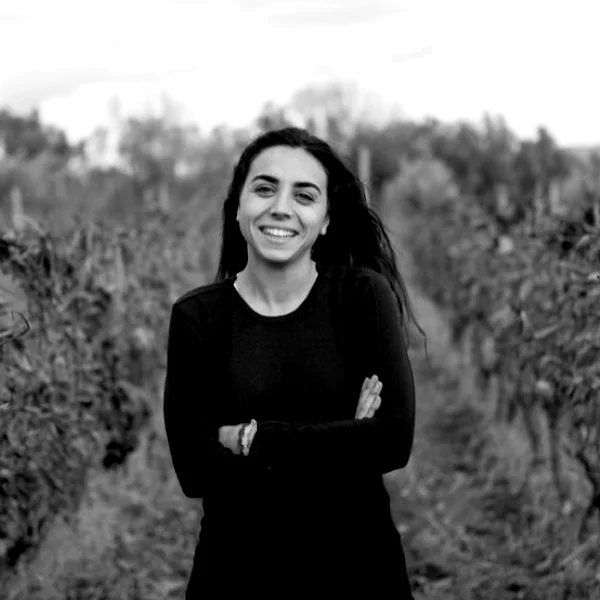
Occhipinti
Arianna Occhipinti – the face of the Sicilian natural wine movement, Frappato from limestone soils.
Discover
Also working biodynamically with us: Clemens Busch · Huet · Manincor · Odinstal · Loimer · Meinklang · Peter Jakob Kühn · Albert Mann · De Sousa · Larmandier-Bernier · Johannes Zillinger · Boris Champy · Duemani · Terroir al Limit
Frequently Asked Questions
What is biodynamic wine?
Biodynamic wine comes from growers who work according to the principles of biodynamic farming: closed-loop agriculture, proprietary preparations, and working in harmony with the rhythms of nature. The estate is understood as a living organism, with active cultivation of soil health. This is overseen by private organisations such as Demeter, Biodyvin, and respekt-BIODYN, whose standards go well beyond EU organic certification.
What is the difference between organic and biodynamic?
Organic farming prohibits synthetic pesticides and artificial fertilisers. Biodynamics takes that as a given and goes further: preparations, lunar calendars, lower copper limits, and mandatory biodiversity. The underlying philosophy is different, too: it is not merely about avoiding harmful inputs, but about actively building soil health.
Does biodynamic wine taste different?
Yes. Biodynamic wines tend to show greater tension, precision, and a stronger sense of origin. Living soils, low yields, and meticulous care in the vineyard produce grapes with cleaner fruit and greater depth – and that comes through in the glass.
What are preparations 500 and 501?
Horn manure (500) is manure matured over winter inside cow horns; it strengthens soil life and root development. Horn silica (501) is finely ground quartz that promotes photosynthesis and ripening. Both are stirred into water and applied in minute quantities to the soil or foliage.
How do I recognise a biodynamic wine?
The most reliable indicator is the certification seal of one of the three organisations: Demeter, Biodyvin, or respekt-BIODYN. Not every biodynamically farmed estate prints its seal on the label – many prestigious addresses choose not to. On our site, the farming approach is described in the profile of every estate.
Is biodynamic wine the same as natural wine?
Not automatically. Biodynamics describes the work in the vineyard, whilst natural wine refers to minimal-intervention winemaking in the cellar. There is considerable overlap: those who take their soils this seriously tend to intervene little in the cellar as well. Yet there are also classically made biodynamic grand crus, just as there are natural wines from estates that farm organically but not biodynamically. Everything else – from the five cellar principles and sulphur limits to orange wine and Pét-Nat – is covered on our Natural Wine page.
What does working by the lunar calendar actually achieve?
It brings rhythm and mindfulness to the vineyard. Growers who follow it are more closely attuned to the vine, harvesting and bottling at the right moment, and allowing their wines to show at their best on fruit and flower days – and you can taste the difference.
Why do top estates work biodynamically?
Because terroir only becomes perceptible when the soil is alive. From Romanée-Conti to Leflaive and Zind-Humbrecht, many of the world’s finest addresses have embraced biodynamics – not out of ideology, but because living soils, deep roots and low yields express origin more precisely in the glass than any winery technology ever could.
Discover Biodynamic Wines
Over 800 wines from more than 40 certified estates – from the entry-level cuvée to Grand Cru.
To the Estates All Wines in the Shop