
 EN
 DE
 FR
 IT
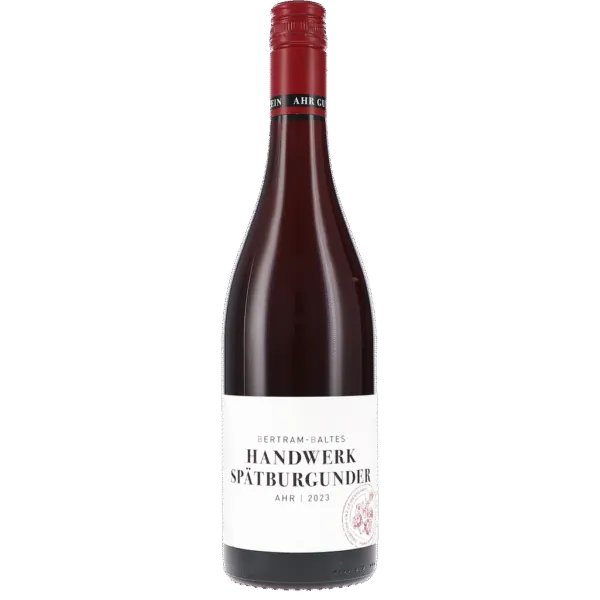
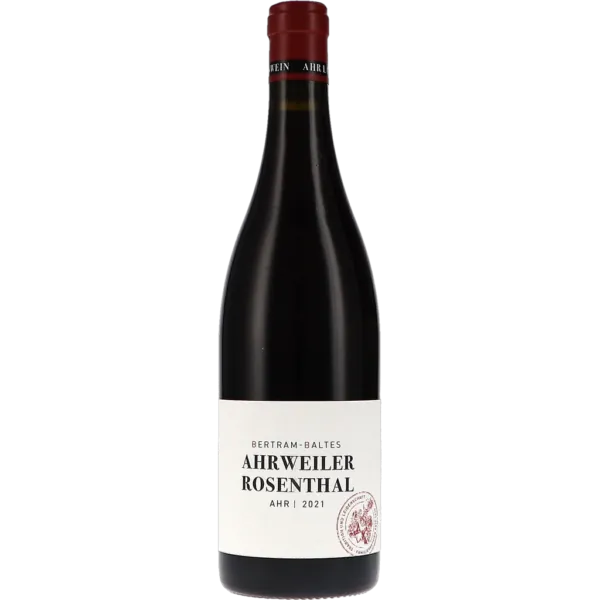
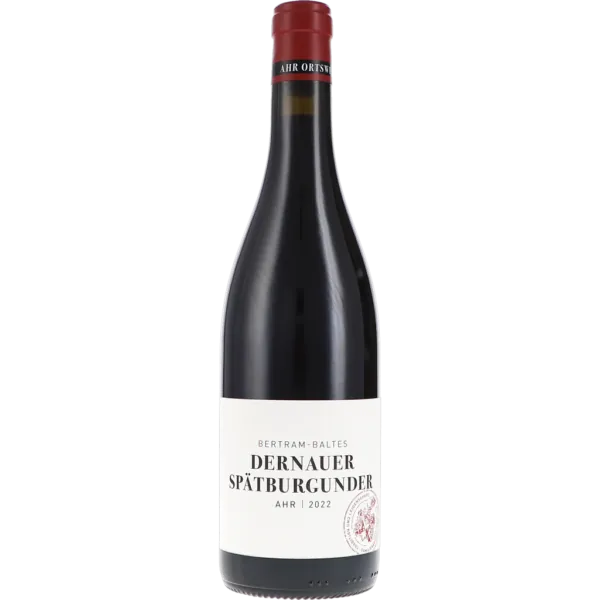
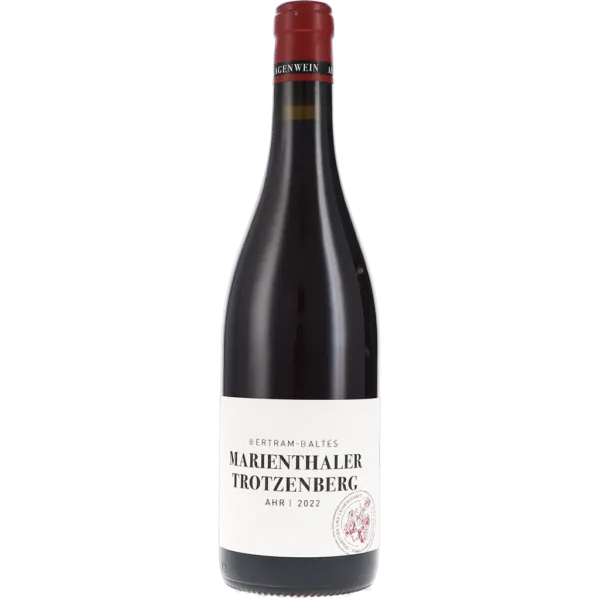
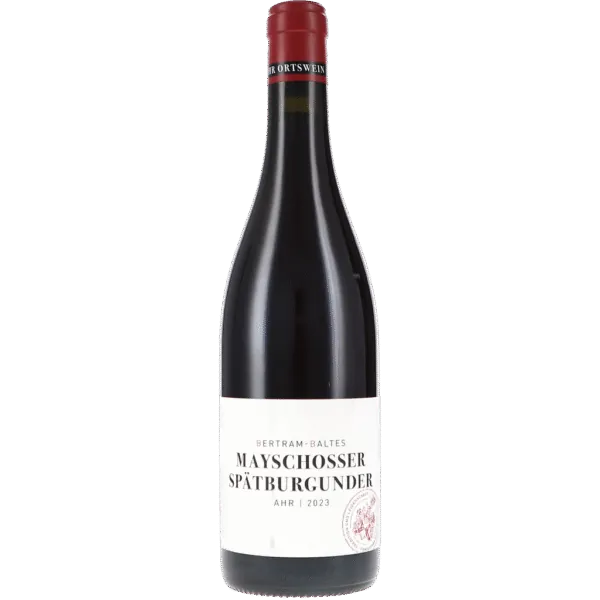
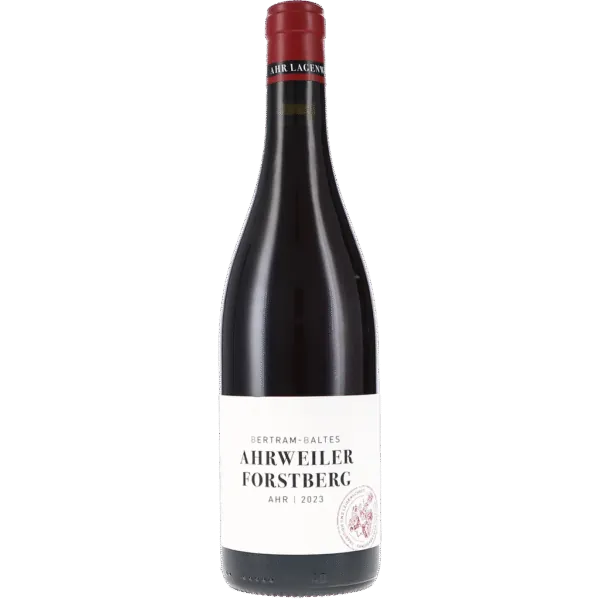
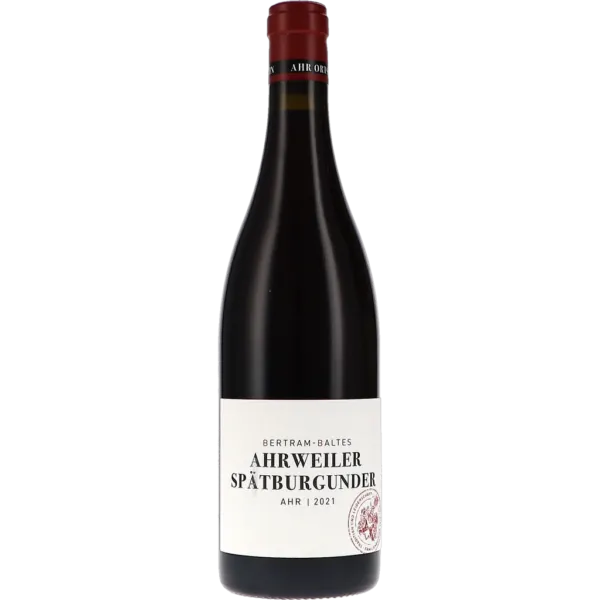
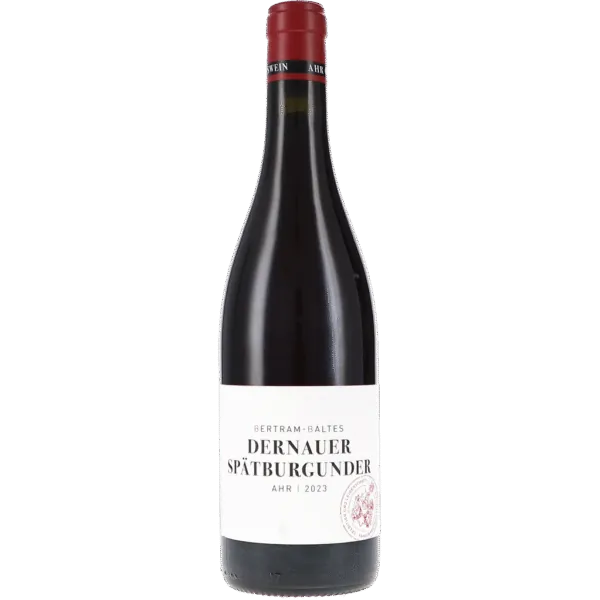
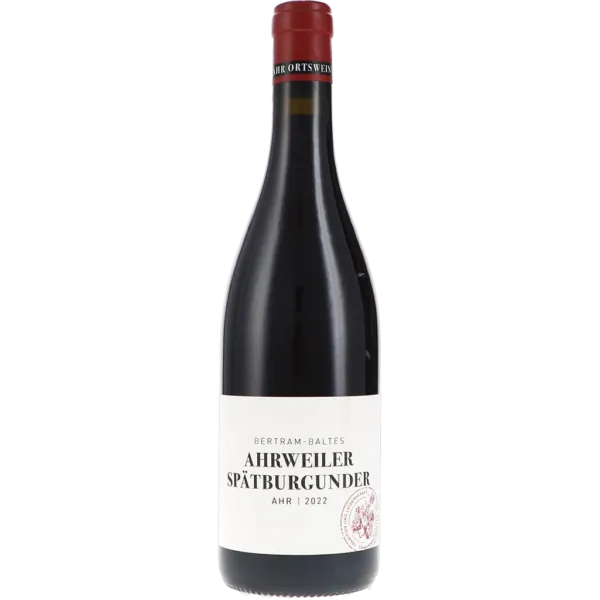
Between Altenahr and Bad Neuenahr-Ahrweiler, the Ahr cuts so deeply into the slate mountains that the vines cling to narrow terraces above the river, supported by dry-stone walls that absorb sunlight during the day and radiate warmth back to the grapes in the evening. Those seeking wine from the Ahr will almost invariably find red: Spätburgunder and Frühburgunder dominate the valley, offering bright cherry fruit, cool spice and a tension derived from the rock. Our wine from the Ahr Valley comes from the biodynamic estate Bertram-Baltes, whose village and vineyard-site wines from Mayschoß, Dernau, Walporzheim and Ahrweiler typically reach just 11 to 11.5 per cent alcohol.
More about Ahr
Red wine from the Ahr valley: slate, greywacke and steep terraces
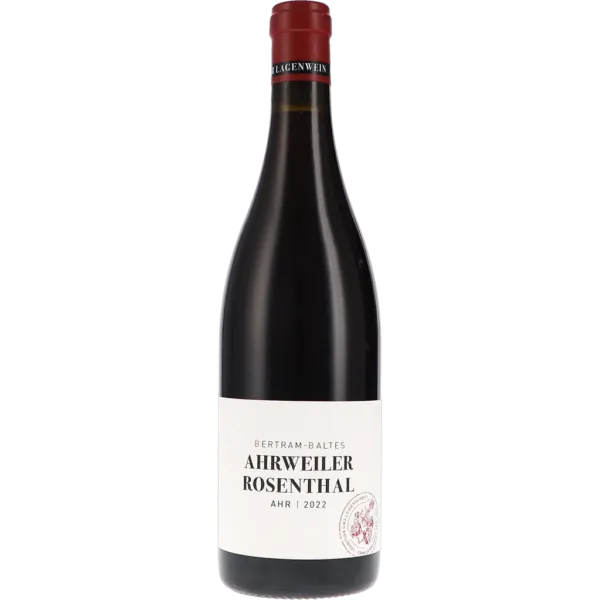
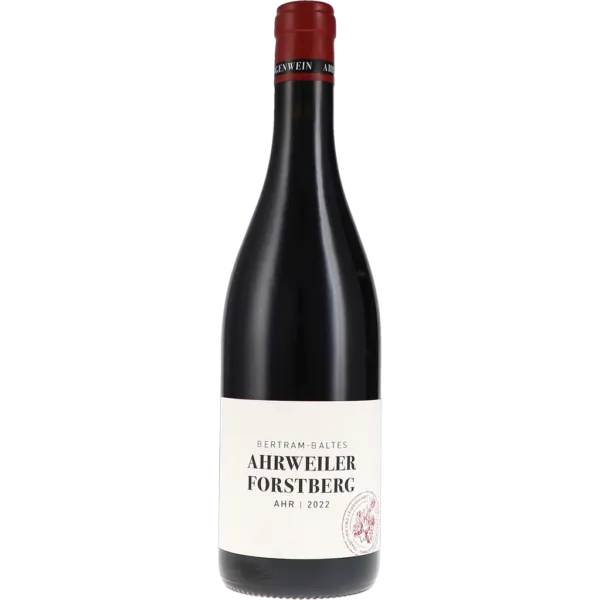
The Ahr rises in the Eifel and flows into the Rhine between Sinzig and Remagen. Viticulture is concentrated in the middle valley, where the river winds in tight loops between rock faces and the slopes are in many places so steep that only manual work is possible. The subsoil consists of slate and greywacke, hard, dark rock that heats up in the sun and holds its warmth into the evening. The Eifel heights to the west keep out wind and rain, and in the narrow valley the air stands still. This combination of warm rock and cool nights explains why, on such a northerly river, red wine ripens that keeps its freshness while still smelling of ripe cherry, forest berries and undergrowth. Ahrweiler, Dernau, Mayschoß, Walporzheim: the village names on the labels stand for slopes with their own exposure, and the best sites are south-facing steep slopes directly above the water.
Spätburgunder and Frühburgunder in the narrow Ahr valley
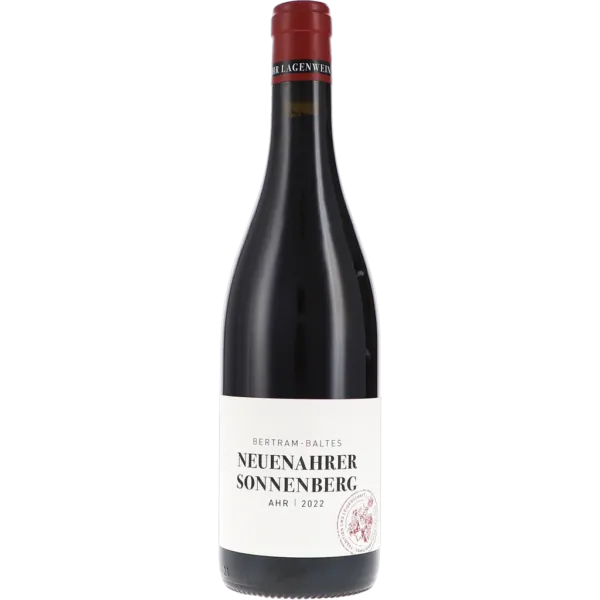
Spätburgunder dominates the terraces; on slate it shows a pale, almost translucent colour, red fruit and a mineral, dry finish. Alongside it the Ahr cultivates Frühburgunder, a form of Pinot Noir that ripens around two weeks earlier, has smaller berries and gives lower yields. It makes velvety red wines with dark cherry, damson and soft tannin. Because the vine is demanding, it had at times almost disappeared in Germany; on the Ahr and in a few other regions, growers kept it going. Anyone wanting to get to know the variety will find in the Neuenahrer Sonnenberg 2022 a dry Frühburgunder with cherry, plum and pomegranate.
Bertram-Baltes: biodynamic single-vineyard wines from Mayschoß to Ahrweiler
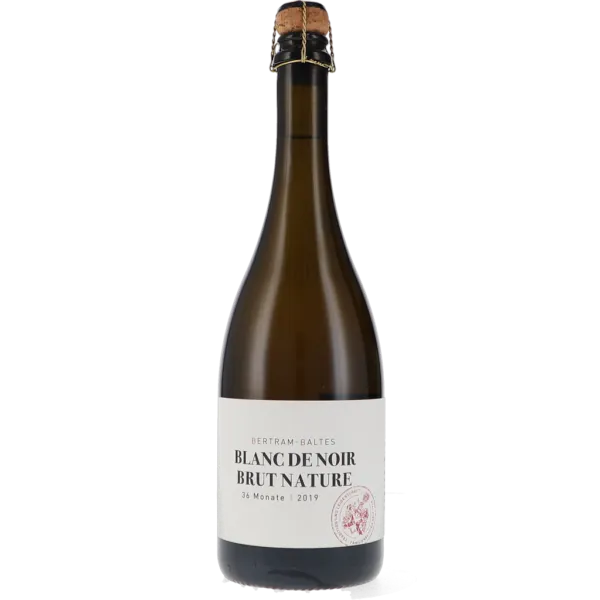
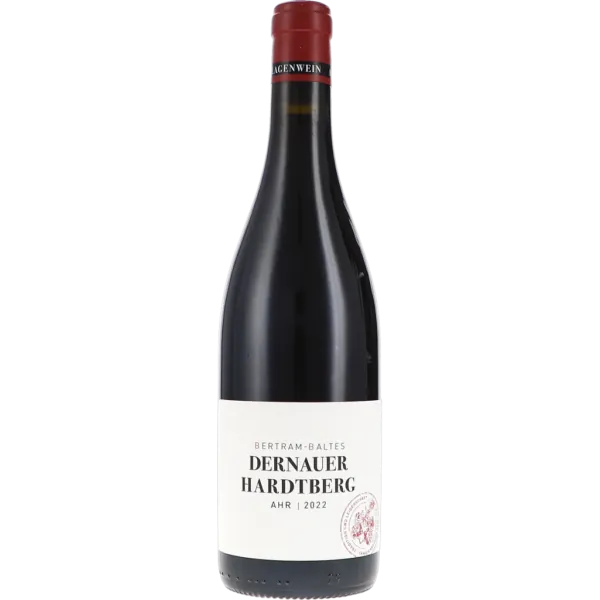
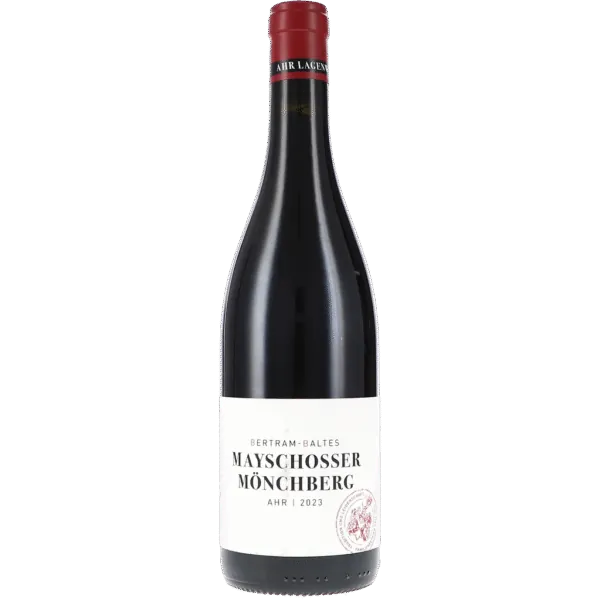
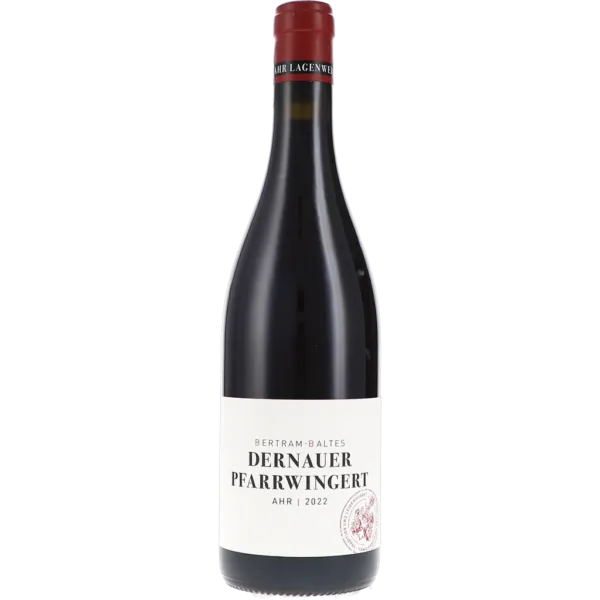
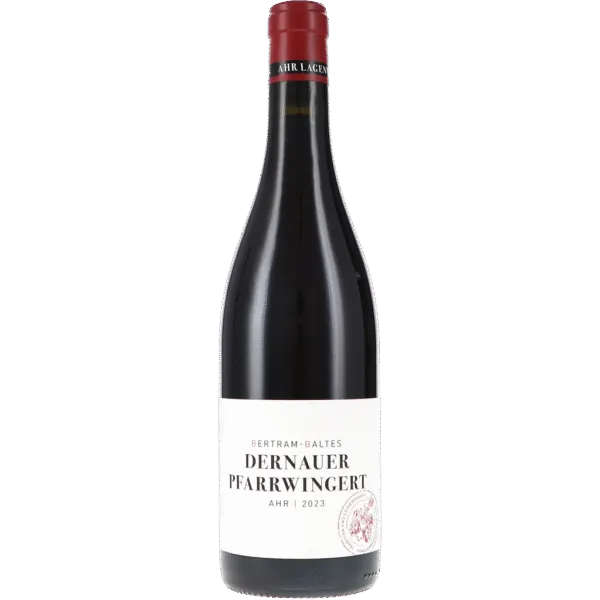
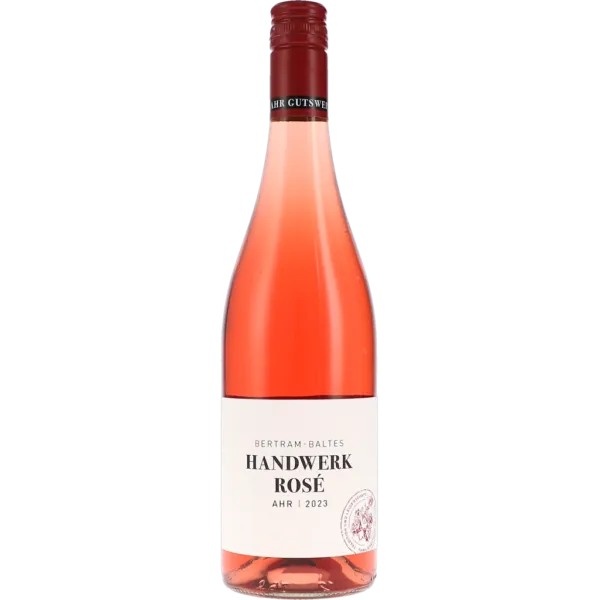
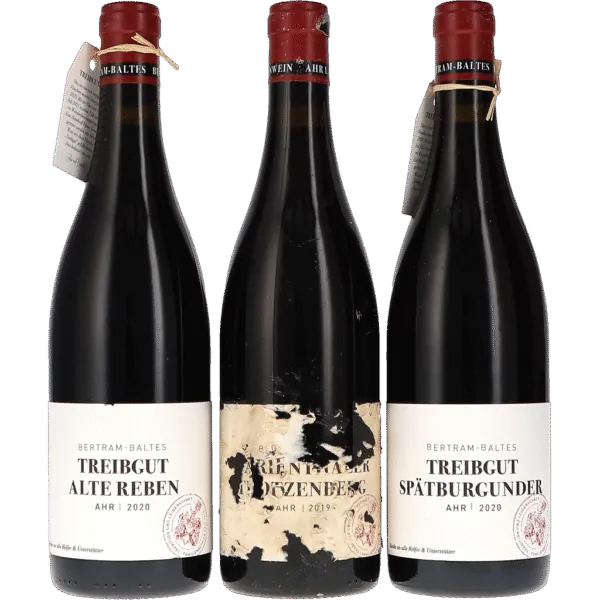
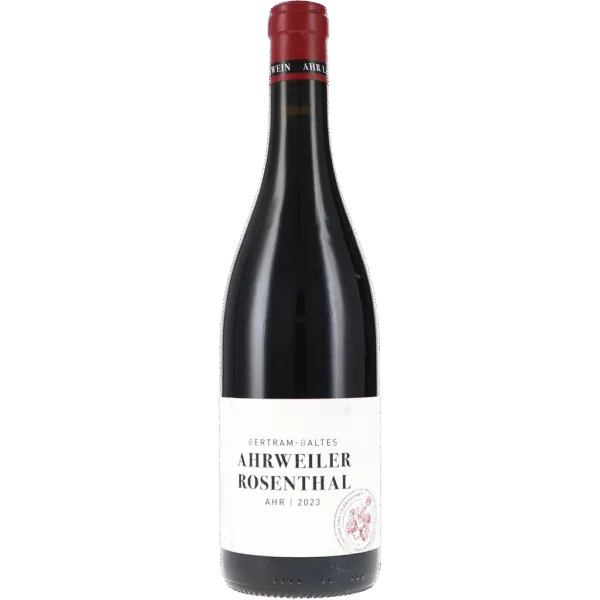
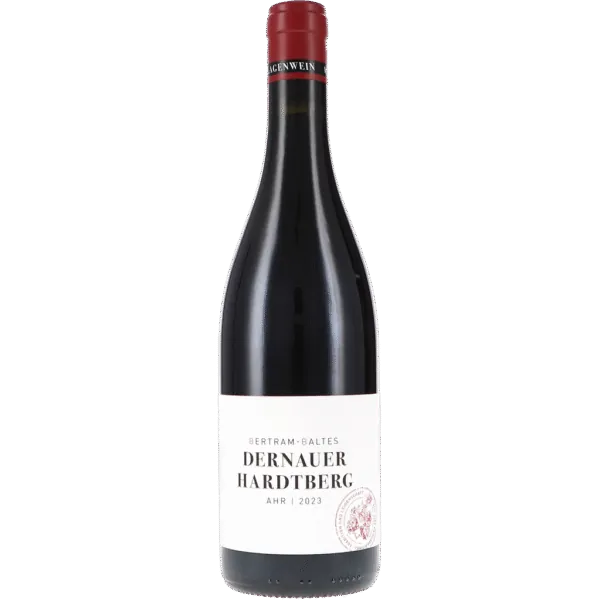
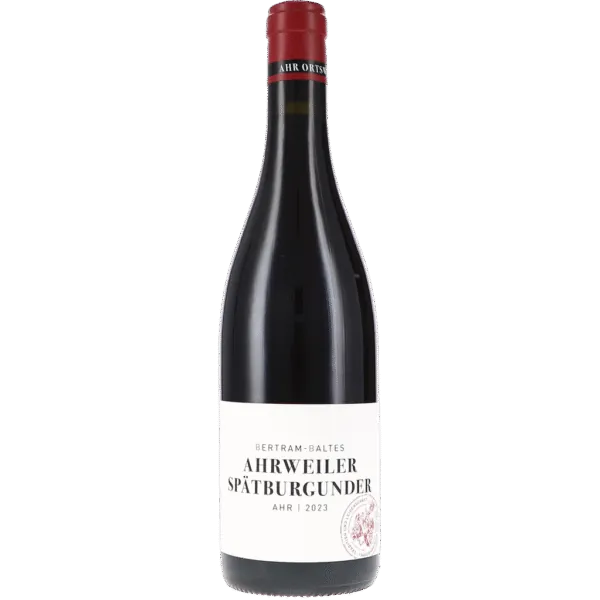
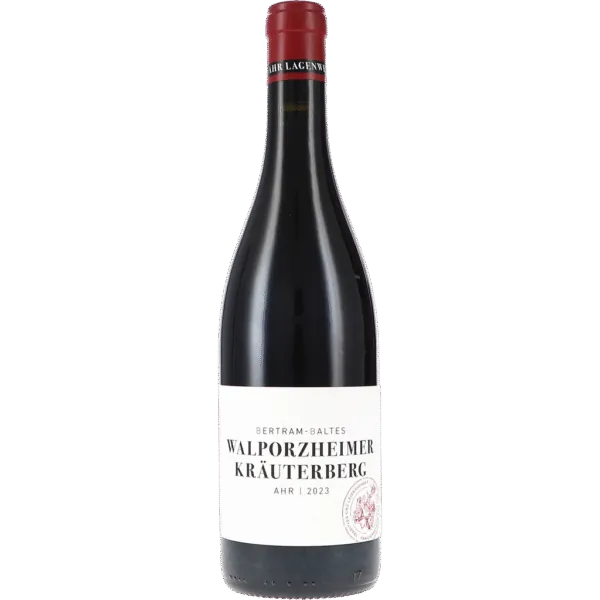
All the Ahr wines in our range come from Bertram-Baltes, the estate of Julia Bertram and Benedikt Baltes. The two farm their vineyards biodynamically, pick by hand, ferment spontaneously and age the wines reductively, so that they seem taut at first and open up with air. Characteristic are the low alcohol levels of 11 to 11.5 per cent in most of the Spätburgunders, along with fine acidity and plenty of drive. The village wines from Ahrweiler, Dernau and Mayschoß show the character of their communes, while the single-vineyard wines go deeper: the Dernauer Hardtberg smells of roses, violets and sour cherry, the Dernauer Pfarrwingert of cassis and dark raspberry, the Mayschosser Mönchberg of blackcurrant. The Walporzheimer Kräuterberg 2023 comes from the terraced steep site above Walporzheim and combines red cherry and wild raspberry with cool slate freshness. The collection also includes a rosé, a Blanc de Noir Sekt Brut Nature and the Treibgut Kiste with Spätburgunders from the 2019 and 2020 vintages that survived the flood of July 2021.
So our journey through the Ahr valley ranges from a village wine for an ordinary evening to a single-vineyard wine that rewards a few years in the cellar.