
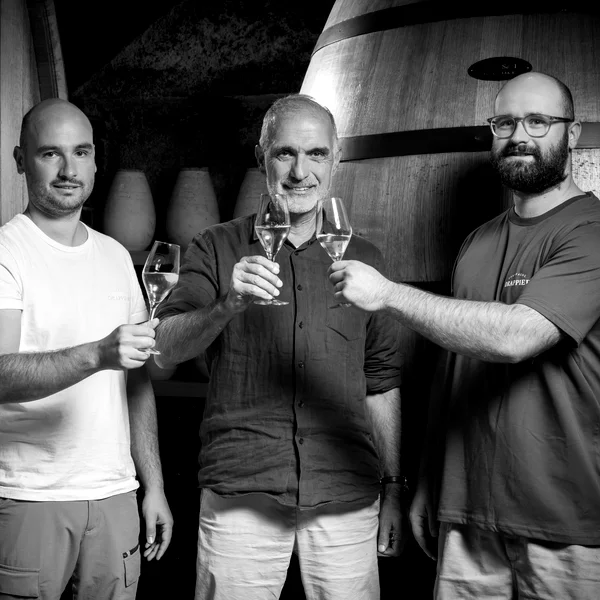
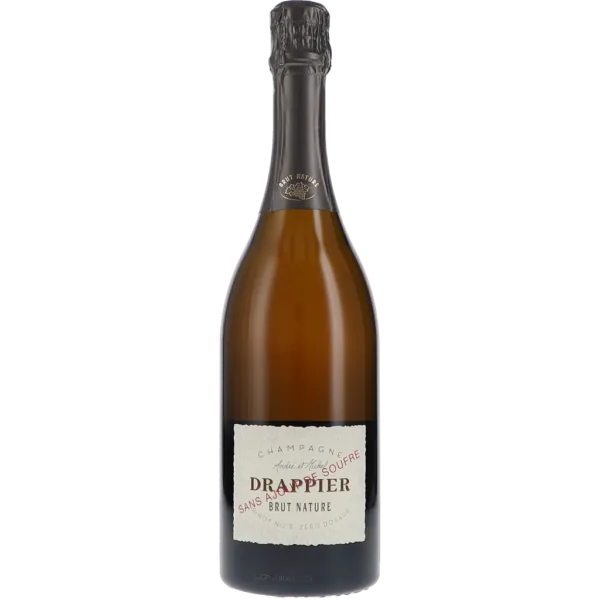
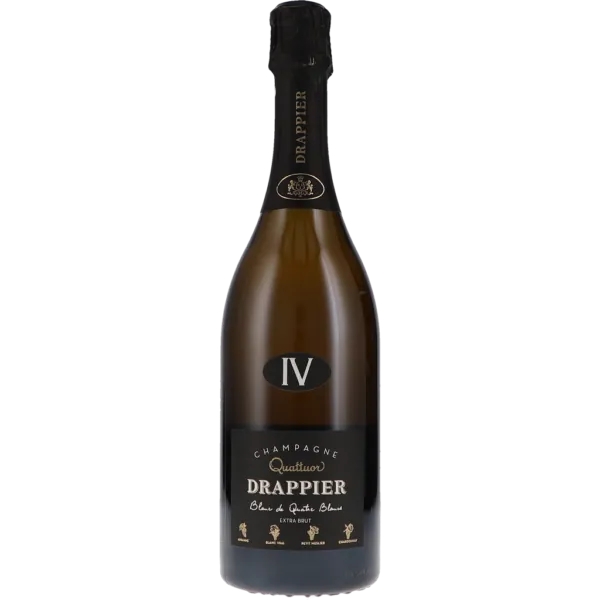
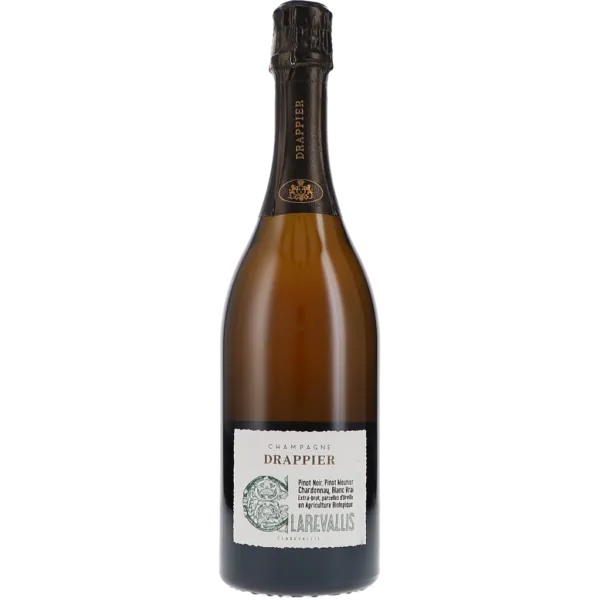
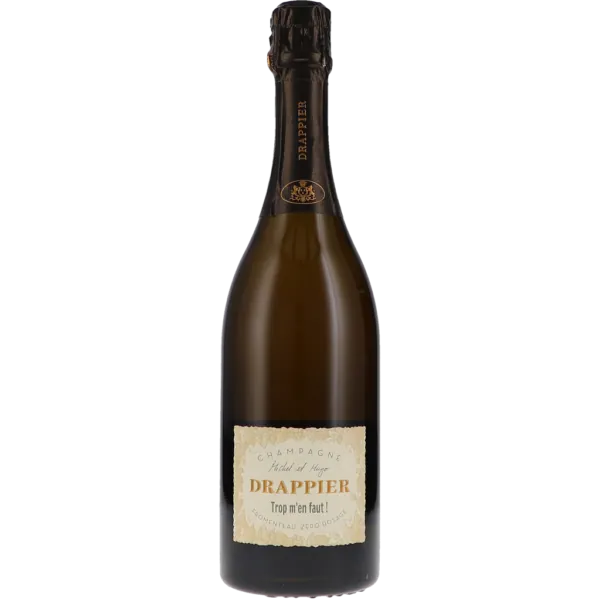
One family, one block of stone, vines stretching to the horizon behind it. Champagne Drappier in Urville is in the midst of a generational change: in 2025, Hugo won an award for his Fromenteau Champagne, and Antoine ploughs with a horse. Their father Michel, at the helm since 1979, was one of the first to dare zero dosage. The cellars beneath their feet were built by Saint Bernard in 1152. Pinot Noir accounts for 70 per cent of the vineyard area, which is now farmed entirely organically. The Côte des Bar is its heartland. Available from stock with us are the Brut Nature without added sulphur, the Rosé Brut Nature, the Clarevallis Extra Brut, the Quattuor IV and the outstanding Trop m'en faut made from Fromenteau, also available as a tasting package with four bottles for you to discover.
≈ Aroma: Cherry
In all wines: 2,854 Wines
More about Drappier
Beneath the vaults of Saint Bernard

The staircase leads down into another era. In 1152, the Cistercians of Clairvaux had these vaults built to store the wine from the surrounding vineyards. The stone arches have survived wars, revolutions and phylloxera epidemics. André Drappier bought them from the commune in 1950 – a foundation that is more than mere architecture. Today, champagnes mature in these cellars without stabilisation or filtration, at a constant 10 degrees, as patiently as they did 900 years ago.
“Père Pinot” and the return of a grape
In the 1930s, Georges Collot, Michel’s maternal grandfather, was the first to replant Pinot Noir on the Côte des Bar. His neighbours thought him mad and called him “Père Pinot”. Today, this grape covers 70 per cent of the vineyard area. The soil – upper Kimmeridgian limestone – is geologically related to nearby Chablis and lends the wines a mineral sharpness. The Brut Nature Sans Soufre shows where this can lead: pure Pinot Noir, with no dosage and no added sulphur.

Forgotten grapes, new accolades
More than twenty years ago, Michel Drappier began bringing back vanished grape varieties: Arbanne, Petit Meslier, Blanc Vrai, Fromenteau. The Quattuor unites all four in equal parts – a champagne like a living archive. The Trop m'en faut!, made entirely from Fromenteau, earned Hugo the prize for best champagne at the Master Winemaker Awards in 2025. André, who passed away in March 2025 at the age of 99, lived to witness his grandson’s triumph.
Carbon neutral since 2016
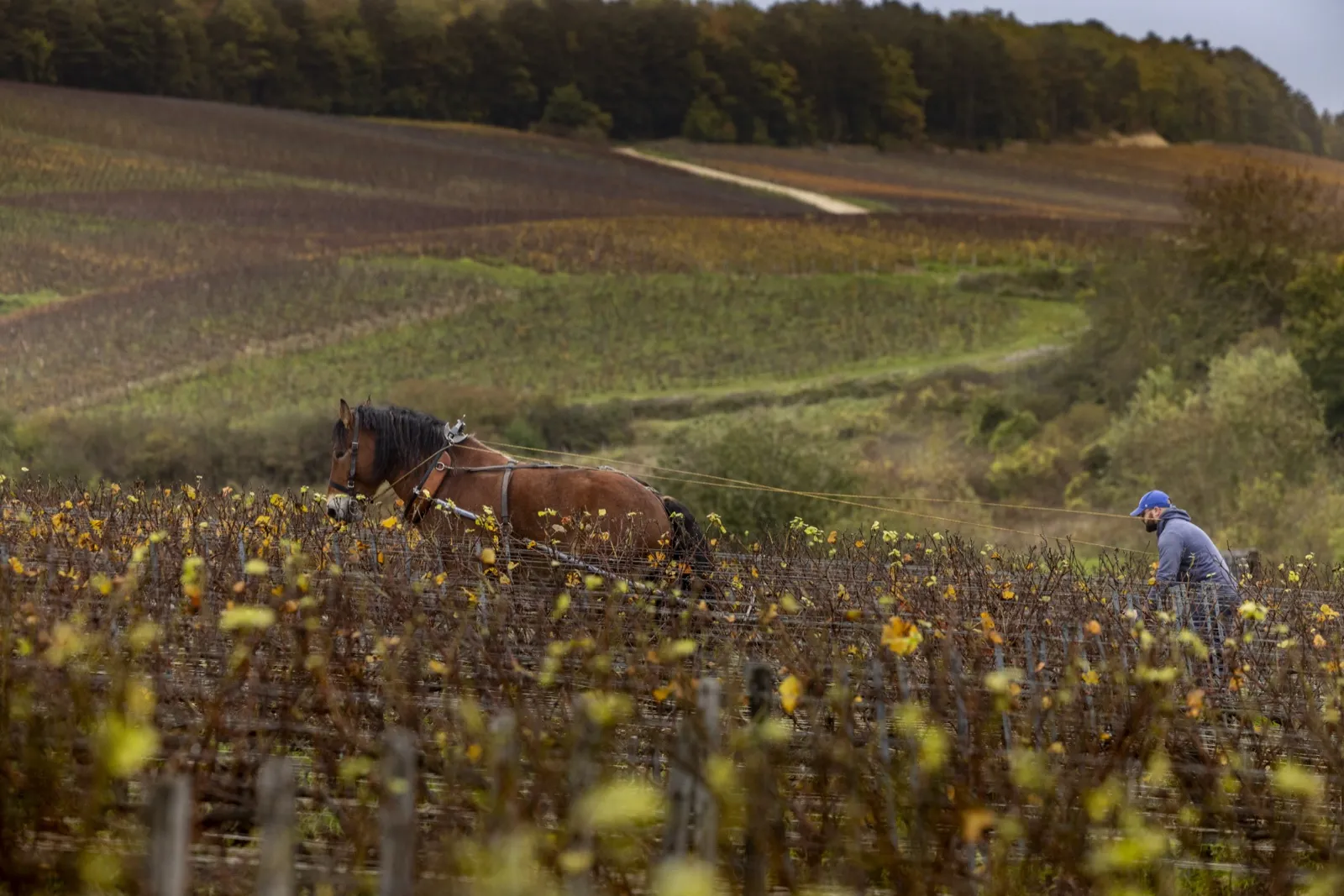
Drappier became the first champagne house to achieve carbon neutrality in 2016. Today, the entire vineyard area is organically certified. Antoine ploughs the plots with his Ardennes draught horse. In Les Riceys, just a few kilometres to the south, Olivier Horiot works on his biodynamic cuvées with similar conviction – the Côte des Bar is developing into the epicentre of a new Champagne movement.
Drappier price list
6 wines · as of 1 November 2026 · prices incl. VAT, excl. shipping
Download the price list (PDF)(PDF, 134 KB)