
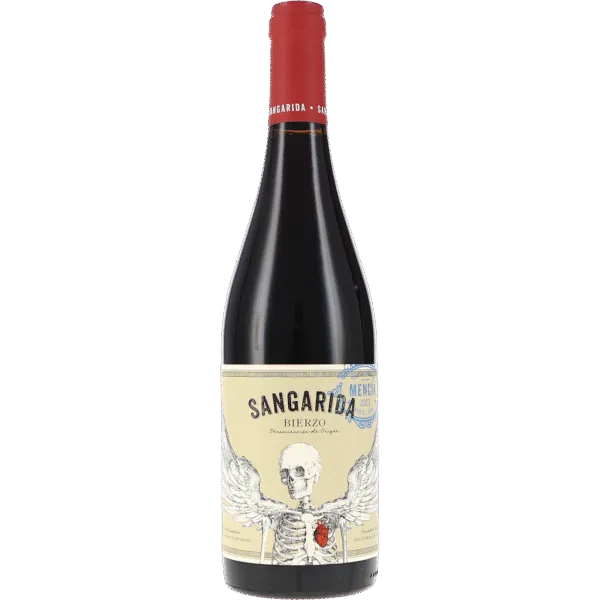
In the north-west of the province of León lies a vast, mountain-ringed basin where vines cling to slate slopes and clay terraces, gazing towards the peaks of the Montes de León and the Sierra de los Ancares. Bierzo wine hails from the borderland between Castile and Galicia, embodying both worlds: Atlantic moisture and cool nights from the west, warm, dry summer days from Spain’s interior. The principal red variety is Mencía, often sourced from old bush vines, yielding fragrant red wines with notes of cherry, violet and a smoky slate character; among the white varieties, Godello sets the benchmark. Our wines from Bierzo come from the young estate Sangarida in San Lorenzo del Bierzo.
Grape variety: Mencia
More about Bierzo
Wine from Bierzo: a basin between Castile and Galicia
Politically, Bierzo belongs to Castilla y León; in its landscape it looks towards Galicia. The area around Ponferrada, Cacabelos and Villafranca del Bierzo is a basin enclosed on all sides by mountain ranges, which keep out the heaviest Atlantic rains yet let in enough moisture and coolness. The Camino de Santiago runs right through it, and the monasteries along the pilgrim route sustained viticulture here for centuries. Bierzo has been a D.O. in its own right since 1989, and wine from Bierzo today stands for a cool, fragrant style of Spanish red with moderate alcohol and fresh acidity.
Mencía and Godello on slate and clay
Two soils shape the wines. On the slopes lies slate, often iron-rich, poor and free-draining; the roots go deep, yields remain small, and the wines gain that taut, cool minerality instantly recognisable in Bierzo. On the valley floor and the lower terraces lie heavier loam and clay soils, which hold more water and give the wines fullness. On both grows Mencía, the region's main red variety: thin-skinned and early-ripening, with aromas of sour cherry, violets, herbs and black pepper. Many vineyards are old bush vines, planted a hundred or more years ago as field blends with other varieties. Among the whites Godello leads, with citrus, stone fruit and a saline length; alongside it stands the rare Doña Blanca, which contributes floral scent and texture. Since 2017 a hierarchy of origin, on the Burgundian model, has classified the wines: from regional Bierzo through village wines (Vino de Villa) and site wines (Vino de Paraje) to classified single vineyards.
Sangarida: old vines around San Lorenzo del Bierzo
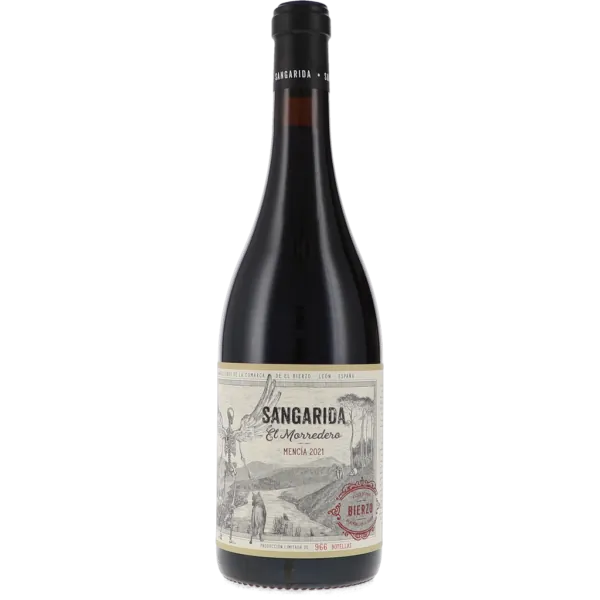
Lía Fariña founded Sangarida in 2019. She is the daughter of Robustiano Fariña, founder of Attis Bodegas y Viñedos in the Rías Baixas, and her mother comes from Bierzo. She is advised by the oenologist Jean-François Hébrard. The vineyards lie around San Lorenzo del Bierzo at 550 to 650 metres, some planted in 1901 and 1910. The grapes are destemmed, fermented spontaneously and matured in used oak barrels of 225 and 500 litres, so that the wood merely frames the fruit. The El Morredero 2021 is a Mencía from a single parcel on clay at 600 metres, slender, with cherry, violets, a smoky, almost meaty note and 12.5 per cent alcohol.
White wine from Bierzo: Godello and Doña Blanca
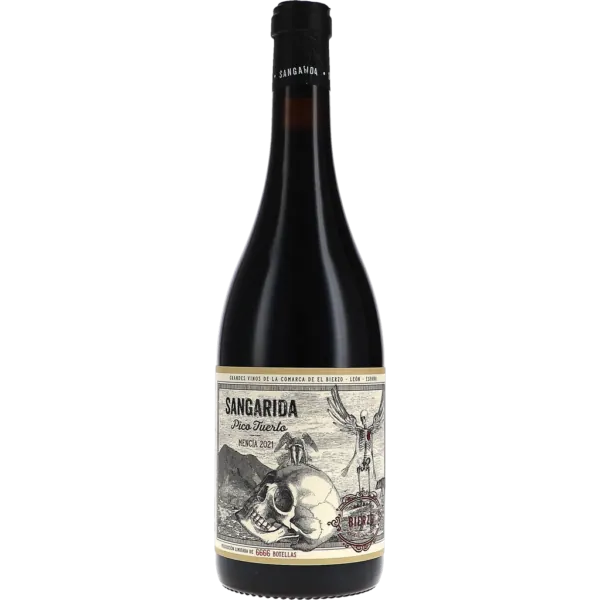
Sangarida's white wines show how much freshness the high sites give Bierzo. The Godello 2024 smells of citrus, green apple and pale stone. The La Guiana 2022 is a Godello with more depth, stone fruit and a saline finish. The La Yegua 2021 combines Godello and Doña Blanca in equal parts; the Doña Blanca vines are well over a hundred years old and grow on iron-rich slate, and the wine matures for twelve months on its fine lees, remaining dry, taut and structured. You will find all available wines from Bierzo in the list above.