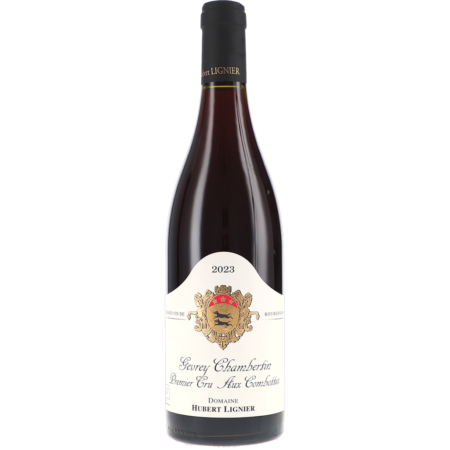
Bright, transparent ruby red with fine garnet reflections at the rim.
Nose
Dark cherries, violets and delicate smoke, underpinned by subtle notes of red berries and a spicy depth.
Palate
Silky tannins, vibrant acidity and an almost translucent clarity; the wine feels both ethereal and profound, with a long, pure finish.
Character
A wine of transparent finesse and natural authority, rendering the winemaker’s hand invisible and revealing the terroir as if through a magnifying glass.
Pairing
Roast duck breast with cherries, saddle of venison in red wine jus, or ripe Époisses.
Notes
Biodynamically produced (Demeter) from old vines dating back to the 1930s; vinified with indigenous yeasts, without fining or filtration, and aged in just one-third new casks from Tronçais and Allier.
Tasting note
Character
A Vosne-Romanée of almost translucent clarity: finely structured, silky, and coolly elegant. By his own admission, Bruno Clavelier seeks “neither colour nor tannin” – what interests him is transparency, the pure voice of the place. This Premier Cru reveals itself accordingly: dark cherries, violets, a hint of smoke, underpinned by a fine, almost saline trace. The old vines – “Vieilles Vignes” is no mere marketing term here, but a statement of intent – lend depth without weight, concentration without opulence. A wine that whispers rather than shouts, and lingers all the longer for it.
Terroir & Origin
Aux Brulées lies on the northern edge of the village of Vosne-Romanée, directly below the Grand Cru vineyard site Richebourg – one of the most privileged addresses in the Côte de Nuits. The name alludes to its sun-exposed, warm aspect; the calcareous subsoil simultaneously provides the typical Burgundian tension. Clavelier’s vines have been rooted here since the 1930s, planted in that era when grandfather Joseph Brosson rebuilt the estate vine by vine after the phylloxera catastrophe. Vines over 80 years old, naturally low yields, deep root systems – this is the foundation.
Grape Variety & Vinification
Pure Pinot Noir, predominantly the traditional Burgundian clone Pinot Fin, which stands for finesse rather than power. In the cellar, purism prevails: fermentation in open oak vats with indigenous yeasts, up to 30 per cent whole bunches, manual pigeage instead of mechanical extraction. Maturation lasts 16 to 18 months in casks of Tronçais and Allier oak, only a third of them new – the wood should support, not dominate. Neither fining nor filtration, minimal sulphur. The estate has been farmed biodynamically since 2005, and the label bears Demeter certification.
Food Pairings
The fine structure and ripe, yet never sweetish fruit call for dishes of similar nobility: partridge with truffle jus, pink-roasted duck breast, braised veal cheeks, or a simple Coq au Vin, as it has been prepared in Burgundy for generations. This wine also finds a natural affinity with young Comté or Époisses – the region’s proud, pungent cheese. Serving temperature: 16 to 17 degrees; decanting enhances its definition.