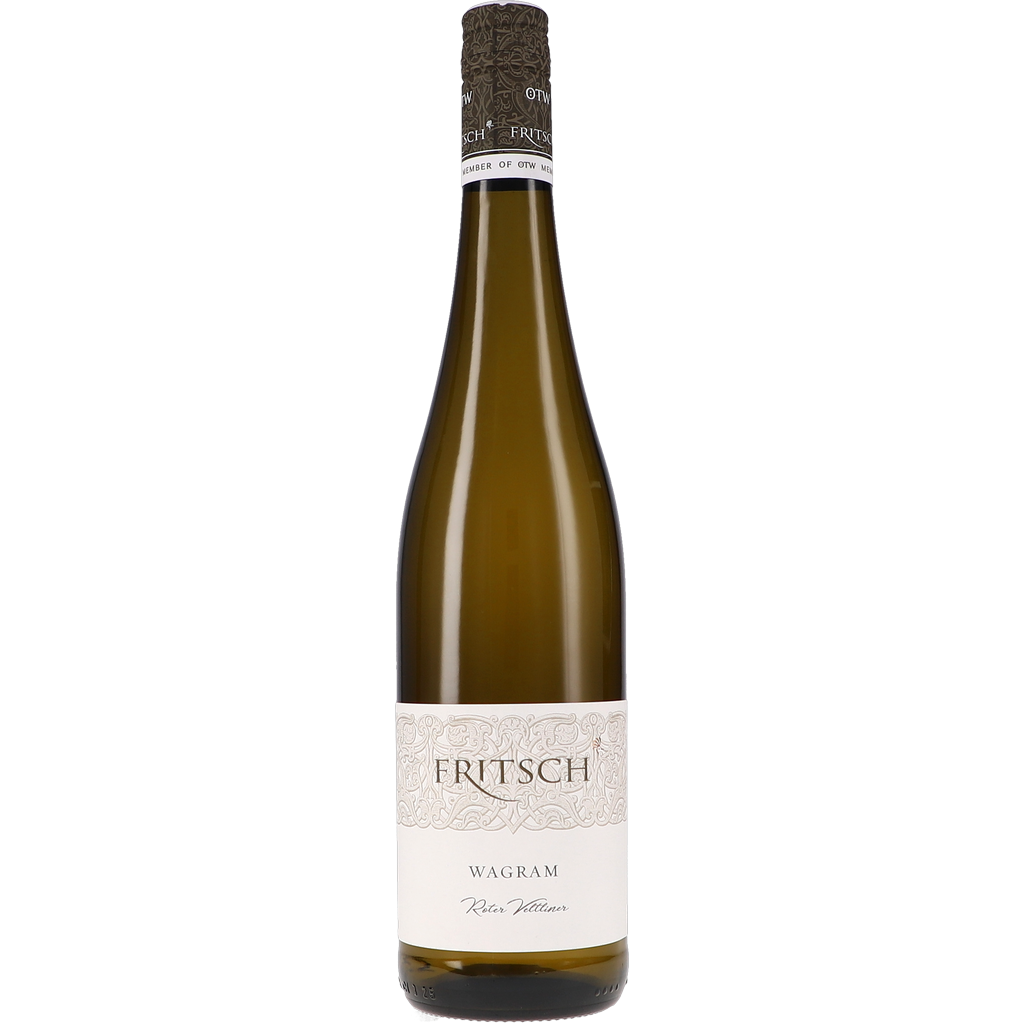
The Roter Veltliner Wagram 2025 from Weinberghof Fritsch comes from 5–11-year-old vines on loess soils at an altitude of 220 metres – a dry, fresh white wine with piquant spice and a saline length from the traditional estate working biodynamically on the Wagram.
11,34€15,12€ / l
Excl. VAT
In stock.Fast shipping via DHL or DHL Express. Securely packed and insured against breakage and loss.
Bottler: Vineyard Fritsch, Oberstockstall 24, A-3470 Kirchberg am Wagram / Austria
In the glass
Colour
Medium golden yellow with delicate green reflections.
Nose
Fine aromatics of red apple, grapefruit and quince, interwoven with ivy, nettle as well as a hint of rye bread and mustard.
Palate
Juicy on the palate, with a saline length and a piquant note on the finish; the invigorating freshness lingers long and offers a pleasant challenge.
Character
An exciting, multi-layered white wine with depth rather than upfront fruit – this rare grape variety shows itself to be distinctive, spicy and with a clear mineral drive.
Pairing
Intense cuisine with earthy and piquant touches: mushroom dishes, Wiener Schnitzel or boldly seasoned vegetable pans.
Notes
Hand-harvested and spontaneously fermented in stainless steel tanks; the rarity that is Roter Veltliner regularly achieves 94 Falstaff points at Fritsch in top vineyard sites, and the estate has been farming biodynamically since 2006 and is a founding member of respekt-BIODYN.
Tasting note
Colour & appearance
Medium golden yellow with delicate green reflections – lighter than one might expect from this often powerful variety, yet with visible density in the glass.
Nose
An aromatic profile of rare precision: red apple, grapefruit and quince, alongside the green, herbal side of ivy and nettle. Beneath lies something spicy and earthy, reminiscent of rye bread and a hint of mustard – not a wine that tries to please, but one that demands attention and rewards it.
Palate
Juicy and linear, with a salty energy that tugs at the corners of the mouth. The fruit remains cool and precise, accompanied by a piquant spiciness that carries the wine beyond the moment. At just 12.0% vol., it is a remarkably slender yet substantial performance.
Finish
Long and fresh, with that appealing spark of piquancy lingering on the finish – an ending that poses questions rather than providing answers.
Terroir & origin
On the Wagram, that striking escarpment west of Vienna which once formed the coastline of the Tethys Sea, the vines grow on loess soils at 220 metres altitude – Ice Age deposits interspersed with calcium-rich marine sediment that store water and nutrients like a sponge. It is precisely here, on the loess terrace that estates such as Fritsch have trusted for generations, that Roter Veltliner finds its ideal stage.
Grape variety & vinification
Roter Veltliner – named after its reddish berry skins and unrelated to Grüner Veltliner – was long considered a marginal curiosity. Karl Fritsch has made it the estate’s calling card. The grapes come from vines aged 5 to 11 years, are harvested by hand and fermented spontaneously in stainless steel tanks – vinified dry, without any cosmetic additions.
Food recommendations
The salty tension and piquant note call for intense, earthy cuisine: Wiener Schnitzel with potato salad, baked mushrooms with herb remoulade, asparagus with hollandaise sauce or a mature Bergkäse. It is also a reliable choice with smoked trout and spicy Asian dishes.
Special features
Karl Fritsch has farmed his 25 hectares biodynamically since 2006, as a founding member of respekt-BIODYN – and Roter Veltliner is his quiet masterpiece: in the Ried Steinberg vineyard site, the variety regularly achieves 94 Falstaff points at Fritsch. This entry-level wine bears the very same signature: manual labour, patience and the belief that the cellar needs less than the vineyard.