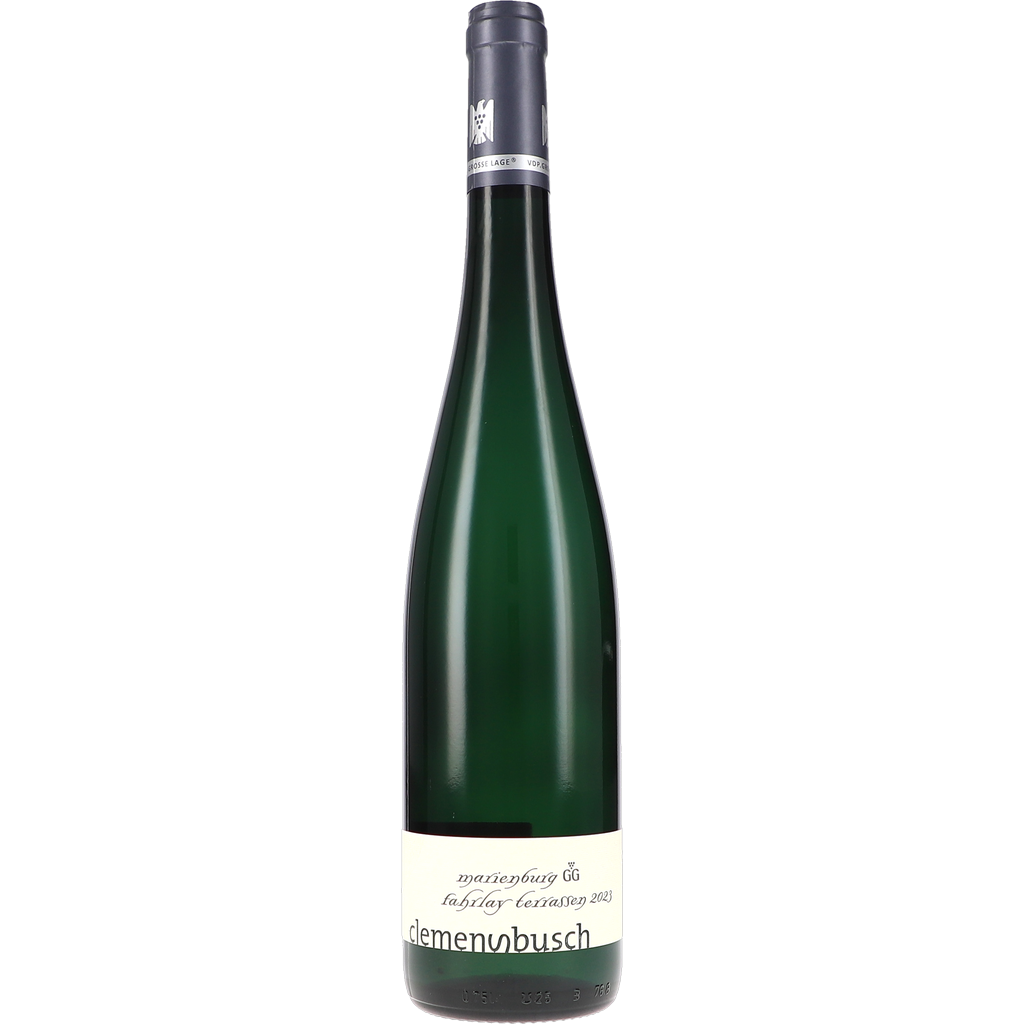
Bottler: Winery Clemens Busch, Kirchstrasse 37, 56862 Pünderich / Germany
In the glass
Colour
Pale, luminous straw yellow with greenish reflections.
Nose
Cool citrus fruit, white peach and green apple, underpinned by delicate herbal notes and the crystalline, stony freshness of blue slate.
Palate
Dry, linear and juicy, with racy acidity, saline minerality and a long, profound finish.
Character
A cool, finely etched Grosses Gewächs style – powerful at its core yet elegantly delineated, bearing the unmistakable terroir imprint of the Marienburg.
Pairing
Arctic char or pike-perch with fine herbs, pan-seared scallops, goat’s cheese salad.
Notes
From biodynamic viticulture (certified since 1986, Demeter since 2015), spontaneously fermented and aged in old 1,000-litre foudres. Vines rooted up to eight metres deep in blue slate define the cool, mineral freshness of this Riesling.
Tasting note
Character
A dry Riesling of intense, almost seismic minerality: taut along its acid spine, cool in expression, with notes of citrus fruit, white peach and a smoky-spicy depth shaped by the blue slate of the Fahrlay terraces. A wine that convinces through substance and length rather than opulence – and one that will gain additional facets with a few years of bottle age.
Terroir & Origin
The Pündericher Marienburg ranks among the great vineyard sites of the Mosel, with the Fahrlay Terrassen amongst its steepest and most celebrated parcels. Three slate colours define the landscape here: red, grey and blue – identifiable at Clemens Busch by the coloured capsules. The oldest vines are rooted up to eight metres deep in the slate bedrock, accessing mineral layers that shallow-rooted vines can never reach – a natural buffer even in hot, dry years.
Grape Variety & Vinification
Riesling in its clearest Mosel expression. Clemens Busch has farmed his roughly 20 hectares biodynamically since 1986, holding Demeter certification since 2015, having banned herbicides as early as 1976. Restraint governs the cellar: the majority of the wines ferment spontaneously in old 1,000-litre foudres, without cultured yeasts or enzymes, some for over a year, followed by extended ageing on fine lees. Sulphur additions remain minimal.
Food Recommendations
A powerful, dry Riesling such as this calls for food of equal stature: poached turbot with beurre blanc, pan-fried pike-perch on celeriac purée or stuffed chicken with morels. It is also an exciting choice with Asian dishes featuring ginger and lime or simply with matured hard cheese. Classics of Mosel cuisine such as trout meunière pair equally well.