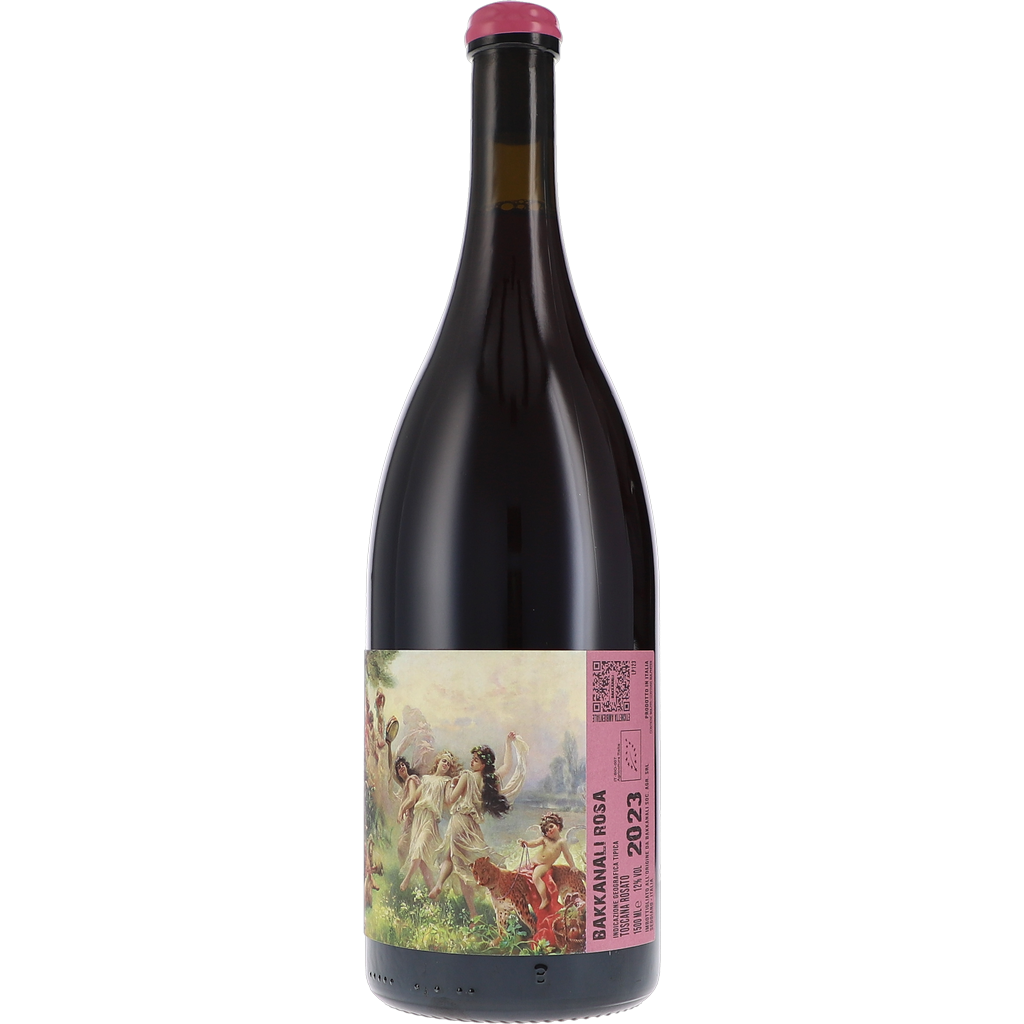
Pomegranate, fresh amarena cherries and wild raspberries, accompanied by rosehip jelly and a hint of vanilla.
Palate
Juicy, red-fruited and refreshing, with ripe, present acidity and noticeable tannins.
Character
A rosé with the backbone of a red wine – powerful and structured, carrying the coolness of the altitude from which it originates.
Pairing
Strawberry and mozzarella salad on toasted ciabatta, pan-fried calf's liver with pickled raspberries, or warm rhubarb salad with salmon and beetroot.
Notes
Sangiovese from organically certified vineyards on the extinct volcano Monte Amiata – a rosé capable of standing up to intense cuisine with concentrated sauces.
Tasting note
Colour & appearance
Intense pomegranate red with violet reflections – a rosé that announces in the glass that it aspires to more than mere summer lightness.
Nose
Unusually dark and multi-layered for its colour: pomegranate, fresh sour cherries and wild raspberries, accompanied by a delicate scent of rosehip jelly and a hint of vanilla. Fresh and intense, even the bouquet makes you curious for the first sip.
Palate
Juicy, red-fruited, refreshing. The acidity and tannins are ripe yet present – this rosé has backbone and a powerful structure of the kind one would otherwise seek in red wines. A wine with substance that wants to hold its own at the table.
Terroir & origin
The estate lies at an altitude of 600 to 850 metres on Monte Amiata, a volcano that has been dormant for 180,000 years, half an hour from Montalcino. Limestone, schist, volcanic silicates and quartz characterise the soils; temperature fluctuations of up to 20 degrees between day and night preserve the grapes’ acidity and aromatics.
Grape variety & vinification
Pure Sangiovese from organically certified vineyards. Sebastian Nasello – formerly cellar master at Podere Le Ripi in Montalcino – and Ugo Fabbri rely on stainless steel and concrete in the cellar, along with cool maceration, and dispense with new barriques. The estate’s wines are bottled unfined and only minimally sulphured.
Food recommendations
Its structure makes it a serious partner for food: strawberry and mozzarella salad on toasted ciabatta, pan-fried calf’s liver with veal jus and pickled raspberries or warm rhubarb salad with salmon and beetroot. It is also an idiosyncratic yet successful choice alongside intense cuisine with concentrated sauces and piquant side dishes.
Special features
A rosé with the substance of a red wine – and in magnum format at that. With just 12% vol., it demonstrates how much energy Sangiovese can carry from a cool, high-altitude site – entirely in the spirit of the estate’s name, which refers to the Bacchanalia, the Roman festivals in honour of Bacchus, the god of wine.