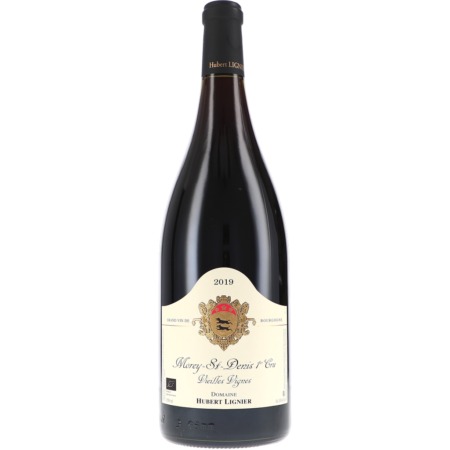
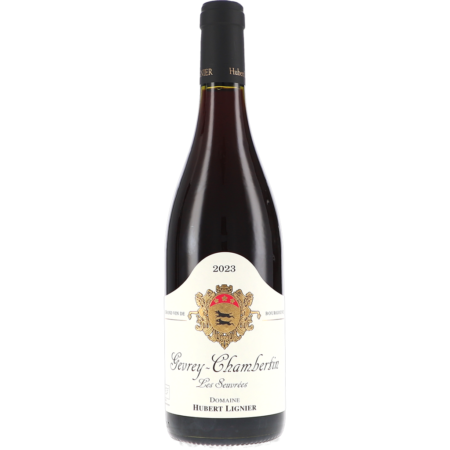
Bottler: Domaine Hubert Lignier, 13, Route Nationale 74, 21220 Morey Saint Denis / France
In the glass
Colour
Dense, dark ruby red with a cool sheen and garnet reflections at the rim of the glass.
Nose
Intense and profound: dark cherries, black berries and violets, accompanied by fine notes of undergrowth, spices and a hint of cool minerality.
Palate
Concentrated and silky, with fine-grained tannins, lively acidity and cool, dark fruit; the finish is long, clear and taut.
Character
A Grand Cru of cool clarity and linear structure – serious, finely delineated and endowed with great ageing potential.
Pairing
Squab breast seared skin-side down, loin of venison with juniper jus or ripe Époisses cheese.
Notes
Cuvée from the vines planted in 1955 by Henri Lignier, whose millerandage yields tiny, highly concentrated berries; organically certified, vinified in a gravity-flow cellar without pumps and aged with restrained use of new wood – only about two barrels per vintage.
Tasting note
Character
Cool clarity, fine-grained structure, long finish: this Clos de la Roche is a precisely delineated Pinot Noir of enormous concentration, yet without heaviness. Dark berry fruit, floral hints and a silky texture carry a wine built for length – and for patience. Barely two barrels a year: one of the most sought-after bottles in the entire Côte de Nuits.
Terroir & Origin
The cuvée MCMLV – Roman numerals for 1955 – comes from twenty-seven rows of vines that Henri Lignier planted in 1955 in the Monts Luisants climat at the upper edge of the Clos de la Roche Grand Cru. These old vines are the genetic origin of the estate; from their wood, the family propagated the rest of their parcels vine by vine. The vines tend towards millerandage – tiny, often seedless berries of exceptional density. Morey-Saint-Denis, in the heart of the Côte de Nuits: the Lignier family has been rooted here since the 1880s.
Grape Variety & Vinification
Pinot Noir in its most demanding Burgundian expression. Laurent Lignier – the fifth generation – has worked under organic certification since 2019; the cellar relies solely on gravity, without pumps. A long, cool maceration before fermentation, an increasing proportion of whole bunches, restrained new wood from four cooperages – this keeps the wine unadorned: cool, finely built, clear. Since 2017, this historic parcel has been bottled separately as a tribute to his grandfather.
Food Pairings
A wine for the grand table: pigeon with red wine jus, venison with lingonberries or roasted duck breast suit it beautifully. It also reveals its full depth alongside truffle dishes, porcini mushrooms or a mature Époisses. If you open it young, decant it generously – or lay it down in the cellar for five to ten years.