Tasting note
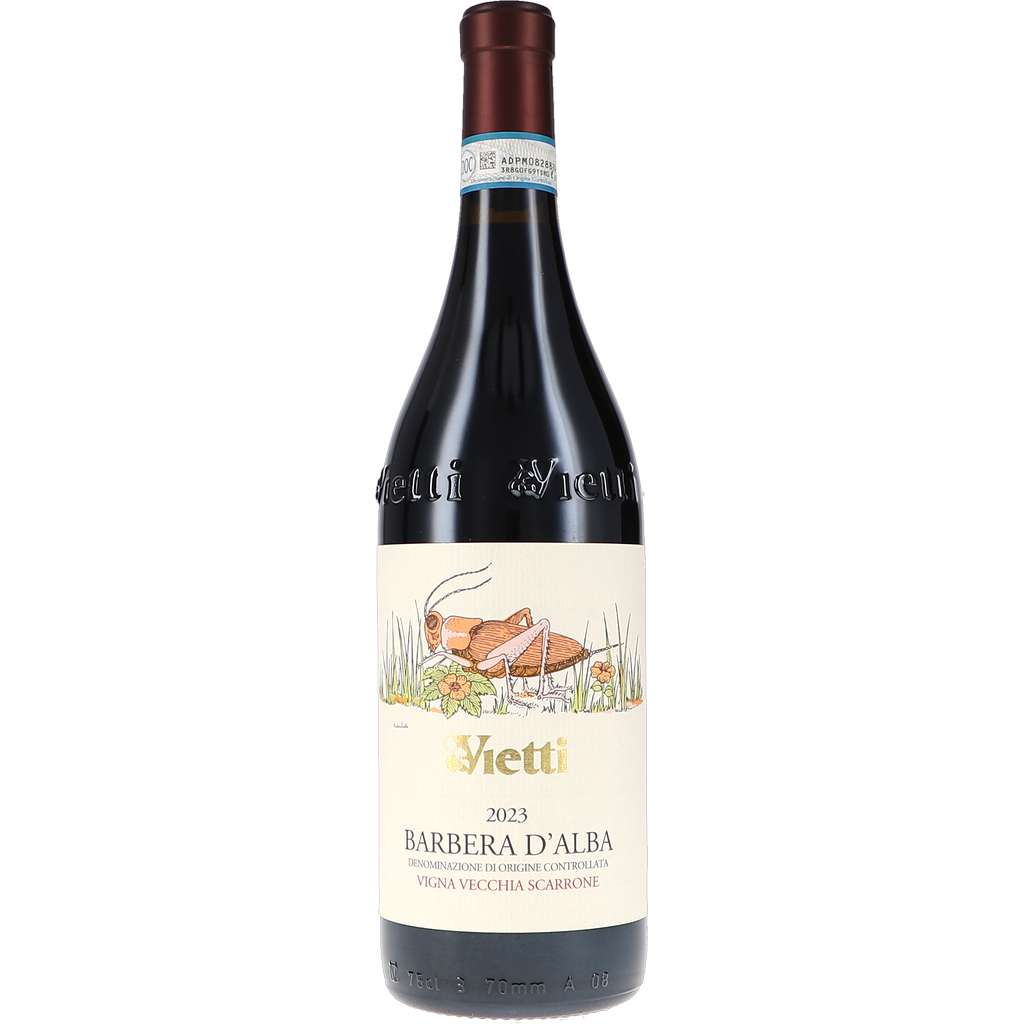
A filmmaker, a sculptor, a painter – all of them have designed labels for Vietti, and since 1974 original works of art have adorned the bottles. Yet behind the art lies uncompromising craftsmanship: this Scarrone comes from the oldest part of the vineyard site in Castiglione Falletto, where the oldest parcel was planted back in 1918. The result is a Barbera on steroids – and at the same time astonishingly finely drawn.
- Colour & appearance
- Black ruby red with purple reflections – even in the glass, a promise of concentration.
- Nose
- An expansive declination of cherries, along with blackberry and elderberry, floral overtones of orange blossom and a hint of dark chocolate – rich fruit meets untamed power.
- Palate
- The exuberant opening gathers into a wine of great finesse: juice and power with fine distinction, dense extract enveloped by bright, luminous acidity. A polished tannin structure carries the fruit, while a touch of hedonism ensures excellent drinkability.
- Finish
- Long, the bright acidity accompanies the wine from the first sip through to the persistent finale.
- Terroir & origin
- The oldest parcel was planted in 1918; the old vines stand at around 4,300 vines per hectare with a south-eastern exposure on calcareous marl soils in Castiglione Falletto. The already low yields are reduced further through strict selection.
- Grape variety & vinification
- Pure Barbera. Hand-harvested, short cold maceration, around two weeks’ fermentation of the destemmed grapes in stainless steel with remontages and délestages, followed by 18 months of ageing in large wooden casks, barriques and stainless steel.
- Food recommendations
- A powerhouse for the table: braised veal shoulder, tajarin with truffle, braised oxtail or aged Castelmagno. The lively acidity also handles fatty roast duck with ease.
- Special features
- Vines from the 1918 planting in the oldest parcel of the vineyard site – that is what makes this Vigna Vecchia a rare document of Piedmontese wine history. Vietti, founded in 1873 and today cultivating 75 hectares in the finest sites, demonstrates here that Barbera by no means has to play second fiddle to Barolo.