
Between the Rhine, the Nahe and the Alzeyer Land, the Rheinhessen hill country stretches from calcareous loess in the Wonnegau to the red slate and sandstone of the Roter Hang near Nierstein. Here, Riesling and Silvaner grow with a clarity that has carried the region far beyond its old image. Our organic wines from Rheinhessen come from two estates shaping this development: Kühling-Gillot and Battenfeld-Spanier, who work biodynamically under one roof and produce Grosses Gewächs wines from Pettenthal to Zell, as well as the Demeter-certified Weingut Schätzel, which crafts quiet, precise Rieslings and natural wines of great inner tension on the Roter Hang.
More about Rheinhessen
From the Roter Hang to the Wonnegau
Rheinhessen lies west of the Rhine between Mainz, Worms and Bingen and was long known for bulk wine before a generation of winemakers made the region’s true strengths visible once more. The most famous stretch of vineyards is the Roter Hang between Nierstein and Nackenheim, a steep bank where the Rhine once changed its course and exposed the slope. Here lie vineyard sites such as Pettenthal, Hipping, Ölberg, Brudersberg and the Nackenheimer Rothenberg, classified by the VDP as Grosse Lage, which yield Rieslings of smoky depth. Further south, in the Wonnegau around Hohen-Sülzen and in the Zellertal, limestone and calcareous marl shape the landscape; here, taut, cool wines with salty minerality are born. White wine from Rheinhessen therefore bears two signatures: warm and powerful from the Roter Hang, cool and polished from the limestone.
Soils and climate of the hill country
The climate is mild and comparatively dry, as the heights of the Hunsrück and the Palatinate Forest intercept the rain clouds. The Rhine stores warmth and reflects light back onto the slopes. Geologically, the region is a mosaic: on the Roter Hang, weathered Rotliegendes and clay slate dominate, lending the Rieslings their smoky, almost sweet minerality. In the Wonnegau and the Zellertal, limestone from marine deposits rests beneath layers of loess, giving the wines pressure and finesse. Silvaner has an old home here and, on limestone, produces herbal, juicy white wines; alongside it grow Weißburgunder, Grauburgunder and Chardonnay with a Burgundian allure.
Kühling-Gillot and Battenfeld-Spanier: two estates, one philosophy
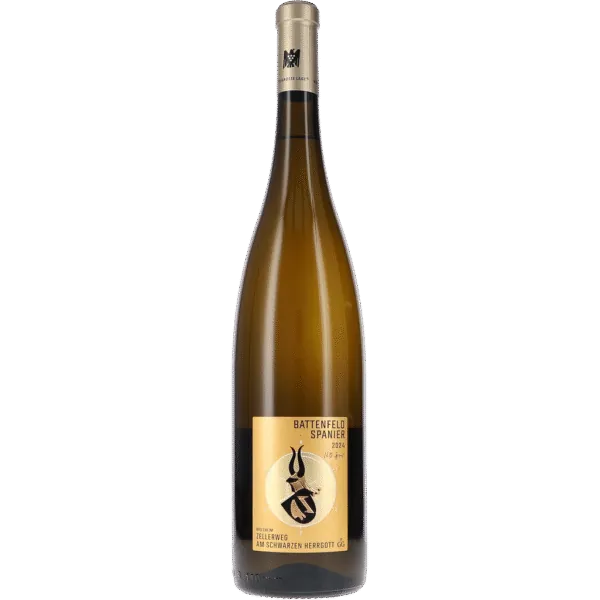
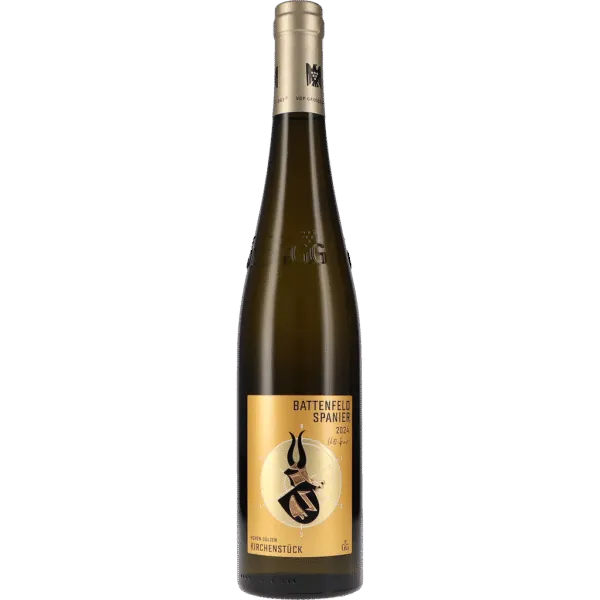
Under the umbrella of Kühling-Gillot & Battenfeld-Spanier, two VDP estates work together: Kühling-Gillot on the Roter Hang and Battenfeld-Spanier in the Wonnegau. Both farm their vineyards biodynamically and allow spontaneous fermentation. A particular feature is the vines in the Rothenberg, planted in 1934, which never saw a rootstock and have survived phylloxera ungrafted. The Riesling Pettenthal GG 2023 shows the Roter Hang from its powerful side, with smoky rock, yellow fruit and dense structure. Quite different is the Riesling Zellerweg am Schwarzen Herrgott GG 2023 from Battenfeld-Spanier, rooted in pure limestone rock, offering citrus fruit, cool tension and a salty pull of crystalline depth. Between these two poles, the entire repertoire of the region unfolds.
Natural wine from Rheinhessen: Weingut Schätzel
Anyone looking for natural wine from Rheinhessen cannot pass by Weingut Schätzel in Nierstein. Kai Schätzel has run the family estate since 2008, has been Demeter-certified since 2023 and lets his wines mature in complete tranquillity in the wooden cask cellar that is over 800 years old. His Steiner Riesling 17-22 is a solera of six vintages, partly aged under flor yeast and bottled sulphur-free – a lean, profound wine with notes of sencha tea and stone. The Riesling “Fuchs” 2021 from the Grosse Lage Hipping was foot-trodden, cold-macerated and aged for 36 months under flor, a purist wine that explores the boundaries of the variety. At these three estates, organic wine from Rheinhessen means Riesling and Silvaner that reveal their soil and require little intervention in the cellar.