
 EN
 DE
 FR
 IT
Sekt, Champagne, Crémant, Pét-Nat: the difference in brief
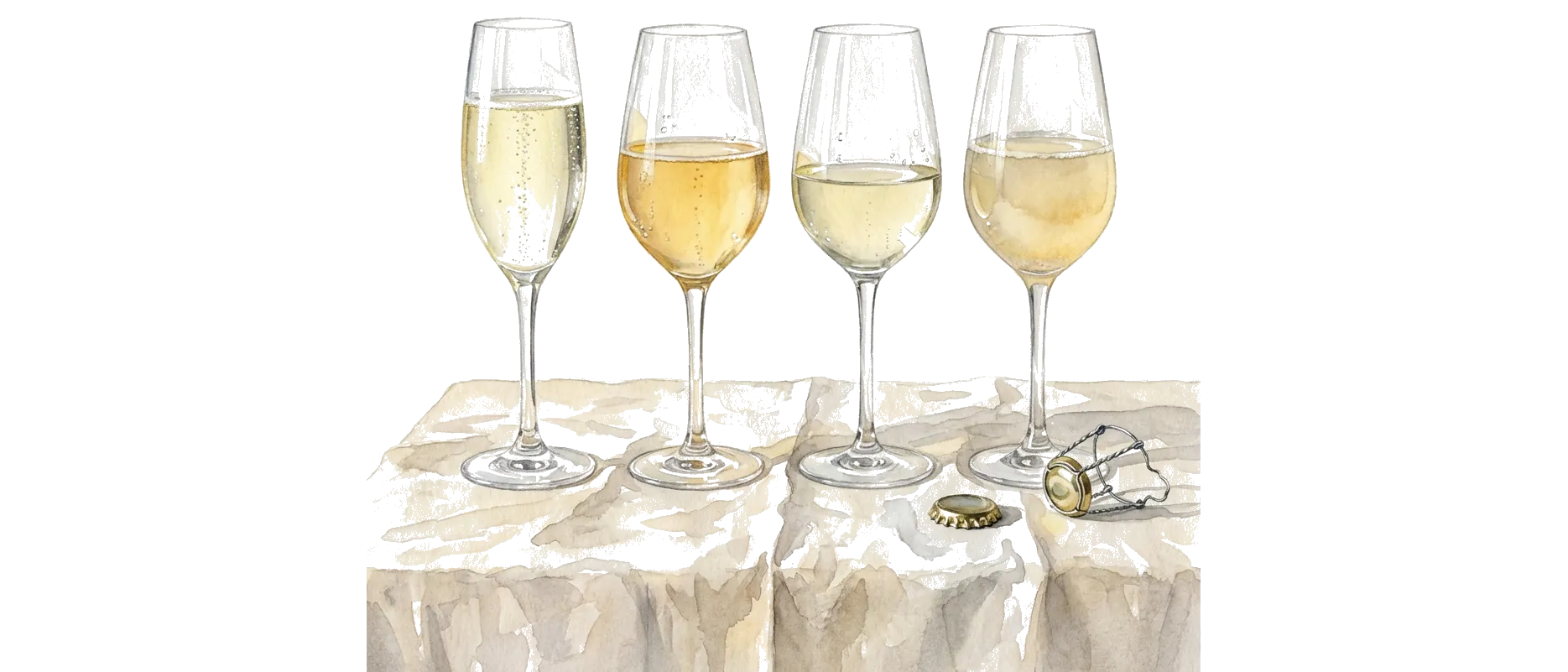
In short: Champagne is sparkling wine from the Champagne region in north-eastern France, fermented in the bottle and aged for at least twelve months on its lees. Crémant is made by the same method in eight other French appellations, among them the Loire, Alsace, Burgundy and the Jura. Sekt is the German term for quality sparkling wine; for a Winzersekt, or grower Sekt, both the grapes and the base wine come from the estate itself. Pét-Nat is bottled before the first fermentation has finished and needs no dosage. What separates the four, then, is origin, method and the time the wine spends on its lees.
| Sparkling wine | Method | Time on lees (minimum) | Origin | Dosage | Price at our shop |
|---|---|---|---|---|---|
| Champagne | Traditional bottle fermentation | 12 months on the lees, release no earlier than 15 months after bottling; vintage 36 months | AOC Champagne | Brut Nature to Doux, our growers mostly 0 to 6 g/l | from approx. €44 |
| Crémant | Traditional bottle fermentation | 9 months; on the Loire, release no earlier than 12 months after bottling | eight French Crémant appellations, including Loire, Alsace, Burgundy, Jura | same scale as Champagne, our Crémants Extra Brut and Zéro | approx. €24 to €35 |
| Winzersekt | Traditional bottle fermentation | 9 months; VDP.Sekt 15, VDP.Sekt.Prestige 36 | the estate’s own grapes, one German wine region | Brut Nature to Mild | approx. €15 to €79 |
| Pét-Nat | Méthode ancestrale, a single fermentation | no requirement | anywhere | no dosage, only residual sugar from fermentation | approx. €12 to €23 |
The label on a bottle of sparkling wine seldom names just a style. The terms you find there mix three different levels: an origin such as Champagne or Crémant de Loire, a legal category such as Sekt, and a method such as Pétillant Naturel.
Three questions bring order to the comparison. How does the carbon dioxide get into the wine, how long does the wine stay on its lees, and where do the grapes come from? The first decides the structure, the second the depth and the notes of brioche and nuts, the third the origin and the legal status. Time in the cellar also explains the price. A year on the lees costs space and capital, three years cost more.
How the bubbles get into the wine: three methods
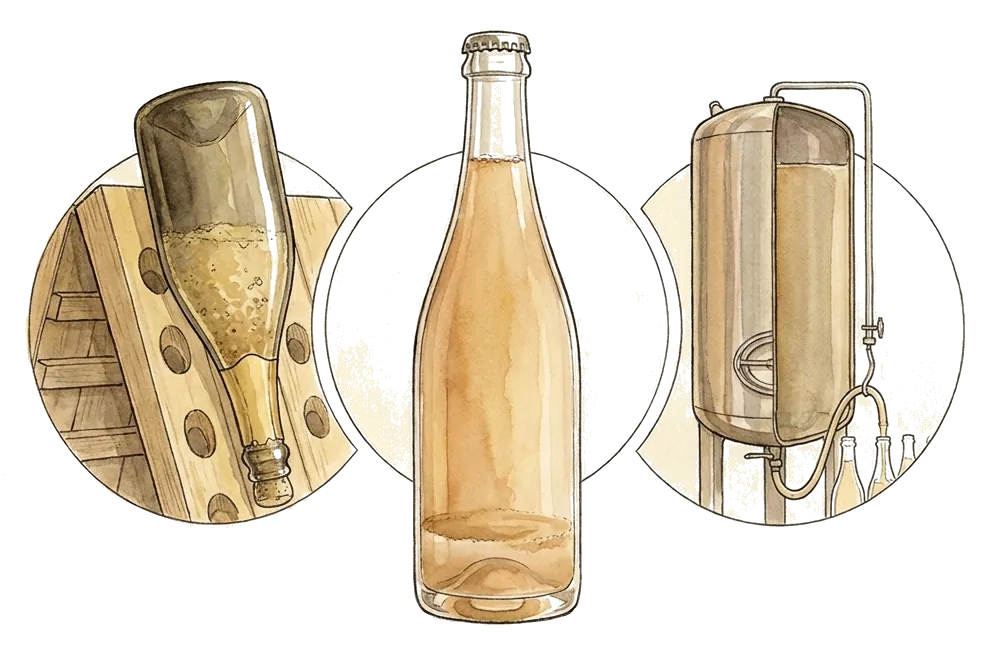
In traditional bottle fermentation a still base wine is bottled with a liqueur de tirage of yeast and sugar and then sealed. The second fermentation takes place in the very bottle in which the wine will later be sold. Afterwards it stays there on its lees for months, often for years. During this time the dead yeast cells break down, a process called autolysis, which gives the wine notes of pastry and nuts and a finer mousse. Champagne, Crémant, Winzersekt and Cava are all made this way. Our page on how Champagne is made describes each step, from riddling to disgorgement.
The méthode ancestrale is older and simpler: the must is bottled before the first fermentation has finished and completes it in the sealed bottle. There is neither a liqueur de tirage nor a dosage; the remaining sugar in the must ferments in the bottle and builds the pressure. In tank fermentation, the Charmat method, the second fermentation takes place in a pressure tank, after which the wine is filtered and bottled under counter-pressure. This is quick and preserves the primary fruit. Prosecco and most branded Sekt are made in tanks.
| Method | Process | Lees contact | Typical wines |
|---|---|---|---|
| Traditional bottle fermentation | still base wine, liqueur de tirage (yeast + sugar), second fermentation in the bottle, riddling, disgorgement, dosage | months to many years in the same bottle | Champagne, Crémant, Winzersekt, Cava |
| Méthode ancestrale | must bottled before the first fermentation ends, finishes fermenting in the bottle, no added sugar | yeast usually stays in the bottle | Pét-Nat, Blanquette Méthode Ancestrale (Limoux) |
| Tank fermentation (Charmat) | second fermentation in a pressure tank, filtered and bottled under pressure | short, in large volumes | Prosecco, most branded Sekt |
Champagne: origin, grape varieties, ageing
Champagne may only come from Champagne, the AOC Champagne in north-eastern France with around 34,000 hectares of vines. Seven grape varieties are permitted: Pinot Noir, Meunier and Chardonnay cover virtually the whole area, while Arbane, Petit Meslier, Pinot Blanc and Pinot Gris survive as rarities. There is more on our page about the grape varieties of Champagne, and the page on the terroir of Champagne explains how chalk and sites shape the style. The pressure in the bottle is around 6 bar.
The ageing periods are fixed by law. A non-vintage Champagne may be released no earlier than 15 months after bottling, of which at least 12 months must be spent on the lees; for vintage Champagne it is 36 months before release. The dosage, the liqueur d’expédition added after disgorgement, determines the sweetness: the scale runs from Brut Nature with less than 3 grams per litre through Extra Brut and Brut to the sweet Doux with more than 50 grams. Our Champagne growers mostly dose between 0 and 6 grams.
Almost all our Champagnes come from growers who farm their own grapes, Récoltants-Manipulants. Lacourte-Godbillon in Écueil on the Petite Montagne de Reims farms 8.5 hectares of Premier Cru, with old Pinot Noir vines on limestone, organic since 2012 and Demeter-certified since 2020, with hand harvesting and spontaneous fermentation. Bonnet-Ponson has been certified organic since 2016 and works with spontaneous fermentation, without filtration and with very little sulphur; the Cuvée perpétuelle also comes as a Non Dosé, with no dosage at all. The exception is Clandestin in Buxières-sur-Arce on the Côte des Bar: the house buys grapes from growers whom it accompanies in their conversion to organic farming. The base wines age for twelve months in wood, every Champagne spends at least 15 months on its lees, and everything is bottled as Brut Nature.
Crémant: bottle fermentation outside Champagne
Crémant is the collective name for French sparkling wine made by traditional bottle fermentation outside Champagne; eight appellations carry the name, from Alsace to Savoie. The minimum time on the lees is nine months, and Crémant de Loire may in addition only be released twelve months after bottling. On the Loire, Chenin Blanc is the leading variety; in Alsace, Pinot Blanc, Auxerrois, Pinot Noir and Riesling dominate; in Burgundy, Chardonnay and Pinot Noir, alongside Aligoté and Gamay. The Jura has its own Crémant too, although there is none in our range at present.
Liv Vincendeau in Rochefort-sur-Loire leaves her Crémant de Loire Réserve “Zeitlos”, made from Chenin Blanc, on the lees for 48 months, fermented spontaneously and without dosage; the estate has been Demeter-certified since 2020. Domaine Albert Mann in Wettolsheim farms 25 hectares, biodynamically since 1997; its Crémant d’Alsace Extra Brut is a blend of Auxerrois, Pinot Blanc and Pinot Noir. Boris Champy in Nantoux in the Hautes-Côtes de Beaune makes his Crémant de Bourgogne from Aligoté, also biodynamically. Also worth mentioning is the Crémant d’Alsace Clos Windsbuhl 2023 from Domaine Zind-Humbrecht in Turckheim, Demeter since 2002, made from Chardonnay.
Sekt, Deutscher Sekt, Winzersekt: the German categories
Sekt is the German term for quality sparkling wine and requires a pressure of at least 3.5 bar; the second fermentation may take place in a tank or in the bottle. If the label says only Sekt, the base wine may come from other EU countries. Deutscher Sekt requires German grapes, and Sekt b.A. comes from a single German wine region. Branded Sekt is mostly made in tanks.
Winzersekt, grower Sekt, is more narrowly defined: grapes and base wine come from the estate itself, the wine is fermented in the bottle by the traditional method, and it stays on its lees for at least nine months without interruption; vintage and grape variety appear on the label. The VDP’s Sekt statute sets the bar higher: VDP.Sekt ages for at least 15 months on the lees, 24 as a vintage Sekt, and VDP.Sekt.Prestige for at least 36 months, always by traditional bottle fermentation.
Christmann & Kauffmann in the Pfalz is a pure sparkling wine house, farmed biodynamically under the rules of respekt-BIODYN. The base wines ferment spontaneously in wooden casks, the Sekts spend at least 31 months on the lees and are bottled without dosage. Peter Jakob Kühn in Oestrich-Winkel in the Rheingau, Demeter since 2009, farms 21 hectares planted almost entirely with Riesling; alongside it he makes a Blanc de Noirs from Spätburgunder. Clemens Busch in Pünderich on the Mosel, with the Demeter seal since 2015, does without cultured yeasts and fining; his Reserve Sekt from Riesling comes from the 2013 vintage.
Pét-Nat: a single fermentation
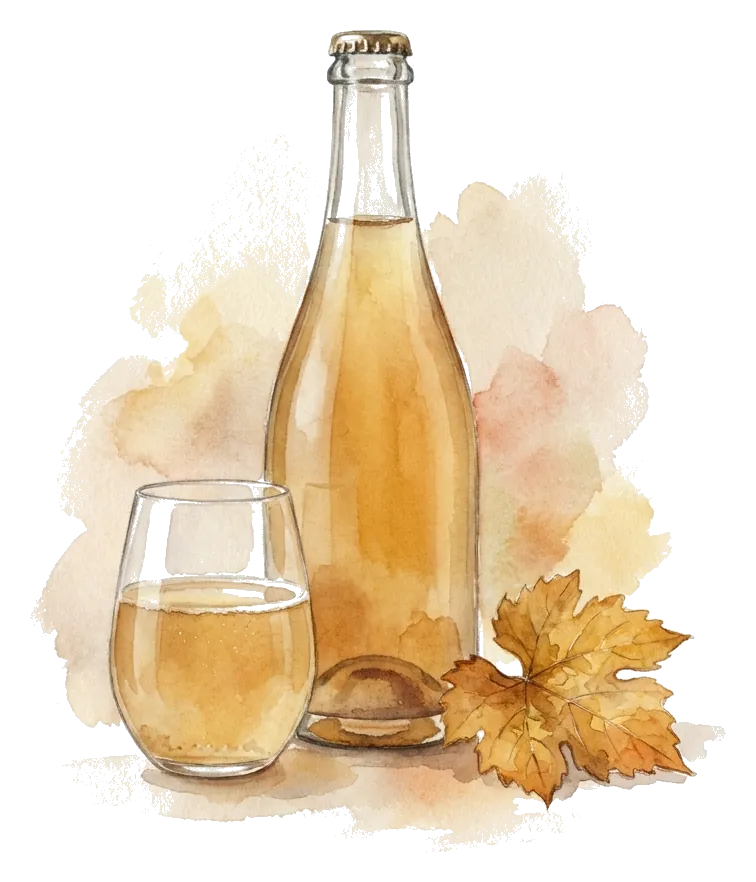
Pétillant Naturel means that the must is bottled before the first fermentation has finished and completes it in the sealed bottle; the carbon dioxide this produces stays in the wine. There is neither a liqueur de tirage nor a dosage, and how dry the wine turns out depends on the moment of bottling. Most are not disgorged, they are sealed with a crown cap, and the wine stays slightly cloudy. The pressure is well below that of a Champagne, and some Pét-Nats are legally classed as semi-sparkling wine. There is no prescribed time on the lees.
The method is called méthode ancestrale and comes from Limoux in the Languedoc; according to tradition, a wine was first bottled this way at the Abbey of Saint-Hilaire in 1531. Today the AOC Blanquette Méthode Ancestrale is restricted to the Mauzac grape and allows no added sugar. The name Pét-Nat was coined by Loire growers in the 1990s; there is more on our page on Pétillant Naturel. In our range you will find, for example, Meinklang in Pamhagen in Burgenland, a Demeter farm with vines, livestock and cereals. Alta Alella works in Alella near Barcelona, in the Serralada de Marina natural park on granitic sand, and has been organic from the start. Nittnaus Anita & Hans in Gols has been biodynamic since 2007 and farms 36 hectares.
- Meinklang “Foam Vulkan” Petnat 2025 approx. €12
- Alta Alella “AUS Puput” Pét-Nat ungeschwefelt 2025 approx. €13
- Nittnaus Anita & Hans “arktika” Pétillant Naturel 2025 approx. €20
Cava and Prosecco for comparison
Cava is Spanish sparkling wine made by traditional bottle fermentation, mostly in the Penedès and from the Xarel·lo, Macabeo and Parellada grapes. The time on the lees starts at nine months; Reserva requires 18, Gran Reserva 30 and Cava de Paraje Calificado 36 months. Vins El Cep in Sant Sadurní d’Anoia released Spain’s first biodynamic Cava in 2003 and works with Demeter. Recaredo and Gramona left the DO Cava in January 2019 and, together with Llopart, Nadal, Sabaté i Coca and Torelló, founded the collective brand Corpinnat: organic farming, hand harvesting, at least 18 months on the lees. Recaredo farms 50 hectares of its own vineyards biodynamically. In our shop these wines are listed under Cava.
Prosecco comes from the Veneto and Friuli, must contain at least 85 per cent Glera and is almost always fermented in tanks, by the Charmat method. This keeps it fresh and full of primary fruit, with notes of pear, apple and blossom. Casa Coste Piane in Valdobbiadene farms six hectares on organic principles and takes a different path: after the first fermentation the wine is bottled with its yeast, referments in the bottle and keeps its sediment.
Serving temperature and glass
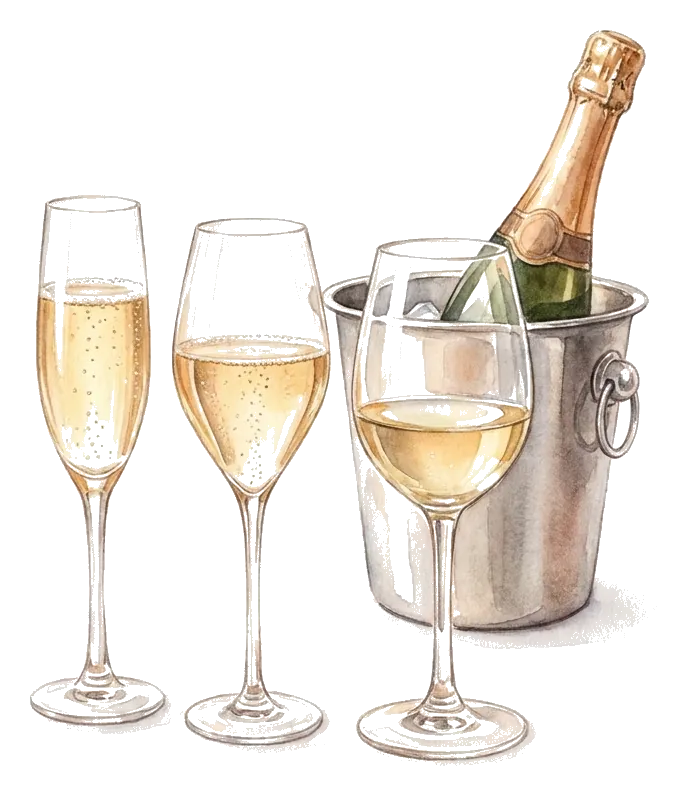
Young non-vintage sparkling wines, Crémant, Cava and Prosecco taste best at 8 to 10 degrees. Vintage Champagne and long-aged Sekt can take 10 to 12 degrees, so that the notes of lees ageing come through. Pét-Nat can be served cooler, at 6 to 8 degrees. Served too cold, all that remains is acidity and fizz. A white wine glass with a slightly tapered rim shows the aroma better than the narrow flute; the wide coupe lets carbon dioxide and aroma escape quickly.
Once opened, a sparkling wine keeps for one to two days in the fridge with a sparkling wine stopper. Tank-fermented Sekt and Prosecco are best drunk young; bottle-fermented wines, especially vintages, continue to develop for years when stored cool, dark and lying down. Pét-Nat, as a rule, is also best drunk young.
Frequently asked questions
What is the difference between Sekt and Champagne?
Champagne is a protected origin: the wine must come from the Champagne region in north-eastern France, be fermented in the bottle and have spent at least twelve months on its lees. Sekt is the German term for quality sparkling wine with a pressure of at least 3.5 bar; the second fermentation may take place in a tank or in the bottle. If the label says only Sekt, the base wine may come from other EU countries.
Sekt or Champagne: which is better?
That depends on the occasion and on what you expect. By law Champagne brings at least twelve months on the lees, often considerably more with growers, and that gives depth and a fine mousse. A good bottle-fermented Winzersekt follows the same method and, with long lees ageing, can reach a similar depth. For a light aperitif a simple Sekt will do.
Crémant or Champagne?
Crémant is made by the same method as Champagne, traditional bottle fermentation, but outside Champagne, for instance on the Loire, in Alsace or in Burgundy. The legal minimum on the lees is nine months; for Champagne it is twelve. Many growers leave their Crémants on the lees far longer. Crémant thus offers the same style of production with its own regional character.
What is Champagne?
Champagne is sparkling wine from the protected origin AOC Champagne in north-eastern France. It is made by traditional bottle fermentation: second fermentation in the bottle, at least twelve months on the lees, release no earlier than fifteen months after bottling, and for vintage Champagne no earlier than thirty-six. Seven grape varieties are permitted, above all Pinot Noir, Meunier and Chardonnay. The pressure in the bottle is around six bar.
What is the difference between Sekt, Prosecco and Champagne?
Champagne comes from Champagne and is fermented in the bottle by the traditional method. Prosecco comes from the Veneto and Friuli, consists of at least 85 per cent Glera and is almost always fermented in tanks, which keeps it fresh and full of primary fruit. Sekt is the German category for quality sparkling wine, and both methods are allowed. Winzersekt requires grapes from the estate itself, bottle fermentation and nine months on the lees.
What styles of Champagne are there?
Blanc de Blancs is made exclusively from white grapes, usually Chardonnay, Blanc de Noirs from red ones, that is Pinot Noir or Meunier. A vintage Champagne comes from a single year and ages for longer. Rosé is made by blending with red wine or by a short maceration on the skins. Then there are the dosage levels, from Brut Nature with less than three grams of residual sugar per litre to the sweet Doux with more than fifty grams.
At what temperature should Champagne and Sekt be served?
Young non-vintage Champagne and Sekt taste best at eight to ten degrees. Vintage Champagne and long-aged Sekt can take ten to twelve degrees, so that the notes of lees ageing come through. Served too cold, all that remains is acidity and fizz. A white wine glass with a slightly tapered rim works better than the narrow flute or the wide coupe.
How long does Sekt keep?
Once opened, Sekt stays fresh for one to two days in the fridge with a sparkling wine stopper. Unopened, the method decides: tank-fermented Sekt should be drunk young. Bottle-fermented Winzersekt, especially vintage Sekt, continues to develop for years when stored cool, dark and lying down. The same applies to bottle-fermented Champagne and Crémant.
Sources
- Comité Champagne, Cahier des charges AOC Champagne (ageing periods, grape varieties)
- INAO, Cahiers des charges AOC Crémant de Loire, Crémant d’Alsace, Crémant de Bourgogne, Crémant du Jura
- INAO, Cahier des charges AOC Limoux (Blanquette Méthode Ancestrale)
- Regulation (EU) No 1308/2013, Annex VII; German Wine Ordinance (Weinverordnung: Sekt b.A., Winzersekt)
- VDP, VDP.Sekt.Statut
- Consejo Regulador DO Cava, Reglamento (Reserva, Gran Reserva, Paraje Calificado)