
 EN
 DE
 FR
 IT
Between the Atlantic and the Mediterranean, Andalusia is home to the chalk-white Albariza hills of Jerez, the limestone soils of Montilla-Moriles and the schist slopes of the mountains above Málaga, each landscape giving rise to its own distinctive wines. When seeking a wine from Andalusia, one first thinks of Sherry — Fino, Manzanilla and Oloroso — as well as sweet Pedro Ximénez and Moscatel from Málaga. Alongside these, a new generation of dry, unfortified white wines from Palomino and Pedro Ximénez is emerging, expressing both soil and altitude. Our selection comes from the Montes de Málaga, where Pedro Ximénez grown on steep schist yields a cool, precise white wine.
More about Andalusien
Andalusian wine between albariza, flor and solera
The heart of Andalusian viticulture is the sherry triangle between Jerez de la Frontera, El Puerto de Santa María and Sanlúcar de Barrameda. This is the home of albariza, an almost white, chalk-rich soil that soaks up winter rain like a sponge and carries the vines through the dry summer. The main grape is Palomino, a variety with restrained aromas of its own that draws its character from soil and élevage. Under a layer of yeast, the flor, fino and, in Sanlúcar, manzanilla age biologically and remain pale, saline and almond-scented. Without flor, in contact with air, the darker oloroso develops, with notes of walnut and leather. Andalusia's classic fortified wine matures in the solera system, in which younger wines are topped up into older casks over the years.
Montilla-Moriles and Málaga: the home of Pedro Ximénez and Moscatel
Inland in the province of Córdoba lies Montilla-Moriles. Summers there are hotter than on the coast, and Pedro Ximénez reaches so much natural sugar that the finos from Montilla often need no added alcohol. For the famous sweet PX, the grapes are dried in the sun until they yield concentrated wines tasting of fig, raisin and coffee. Around Málaga, Moscatel is the second great variety, for centuries the basis of the city's sweet wines. With the Sierras de Málaga designation, the mountains behind the coast also offer a home for dry white and red wines, and around Ronda the high plateaus of the Serranía yield red wines with freshness and firm structure.
Dry white wine from Andalusia: Palomino and Pedro Ximénez reinterpreted
For some years now, young winemakers have been making Palomino from individual albariza sites such as Macharnudo or Balbaina as a still white wine, unfortified and often only briefly under flor. These wines hark back to the old vinos de pasto, the table wines drunk in Andalusia before sherry became dominant. They are dry, chalky and saline, and show how much site expression lies in a variety regarded as neutral. The same movement has reached Pedro Ximénez, the grape behind Spain's darkest sweet wines: as a dry white from cooler, higher sites it is citrusy, herbal and mineral.
Victoria Ordóñez and the steep slopes of the Montes de Málaga
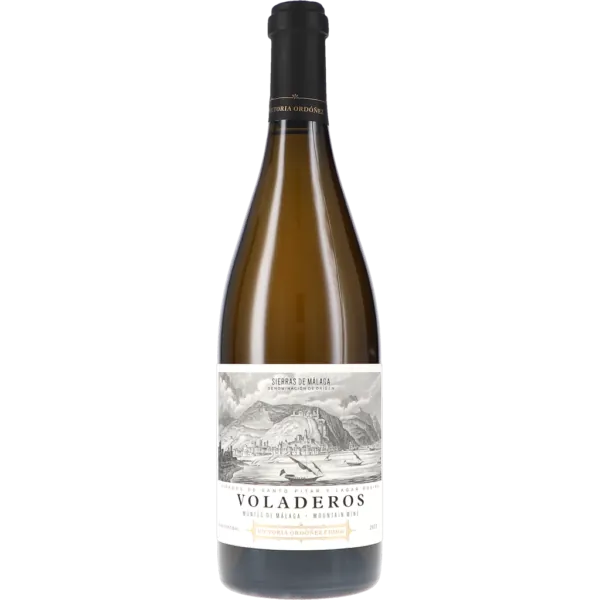
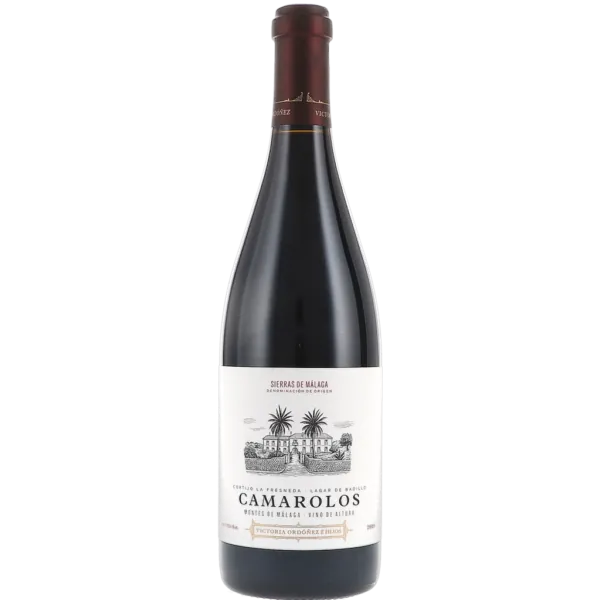
This is exactly where Victoria Ordóñez works. In the Montes de Málaga old vines grow on slate on steep slopes that can only be worked by hand, and the nearby sea brings cool air into the vineyards at night. Her Victoria Ordóñez Voladeros 2023 is a dry Pedro Ximénez from these extreme slopes, pale, fresh and with mineral length. From the same mountains comes the Victoria Ordóñez Camarolos 2018, a red wine from Syrah, Tempranillo and Cabernet Sauvignon that combines Mediterranean ripeness with the freshness of altitude. Both wines are available from us and reveal a side of Andalusia you would not expect in the home of sherry.