
 EN
 DE
 FR
 IT
Between the Black Forest and the Neckar lies a wine region that takes its red wines seriously: in Württemberg, Lemberger – known elsewhere as Blaufränkisch – grows on shell limestone and Keuper marl, while in Baden Pinot Noir ripens along the warm Rhine plain. Riesling, Trollinger and Pinot Blanc also thrive on terraces above the river. In our shop, the region is represented by Weingut Roterfaden in Roßwag, where Olympia Samara and Hannes Hoffmann work biodynamically, ferment spontaneously and bottle unfiltered. Their Lembergers are unusually light-bodied, their Rieslings angular and clear – wines from Baden-Württemberg far removed from cooperative fare.
≈ Aroma: Cherry
In all wines: 2,865 Wines
More about Baden-Württemberg
Wine from Baden-Württemberg: two landscapes, one federal state
At the bend of the Neckar near Roßwag the vineyards drop steeply to the river, and standing up here you can see why Württemberg is red wine country: the slopes catch the sun, the river stores warmth, and the grapes ripen on terraces that can only be worked by hand. Württemberg and Baden together form one federal state but are still thought of as separate wine regions. Württemberg follows the Neckar and the Enz with their loops and side valleys, while Baden stretches as a narrow strip from Lake Constance across the Kaiserstuhl, with its volcanic soils, up to Heidelberg. Most wines carry the designation of origin Württemberg or Baden; above them, for simpler wines, sit the Landwein vom Neckar and the Landwein Oberrhein. The Roterfaden estate makes its wines in Roßwag on the Enz, a small village whose steep vineyards are among the oldest sites in Württemberg.
Muschelkalk, Keuper and a grape with two names
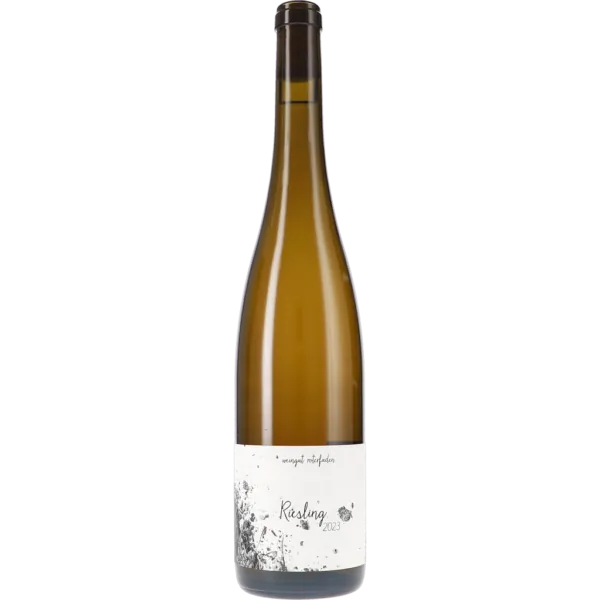
The soils along the Neckar and the Enz are Muschelkalk and variegated Keuper marls, warm, lime-rich subsoils that give Württemberg's red wines their spicy depth. The climate is mild but noticeably cooler than on the Kaiserstuhl, and the cool nights preserve the grapes' acidity. The signature variety is Lemberger, the same vine known in Austria as Blaufränkisch; it brings dark berry fruit, a fine peppery spice and a tangible tannic frame. Trollinger also grows here, Württemberg's light, easy-drinking everyday red, and among the white varieties Riesling leads, often turning out leaner and stonier here than on the Mosel. Anyone looking for a Riesling from Baden-Württemberg will find exactly this cool, mineral style, with citrus fruit and a taut line of acidity, in Roterfaden's Riesling trocken 2023.
Roterfaden in Roßwag: biodynamic, spontaneous, unfiltered
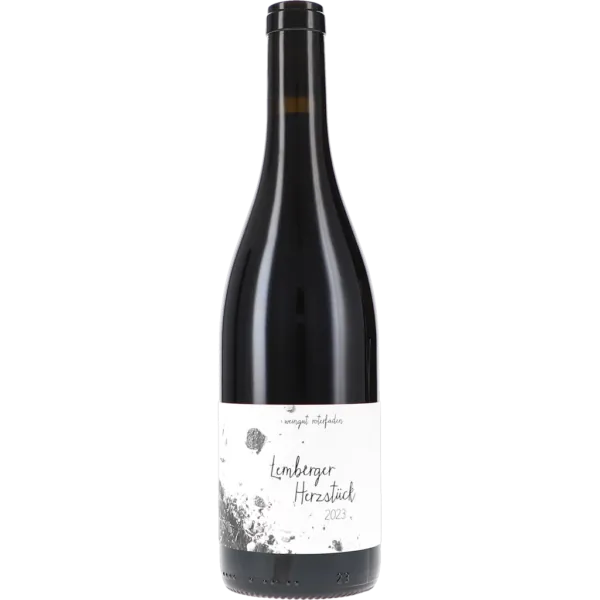
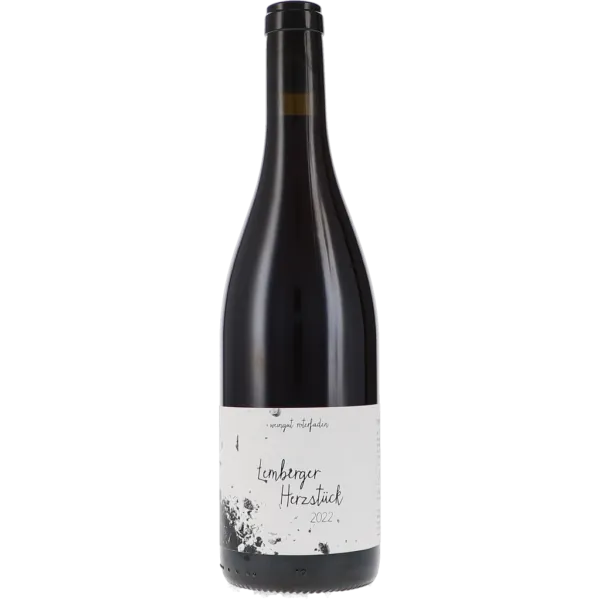
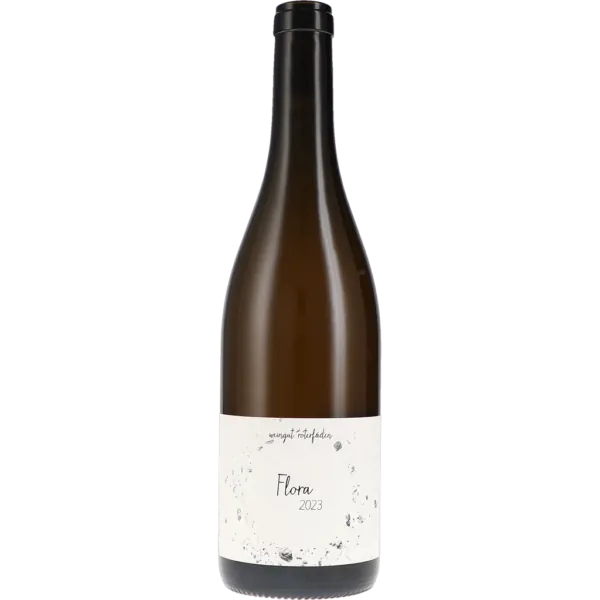
A Greek woman and a Swabian farm the steep parcels around Roßwag, some three and a half hectares in all. At Roterfaden Olympia Samara and Hannes Hoffmann work biodynamically, ferment all their wines spontaneously and do without filtration. The result is wines with a calm clarity all their own. The Lemberger Herzstück 2023 shows the variety at its most feather-light: sour cherry, graphite and wild herbs at just eleven and a half per cent alcohol, dense on the nose yet cool and transparent as it flows. The Flora 2023 is a skin-fermented white blend, an orange wine with fine tannin, apple, almond and cherry blossom and a bracing freshness that makes it far more drinkable than its colour suggests.
Natural wine from Baden-Württemberg: small structures, a clear signature
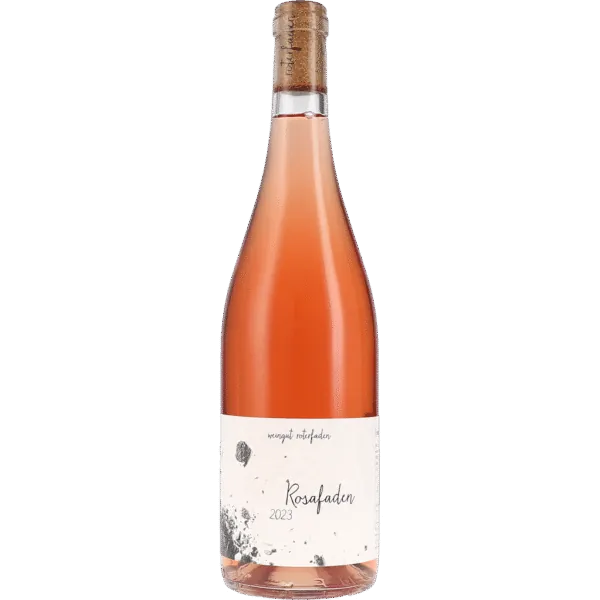
German natural wine often emerges where young growers take on small, steep vineyards that are not worthwhile for big machines, and that is exactly the case in Württemberg. Manual work on steep slopes, the absence of cultured yeasts and restrained use of sulphur produce wines that show their origin more directly than any cellar technique. Roterfaden bottles its Lembergers, rosés and orange whites just as they come out of the cellar; the Rosafaden 2023, for instance, is deliberately left naturally cloudy and smells of wild raspberries. Because such wines turn out noticeably different from vintage to vintage, it is worth consulting the vintage chart before deciding on a vintage. All available wines from Roßwag are listed above.