
 EN
 DE
 FR
 IT
The fat calls for acidity, the jus calls for fruit
From St Martin’s goose to pink-roasted goose breast – for every preparation, the wine that carries it
Goose is the fattiest bird on the festive table, and that is exactly what decides the wine: crisp skin, dark jus, sweet red cabbage and cranberries need fruit and acidity in the glass, not tannic muscle. Whether red or white is answered here by the cooking, not by the goose. For every approach, from the whole Christmas goose to the braised leg, this page shows the bottles that genuinely work.
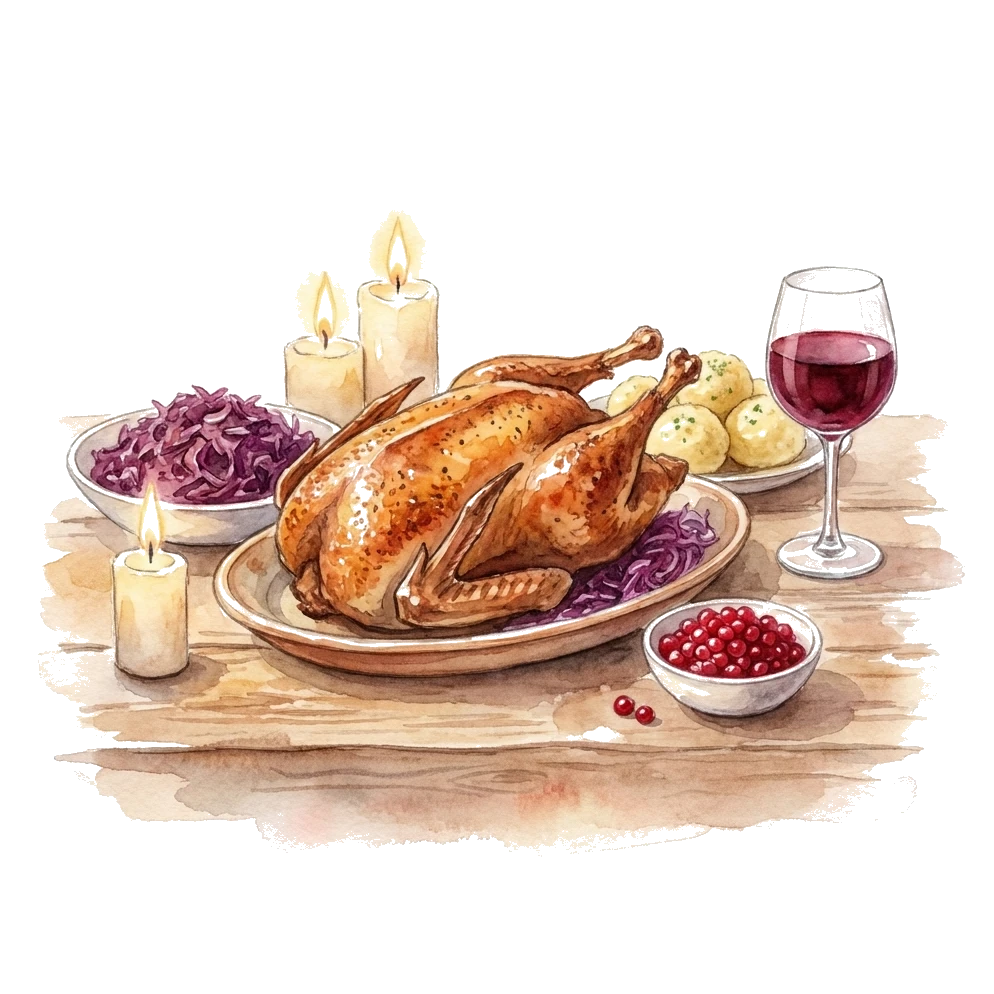
In short — which wine with goose? The classic Christmas goose with red cabbage and dumplings wants a red with fruit, acidity and fine tannin, above all Pinot Noir and mature Spätburgunder. Braised goose leg with a dark jus can take bolder, spicier reds such as Cabernet Franc or Carignan. Pink-roasted goose breast calls for cool, delicate reds, while smoked or confit breast will also carry a full-bodied white. And as the white answer to goose fat, Riesling, Chardonnay and Gewürztraminer work superbly; with apple-braised red cabbage, a touch of residual sugar is even welcome.
Red or white with goose: that is the question that stands in front of the wine shelf every year at Martinmas and Christmas. The honest answer is that both work, but not at random. The goose does not decide the wine; the way it is cooked does. This page guides you through the four main routes: the whole goose from the oven, the braised leg, the pink breast and the white alternative.
If you are planning a smaller bird, our page Wine with duck offers the same pairing profile in a more delicate form. And because Pinot Noir is so often the right answer on this page, it is worth looking there at the grape and its origins in our range.
Why fat and side dishes choose the wine with goose – three rules
Three mechanisms answer almost every goose-and-wine question. All three follow from one quality: goose is rich in fat, skin and roasted flavours.
First: fat needs acidity. Goose fat is the very flavour of the bird, but it coats the palate. A wine without acidic tension seems tired beside it, while one with fresh acidity cuts through the fat and clears the mouth for the next bite. This applies equally to reds and whites, and it is why cool, acid-driven origins work so reliably with goose. Second: the side dishes are sweet. Red cabbage with apple, cranberries, orange jus, chestnuts and the caramelised skin add up to a great deal of sweetness and roasting on one plate. The wine needs fruit of its own to hold its ground; a severe, tannic, drying red comes across as thin and bitter here. Third: tannin in moderation. Goose meat is darker and richer than chicken, but it is still poultry. A massive, oaky powerhouse overwhelms it, whereas fine, ripe tannin melts into the braising jus. That is why Pinot Noir, Blaufränkisch and cool-climate Cabernet Franc lead so surely to the goal, while jammy southern reds with plenty of oak tend to flatten the goose. If you like to think bigger with dark meat, our page Wine with game covers the more powerful variant.
Classic Christmas goose: goose, red cabbage & dumplings
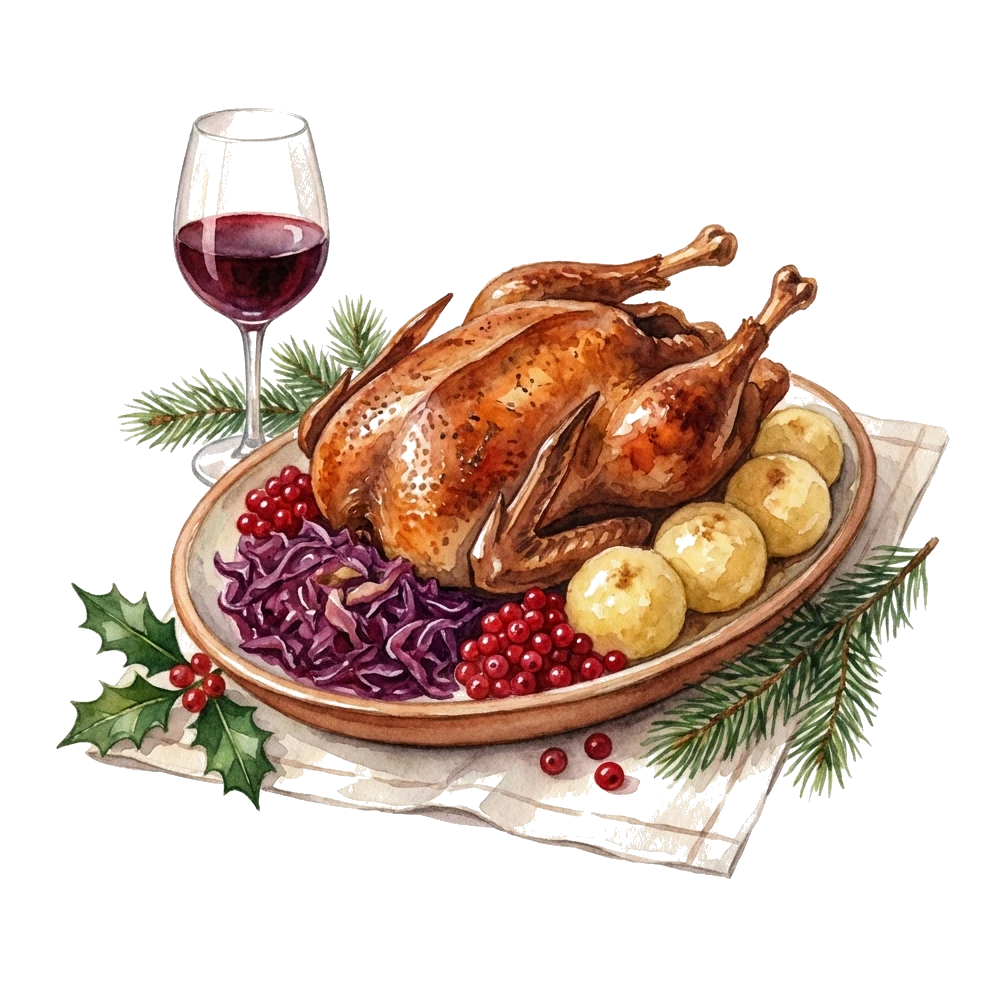
The whole goose from the oven is the most demanding table of the year. Crisp, deeply roasted skin meets tender dark meat, alongside sweetish red cabbage, succulent dumplings and cranberries. What looks at first glance like a call for a big wine actually needs a precise one: fruit that keeps pace with the red cabbage and cranberry, acidity that cuts the fat, and tannin that stays silky rather than digging in.
This is home ground for Pinot Noir. Ripe cherry fruit, subtle spice and a body that carries without pressing, whether from the Wagram, from Gumpoldskirchen or from Burgundy. Mature bottles with a few years in the cellar score extra points, because their tannin has long since merged with the fruit and the jus no longer notices it.

Pinot Noir "P" 2019
Pinot Noir from the Wagram, mature and charming on the nose, with dark cherries, preserved damsons, cedarwood and a hint of cinnamon and clove. A firm minerality keeps it taut. With Christmas goose, red cabbage and dumplings its plummy fruit meets the sweet cabbage, while the acidity cleanly cuts the goose fat. It is explicitly recommended with rolled roast goose and red cabbage.

Pinot Noir Heimbourg 2020
The only red wine from Zind-Humbrecht, the Alsace biodynamic pioneer: Pinot Noir from a tiny west-facing plot on red, iron-rich limestone. Slowly matured, finely aromatic, with cool fruit and precise structure. With goose, cranberries and walnut dumplings it brings exactly the mix of finesse and spice the feast demands, without stealing the bird’s thunder.

Aloxe-Corton rouge AOC 2023
Aloxe-Corton from the Burgundian heartland of Pinot Noir, garnet with mahogany glints and the depth that this site on the hill of Corton brings. With a whole goose from the oven it is the quintessential Burgundian route: cherry fruit for the red cabbage, mature tannin for the dark jus. Be sure to decant it and drink it from large glasses, and it will show what it can do.
Braised: goose leg, rolled roast & dark jus
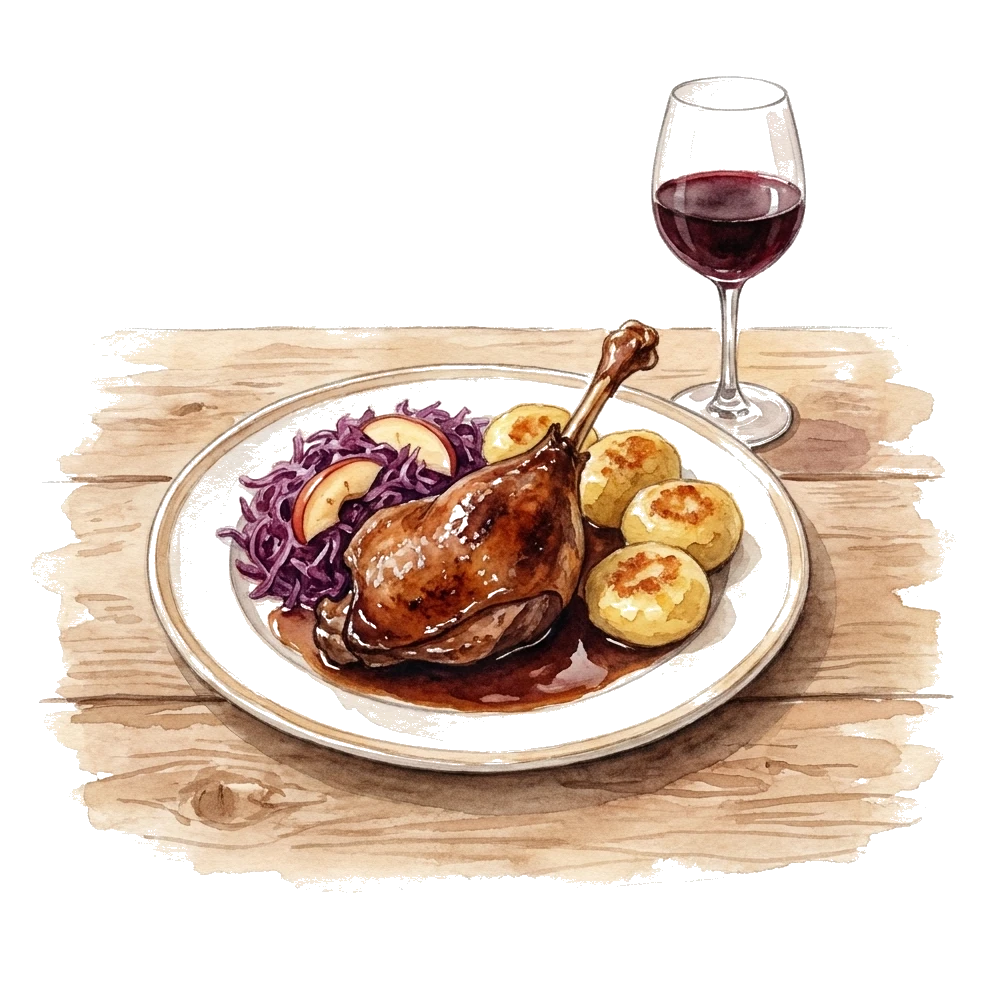
The goose leg is the most honest cut of the bird. Hours in the braising pot turn the sinewy leg into butter-soft meat in a dark, reduced jus, with roasted flavours that the whole goose only has in its skin. That depth calls for a red with spice of its own and more drive than an elegant Pinot, yet still with acidity, because the fat does not disappear in the braise; it simply moves into the sauce.
Cabernet Franc with its violet and herbal side, Carignan from old vines with dark berry fruit and a cool streak: these are the grapes that absorb braising jus and goose fat alike. What matters is that the spice comes from the grape and not from the oak, otherwise it doubles up with the robust jus.

Violette AOC 2020
Violette from Clau de Nell in the Loire, a blend of Cabernet Franc and Cabernet Sauvignon from biodynamically farmed vines. Pansies and violets on the nose, followed by mulberries, blackberries and plums. With braised goose leg and red cabbage and apple salad it offers exactly the dark fruit and floral spice the robust jus is looking for, without upstaging it.

Txabola Mazuela 2020
Pure Mazuelo, as Rioja calls Carignan, from Elvillar in Rioja Alavesa, grown on a slope at 525 metres on calcareous clay. The altitude gives it freshness and drive, and the dark fruit stays juicy rather than heavy. With braised goose legs and roasted potato noodles it brings the spice for the braising jus and the acidity for the fat: a wine that takes the leg seriously without crushing it.

Duemani Toscana IGT 2015
Cabernet Franc from Duemani on the Tuscan coast, deep ruby, leathery, powerful and with the sun-bronzed character of a wine that makes no secret of what it is. With a goose casserole with kale and parsnips it easily stands up to the weight and spice of the pot. It is recommended for exactly this dish, and one sip tells you why.
Goose breast: roasted pink, smoked & confit
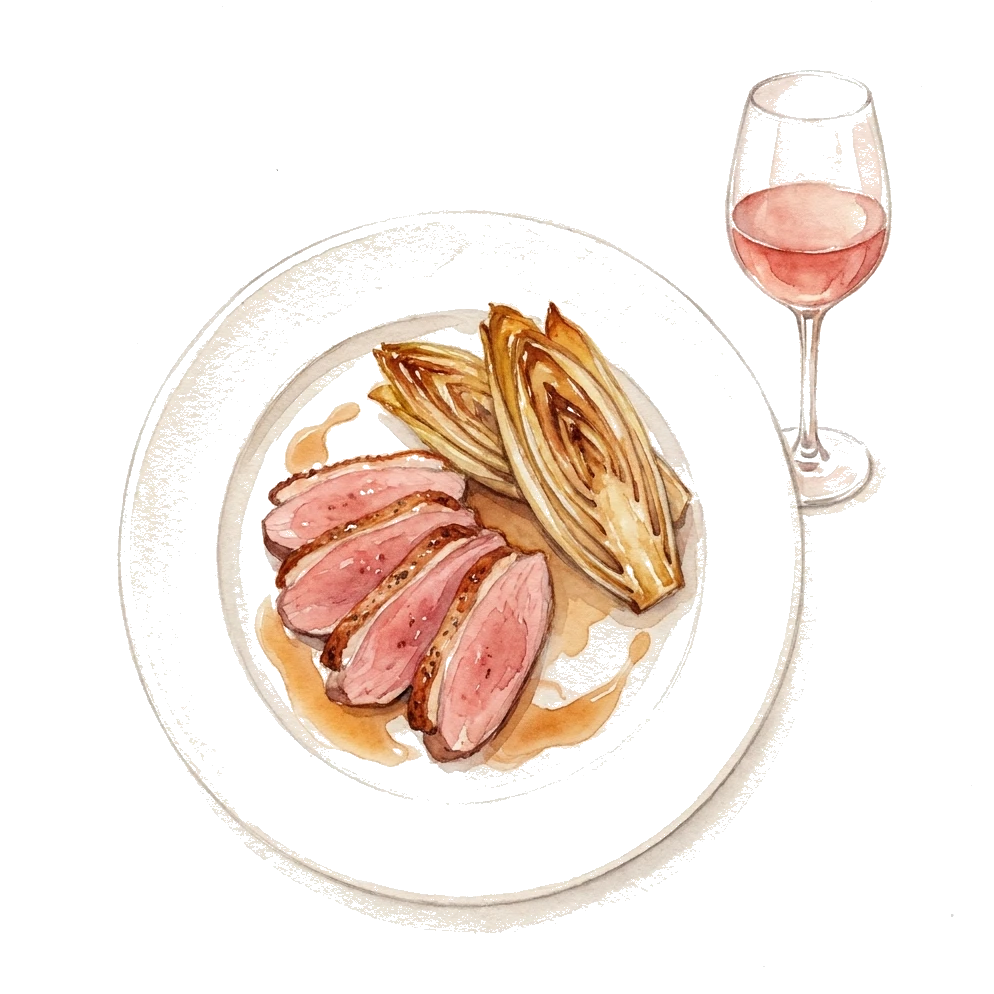
Goose breast is the gourmet’s route through the bird. Roasted pink, it stays juicy and delicate, with crisp, rendered skin and a light jus rather than a braising liquor. Such tenderness cannot cope with a tannic heavyweight. Cool, translucent reds with lively acidity are at home here, wines that float rather than press and whose fruit harmonises with the pink centre.
Confit or smoked breast shifts the axis towards spice and maturity. Carignan from Priorat with its cool precision, or a mature Burgenland blend with a Blaufränkisch backbone, captures the smoke and the richness of the confit meat without masking its fine texture. Served lightly chilled, these wines show their best side alongside the breast.

French Disko rouge VdF 2023
French Disko from Matassa in Roussillon, pure Cinsault, ruby with a pale rim and the easy-going nature of a natural wine that tastes best lightly chilled. With smoked goose breast and oak-leaf lettuce its bright, juicy fruit is a wonderful match, absorbing the smoke rather than competing with it. This very pairing is the one recommended for the wine.

Arbossar 2021
Arbossar from Terroir al Limit, old-vine Carignan from Priorat, wrested from a vintage in which rain made the harvest a challenge. The result is cool precision rather than Mediterranean power. With confit goose breast, red cabbage and dumplings it brings the structure for meat cooked in its own fat and the freshness that keeps a rich plate open.

Gabarinza 2016 1500ml Magnum
Gabarinza from Heinrich on Lake Neusiedl, a mature blend of Blaufränkisch, Zweigelt and Merlot in magnum, deep ruby with a violet rim. The years in the cellar have long since reconciled tannin and fruit. With goose breast, caramelised chicory and a tarragon-mustard sauce its mature spice carries the bitterness of the chicory and the fat of the breast with equal composure.
White wine with goose: Riesling, Chardonnay & Gewürztraminer
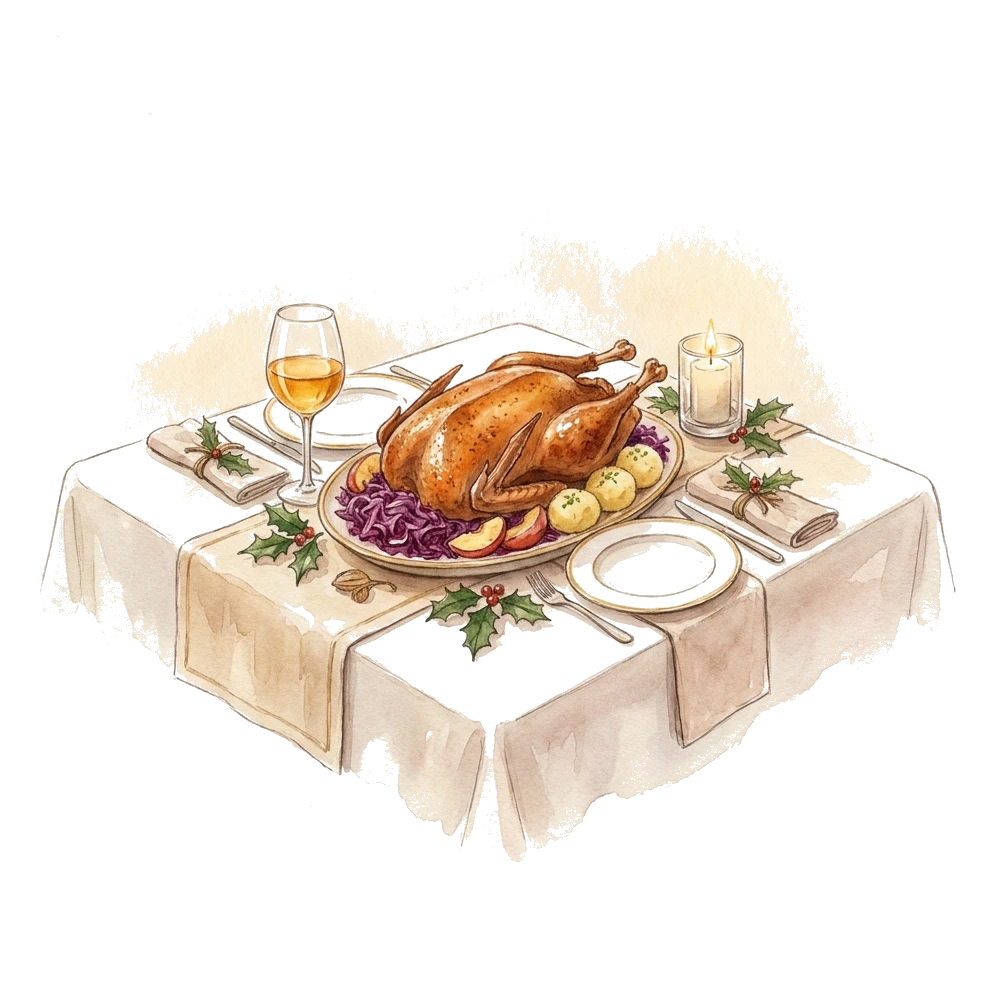
The question of red or white with goose has an answer that surprises many: white wine is no stopgap here but often the smarter choice. What goose fat needs most urgently is acidity, and no family of wines brings as much acidic tension as the great whites. Riesling with its citrus freshness cuts through fat and red cabbage, while a mature Chardonnay with texture and substance is every bit the equal of the rich roast.
Gewürztraminer plays a card of its own: its rose and lychee aromas and phenolic ripeness suit the sweet side of the feast, with cranberries, orange and apple-braised red cabbage. And where the side dishes turn properly sweet, the wine may too; a delicate Auslese with red cabbage and apple is old festive wisdom that has been unjustly forgotten.

Riesling Marienburg "Fahrlay" Auslese VDP Grosse Lage 2023 375ml
Riesling Auslese from the Marienburg on the Mosel, by Clemens Busch from the Fahrlay Grosse Lage, in half bottle. Ripe fruit, delicate sweetness and the acidity for which the Marienburg’s blue slate is famous. With goose, apple and red cabbage and dumplings the residual sugar mirrors the sweet sides while the acidity cuts the fat. This is how the old rule of sweet with sweet tastes at the festive table.

Gewürztraminer Roche Calcaire 2022
Gewürztraminer Roche Calcaire from Zind-Humbrecht, from the limestone of Alsace, where the variety is the last to be picked because it needs its ripeness. Rose petals, lychee and a phenolic structure that makes it seem almost red. With Christmas goose, cranberries and orange jus its spicy richness embraces the sweet and fruity accompaniments, and the phenolics give it grip against the goose fat.

Ried Pfarrweingarten Morillon DAC 2019
Morillon from the Ried Pfarrweingarten by Sattlerhof in South Styria, Morillon being the traditional Styrian name for Chardonnay. Medium straw yellow, with the substance and texture of a single vineyard and the cool elegance of the Styrian climate. With goose, napkin dumplings and dark jus it brings the weight of a roast-dinner wine in white form, and it is explicitly recommended with napkin dumplings and a ragout of goose giblets.
The goose compass
For the questions about the bird that do not need a section of their own, here are the short answers; each follows the three rules on this page.
Wine with St Martin’s goose
St Martin’s goose on 11 November is the first goose of the year and usually the most tender, because the young birds have put on less fat than those for Christmas. That barely changes the choice of wine, but it does change the dose: a medium-bodied Pinot Noir or a fresh Blaufränkisch is quite enough, and the great, mature bottle can happily stay in the cellar until Christmas.
Goose and duck: the same wine?
Almost. Duck is the smaller, finer sister of goose, with less fat and less braising jus, but the same pairing profile of dark poultry, sweet sides and crisp skin. If you are looking for one bottle for both birds, cool Pinot Noir or spicy Cabernet Franc is a safe bet. The full duck logic with its own recommendations is on our page Wine with duck.
Wine with goose giblets and goose soup
Goose giblet stew, made from wings, neck and offal with soup vegetables, is the spiciest and darkest dish in the goose kitchen, often with tomato, paprika or red wine in the broth. It pairs well with a full-bodied white with texture, such as a mature Chardonnay, or a soft, mature red without hard tannin. Goose soup, the lighter opener, also takes a spicy, dry Riesling.
Wine with foie gras
Foie gras is a topic in its own right and no case for red wine. The creamy, sweet fat of the liver demands sweetness and acidity in the glass, which is why nobly sweet wines are the classic answer, from Riesling Auslese to Tokaji. A ripe Gewürztraminer or a Champagne with some age also works; if you want to explore further, browse our selection of Champagne.
Goose in Austria: Gansl with Zweigelt and Blaufränkisch
In Austria, St Martin’s goose is simply called Gansl, and it is traditionally served with napkin dumplings and apple-braised red cabbage. The local answer is as obvious as it is good: Zweigelt with its juicy cherry fruit and Blaufränkisch with spice and acidic drive are the native sons that grew up with the Gansl. Austrian Pinot Noirs offer the finer alternative.
Sparkling wine and Champagne for a goose feast
A festive menu from the foie gras starter to the leg can be served entirely with sparkling wine, and that is the most elegant solution. A mature Blanc de Noirs or a Champagne with dosage will even carry the roast breast, because the bubbles clear away the fat and the maturity catches the jus. Our selection awaits under Sparkling wine.
Goose with chestnuts, orange or apples
The sweet companions of the goose deserve attention of their own. Chestnuts bring a nutty earthiness that flatters mature Pinot Noir. Orange in the jus loves Gewürztraminer or Pinot Gris. Apples in the red cabbage are a case for delicate residual sugar in a white. The rule stays the same: the sweeter the plate, the more fruit and acidity the glass must have.
Frequently asked questions: wine with goose
Which wine goes with goose?
The preparation decides, because goose brings fat, crisp skin and sweet side dishes. A whole Christmas goose with red cabbage and dumplings suits a red with fruit and fine tannin, above all Pinot Noir. Braised goose leg can take spicier reds such as Cabernet Franc or Carignan. Pink goose breast wants cool, delicate reds, and as a white alternative Riesling, Chardonnay and Gewürztraminer work because their acidity cuts the fat.
Red or white wine with goose?
Both are right, and the choice is not a matter of taste but of priority. Red wine with berry fruit and fine tannin accompanies roasted flavours, dark jus and red cabbage. White wine with acidity and substance is the better answer to the fat and to sweet sides such as apple-braised red cabbage and orange. As a rule of thumb: the darker the jus, the more likely red; the sweeter and fattier the plate, the more likely white.
Which red wine with roast goose?
With classic roast goose from the oven, Pinot Noir is the most reliable choice, because it brings cherry fruit for the red cabbage and cranberries, its tannin stays ripe and fine, and its acidity cuts the goose fat. Mature bottles with a few years in the cellar are ideal, as tannin and fruit have already come together. Blaufränkisch is the spicier alternative, whereas a heavy, oak-driven red smothers the bird.
Which white wine with goose?
White wine with goose needs two things: acidity against the fat and enough substance for the roast. A dry Riesling from a good site does both with citrus freshness. A mature Chardonnay brings the texture of a roast-dinner wine in white form. Gewürztraminer suits the sweet side of the feast, with cranberries, orange and apple-braised red cabbage. If the sides turn properly sweet, the wine may have delicate residual sugar, an Auslese for example.
Which wine with goose, red cabbage and dumplings?
Red cabbage with apple is the quiet sweetener of this combination, and it demands a wine with fruit of its own, otherwise the wine tastes thin and harsh. A Pinot Noir with ripe cherry fruit is the red solution, and its acidity also cuts the fat and the succulent dumplings. If you prefer white, reach for a Riesling with a little residual sugar, which mirrors the sweetness of the cabbage and counters it with acidity.
Which wine with St Martin’s goose?
St Martin’s goose on 11 November comes from younger, leaner birds and is more tender than the Christmas goose. That does not change the direction of the wine choice, but it does change the dose: a medium-bodied, fresh red such as young Pinot Noir, Zweigelt or Blaufränkisch is quite enough. The great, mature bottle can stay in the cellar until Christmas; with St Martin’s goose it would simply be too much wine for too little bird.
Which wine with goose leg?
Braised goose leg with a dark, reduced jus is the most robust part of goose cookery and accordingly takes spicier red wines. Cabernet Franc with its violet and herbal side, or old-vine Carignan with dark berry fruit, absorbs braising jus and roasted flavours. What matters is that the spice comes from the grape and not from the oak, because the robust jus already brings plenty of its own.
Which wine with goose breast?
Pink-roasted goose breast is tender and juicy and cannot cope with a tannic heavyweight. Cool, translucent reds with lively acidity, such as Cinsault or a delicate Pinot Noir, work best, served lightly chilled at fourteen to sixteen degrees. Smoked or confit breast shifts the choice towards mature, spicy reds such as Blaufränkisch blends or cool Carignan, which capture the smoke and the richness of the confit meat.
What temperature should red wine be with goose?
Goose likes cool wines more than most people think. For the delicate reds with breast and roast, fourteen to sixteen degrees is ideal, while the more powerful braising wines for the leg can be served at sixteen to eighteen degrees. Red wine served too warm emphasises the alcohol and makes the goose fat taste oily, while the necessary freshness is lost. If in doubt, serve it half an hour too cool rather than too warm.
Discover all goose wines
These 12 are just the beginning: our search understands goose, from St Martin’s goose to foie gras, and shows the matching wines in stock for every dish.
All wines for goose