
 EN
 DE
 FR
 IT
Tasting note
- Colour & Appearance
- Luminous straw yellow with bright, vibrant reflections – clear and energetic in the glass.
- Nose
- Wild, untamed and electrifying. Lychee, white currant and raspberry meet green papaya and unripe mango. Accompanied by an impressive herbal bouquet: lemon thyme, lemongrass, lemon balm, sage and dried bay leaves. A distinctive nettle note and hints of yellow beetroot and young peas lend vegetable freshness. Subtle nuances of almonds and sourdough crust add complexity. A touch of reduction provides tension – a fascinating aromatic profile between herbal meadow, exotic fruit and mineral austerity.
- Palate
- Taut, precise and uncompromising. An unusually high racy acidity for South Tyrolean standards structures the wine with a clarity reminiscent of great Rieslings. Distinctive tannins and bitter compounds provide grip and phenolic density. The texture is herbaceous and lively, characterised by turmeric depth. Yellow carrot, fresh pea, candied quince and a hint of corn in the mid-palate. Behind this unfolds eucalyptus, dried herbs and a mineral-saline character that creates balance. Energetic, wild, demanding – a natural wine with character and precision.
- Finish
- Long, herbaceous and invigorating with persistent herbal spice and mineral resonance. The acidity and phenolic structure carry far.
- Grape Variety & Vinification
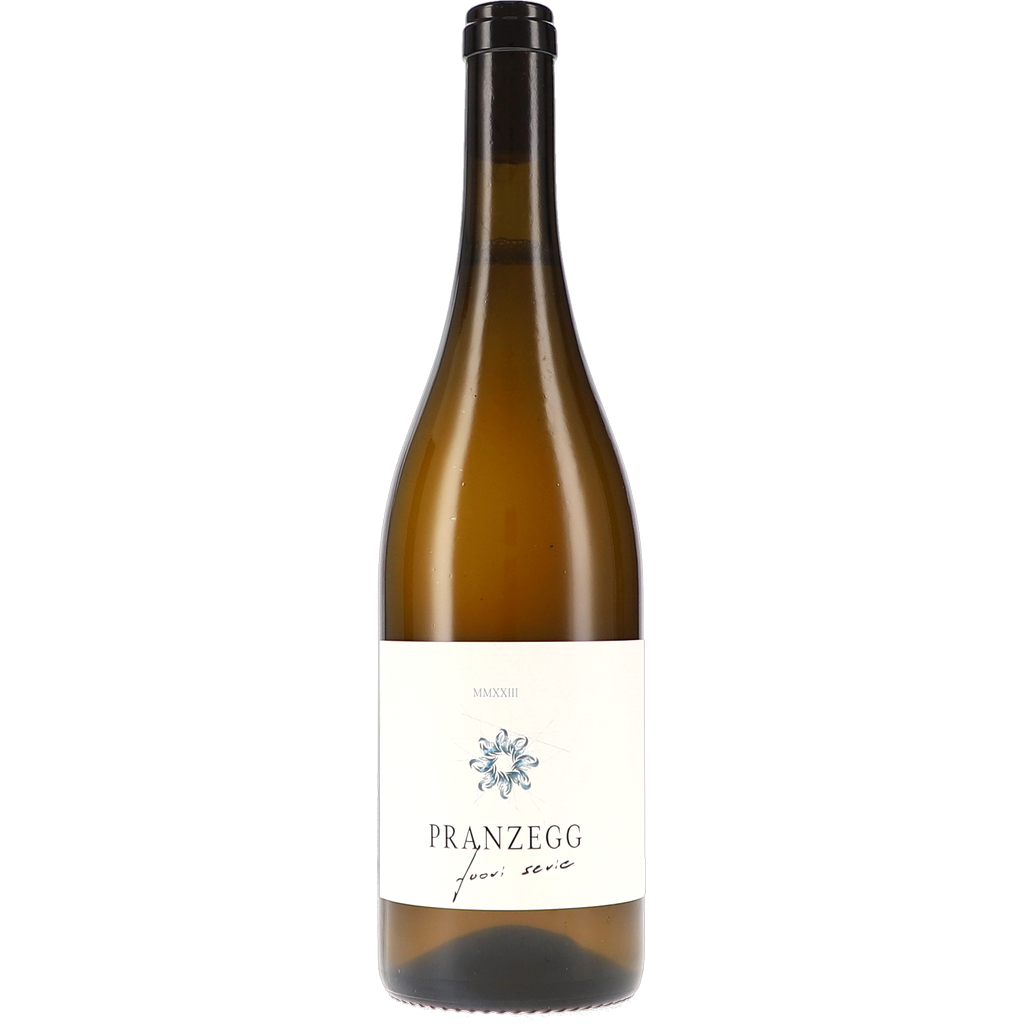
- Made from the rare crossing Manzoni Bianco (Riesling × Pinot Blanc). The name “Fuori Serie” – outside the series – hints at an experimental, natural winemaking approach that emphasises the wild, untamed side of this grape variety and brings its phenolic structure fully to the fore.
- Food Pairing Suggestions
- With grilled fennel with lemon, green asparagus with herb butter, goat’s cheese with herbs, ceviche, oysters or pan-fried turbot with capers. Also interesting with vitello tonnato or artichokes alla romana.
- Special Features
- A bold, untamed natural wine from South Tyrol that defies conventional expectations. With this Manzoni Bianco, Pranzegg demonstrates that the grape variety is capable of far more than pleasing fruit – here it becomes an energetic, phenolically complex statement with Riesling-like acidity structure.


