EN
 DE
 FR
 IT

Tasting note
There are Champagnes you drink, and Champagnes you read like a landscape photograph. This one belongs to the second category. The Côte des Bar lies closer to Chablis than to Reims – and that is precisely what you taste: Kimmeridgian limestone containing fossils of the oyster Exogyra virgula, a 150-million-year-old memory that announces itself in the glass as a salty, iodine-laced sharpness. Delphine Brulez, who runs the house founded in 1910 as its fourth generation, gives her wines at least five years on the lees – two more than the law requires – and consistently forgoes any dosage. What remains is Champagne without make-up, of crystalline precision.
- Colour & appearance
- Golden yellow with a fine, slightly coppery tinge; the mousse rises lively and dense.
- Nose
- An exciting dual movement of freshness and a hint of oxidation: lemon juice and zest, fresh pome fruit, alongside mellow apples reminiscent of an autumn cellar. Beneath this, graphite, crushed stone, oyster shells and a fine iodine trace – the limestone speaks unmistakably, reined in by a light, appealing reduction.
- Palate
- Round, fresh and intense all at once. Red cellar apples, ripe stone fruit and herbs meet chalky minerality, a gossamer-fine tannin and pronounced salinity. The mousse is lively yet fine; the acidity provides support without becoming sharp. A young wine with backbone and a clear signature.
- Finish
- Long and precise, with lingering citrus freshness, stone and a saline aftertaste – a finale that tastes more of low tide than of sweetness.
- Terroir & origin
- Noé-les-Mallets, Côte des Bar: vines at up to 320 metres altitude, south-east facing, on Kimmeridgian limestone and marl with a clay topsoil – geological siblings of Chablis. This southern Champagne site yields mineral precision and unexpected depth.
- Grape variety & vinification
- 50 % each Pinot Noir and Chardonnay. The base wine ferments in used Burgundy casks with wild yeasts; the musts are separated over four fine pressings. The assemblage was brought together in stainless steel, the wine matured on the lees well beyond the legal minimum and was disgorged as Brut Nature – entirely without dosage.
- Food recommendations
- The iodine-laced, chalky side calls for the sea: oysters, sole fillet carpaccio, grilled scallops. With Comté or a young goat’s cheese too, the nutty ripeness shows itself at its very best.
- Special features
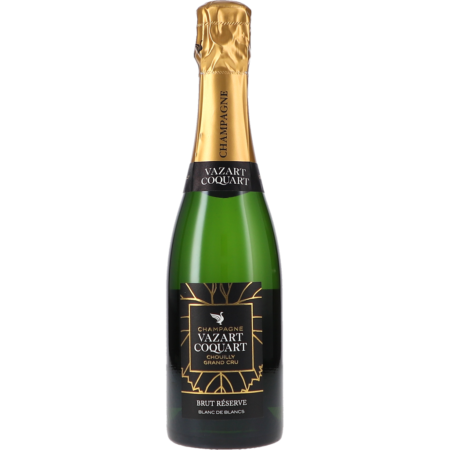
- Exclusively vintage Champagne, exclusively Brut Nature – and organically certified since 2017 (practised since 2011). Delphine Brulez prunes according to the gentle Simonit-Sirch method; under her stewardship, the mycorrhizal share in the soil rose from 18 to 70 per cent. The 375 ml half-bottle makes this perhaps the most honest way to explore Kimmeridgian limestone solo.