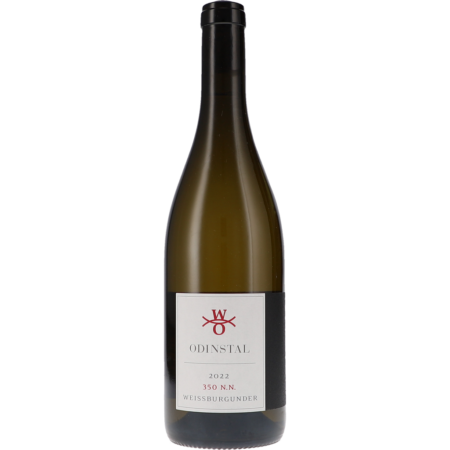
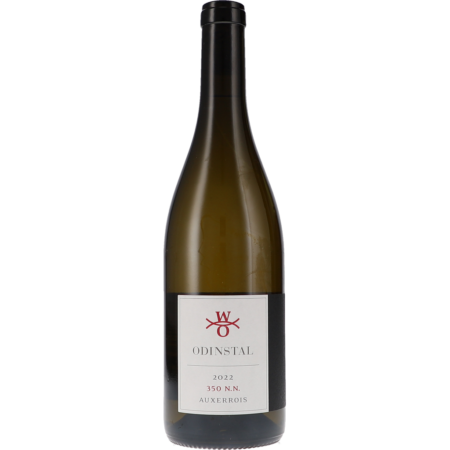
A dry Grosses Gewächs Riesling in magnum format, bringing the cool, high-altitude vineyards of Wachenheim into the glass with precise acidity and smoky minerality.
Citrus fruit, green apple and white blossoms, underpinned by smoky-mineral notes and a hint of herbal coolness.
Palate
Bone-dry, taut and precise; vibrant acidity, fine salinity and a long, cool finish with remarkable depth.
Character
A cool, linear Grosses Gewächs with tension and structure – a wine that unmistakably expresses its origin at 350 metres above sea level.
Pairing
Grilled pike-perch, roasted asparagus with vinaigrette, or Asian cuisine featuring lemongrass.
Notes
From the Demeter-certified, biodynamically farmed monopole vineyard Wachenheimer Odinstal; an extended ripening period at 350 metres altitude lends freshness and complexity, whilst the magnum format ensures a particularly slow and refined development.
Tasting note
Character
A Riesling of remarkably clear signature: bone-dry, taut, underpinned by smoky minerality and precise acidity. The cool, high-altitude site bestows freshness and tension; the magnum bottle promises a particularly slow, controlled evolution in the cellar. A wine that does not conceal its origin but celebrates it — more demanding than immediately approachable, yet therein lies its very allure.
Terroir & Origin
The monopole vineyard site Wachenheimer Odinstal sits at 350 metres above sea level, surrounded by ten hectares of mixed forest, high above the Rhine Valley. A geological singularity within the Palatinate: due to the fault lines of the Rhine Graben, basalt, shell limestone, Keuper and coloured sandstone converge here within a remarkably small area. The vines ripen around 20 days later than those in the valley — this extended growing season imparts depth and complexity alongside cool precision.
Grape Variety & Vinification
Riesling is the principal grape variety of this VDP estate. Estate manager Andreas Schumann has worked according to Demeter-certified biodynamic principles, certified since 2013. In the cellar, the principle of non-intervention prevails: spontaneous fermentation without temperature control, extended ageing on the lees, minimal sulphur addition. The wines become as dry as they wish — most often decidedly bone-dry. At just 12.0% abv, it becomes evident that power here derives not from alcohol but from substance. Schumann’s credo — identical cellar techniques across different soils — renders the geology virtually tangible: volcanic depth from basalt, saline length from limestone.
Food Pairings
Its taut acidity and smoky minerality make it an ideal everyday wine for refined cuisine: steamed char with herbs, sashimi or raw scallops find a worthy counterpart in this wine. It also shows great class alongside Asian dishes with lemongrass, Pfalz Saumagen (stuffed pig’s stomach), or simply with young, piquant hard cheeses. Those with patience will do well to grant the magnum a few years of rest — the high-altitude site has endowed it with the gift of long, graceful maturation.

 EN
 DE
 FR
 IT