
 EN
 DE
 FR
 IT
Only acidity can cut through the cheese fat
From the classic little pan to the tabletop grill – the wine that keeps raclette light
Raclette is a feast of fat and salt: the cheese melts, the potato fills you up, and by the third pan the wine decides whether the evening lifts you or weighs you down. It is not the cheese that chooses the wine, but its sheer weight. This page shows, for every kind of raclette evening, the bottles that bring acidity, freshness and drive – from still whites to sparkling wine on New Year’s Eve.
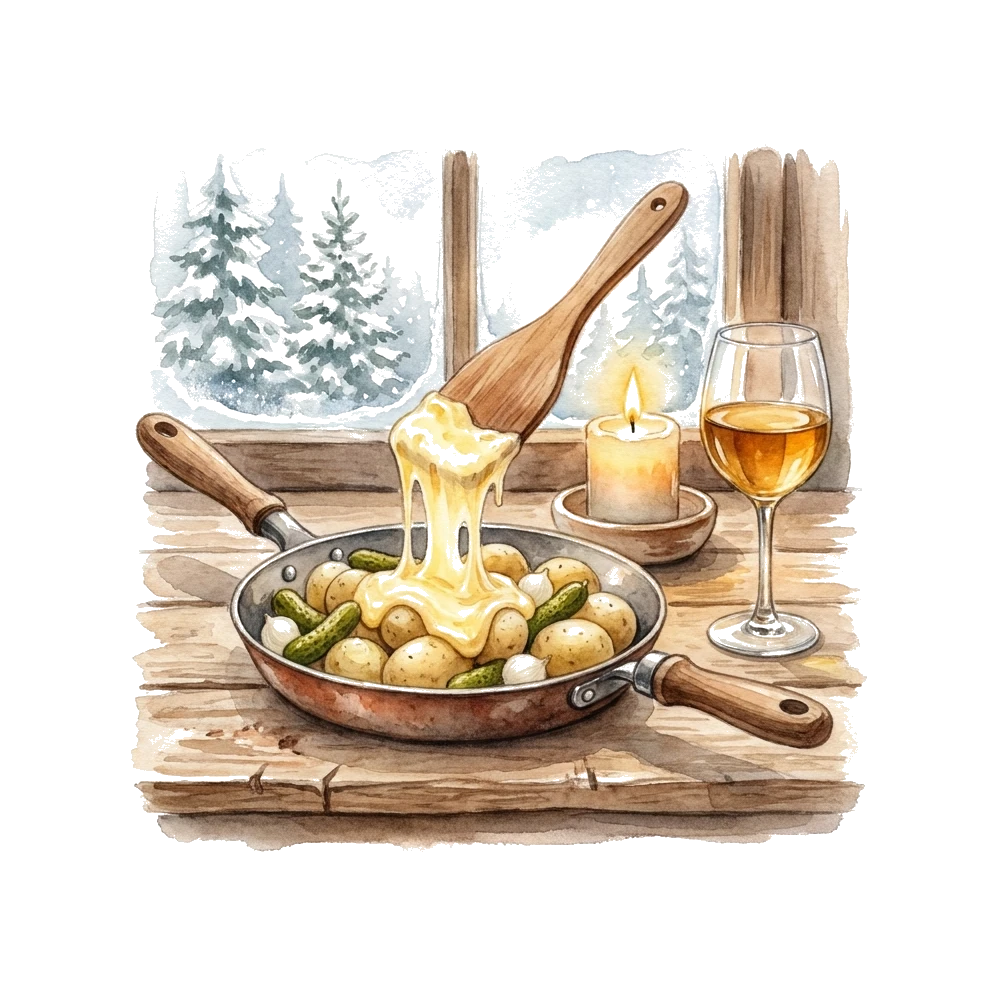
In short — which wine with raclette? The cheese fat calls for acidity: with classic raclette, jacket potatoes, pickled silverskin onions and cornichons, choose dry whites with drive and little oak – Aligoté, Grüner Veltliner and dry Riesling take on the role Chasselas plays in Switzerland. Once beef, bacon and sausages join the pans, light, cool reds with little tannin belong on the table, such as Gamay, Mondeuse or Sankt Laurent. On New Year’s Eve and to start the evening, bring on the bubbles: Crémant, Sekt or Champagne, with their acidity and fizz, cut through the fat. And for the vegetarian round with vegetables, mushrooms and pear, aromatic whites such as Pinot Gris or a skin-fermented Gewürztraminer carry the roasted notes.
Raclette is the most honest meal of winter: cheese, potatoes, heat, repetition. That is exactly where the wine question lies. The melted cheese coats the palate in a film of fat, the silverskin onions and cornichons add sour counterpoints, and freshly ground pepper calls for a wine that stays fresh. Drink a heavy, oaky wine with raclette and you will feel tired afterwards. Drink acidity and you will manage one more pan.
In Switzerland, where the dish is at home, it is served with Fendant made from Chasselas, a slender, neutral white from the Valais. That role can be filled admirably by wines from our range, from Savoie to the Wachau. And if you are also planning a fondue the same evening, you will find its own rule on our page Wine with cheese fondue.
Why acidity decides with raclette – three rules
Three mechanisms answer almost every raclette question. All three follow from a single property: melted cheese is fat that lingers on the palate.
First: fat needs acidity. Raclette cheese melts into a fragrant, salty layer that coats the mouth. A wine without an acid backbone tastes flat beside it and makes the meal feel heavier than it is. The ground rule is therefore: freshness before richness, drive before creaminess. Second: the accompaniments season too. Silverskin onions, cornichons and pepper bring their own acidity and heat, which call for a neutral wine rather than an aromatic loudspeaker. The more pungent the cheese, from mild Valais cheese to smoked mountain cheese, the more character the glass may have. Third: what goes into the pan shifts the colour. If it stays at potatoes and cheese, white is the safe bet; once beef, bacon and sausages from the tabletop grill join in, a light, chilled red may step up, provided its tannin remains almost invisible. Tannin is the only true enemy of melted cheese: against the fat it turns metallic and bitter.
Classic: raclette, jacket potatoes & cornichons
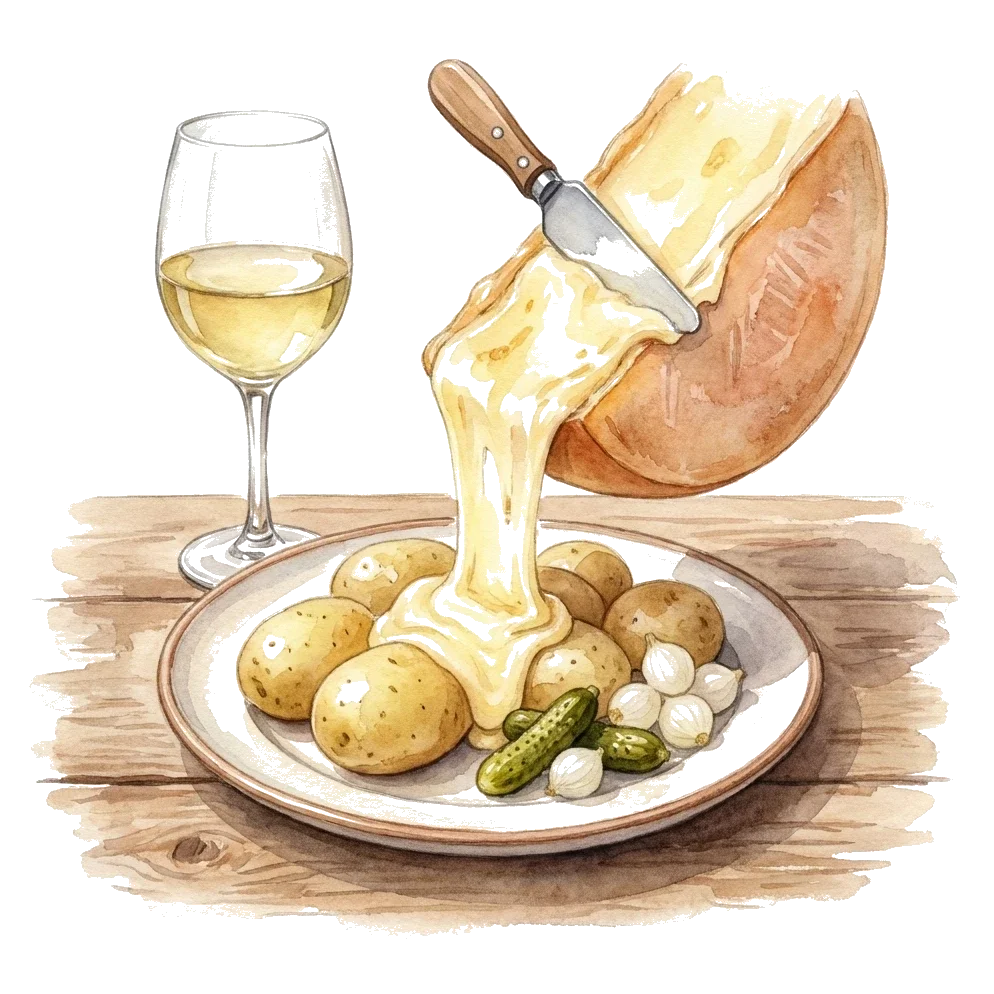
The classic round is the sternest test for a wine. Melted cheese on hot potato, the sour spikes of silverskin onions and cornichons, freshly ground pepper: the fat seeks out everything soft in the glass and flattens it. What remains is the task of the Swiss Chasselas – a dry white with clear acidity, a slender body and as little oak as possible.
That is precisely why wines that are thought of as reserved elsewhere shine here. Aligoté from Burgundy, Grüner Veltliner from Vienna or a mature dry Riesling from Stein near Krems deliver the lemon, the apple and the drive that cut the cheese fat from the palate. Oak, residual sugar and high alcohol are the three things this round will not forgive.

Bourgogne Aligoté Doré Sélection Massale AOP 2024
Aligoté from old sélection massale vines in Burgundy, pale gold in the glass with apple, citrus and a fine, taut line of acidity. In Burgundy the variety is the traditional everyday white to drink with cheese. With raclette, jacket potatoes and cornichons it brings exactly that slender, neutral freshness that cuts the cheese fat from the palate without adding weight.
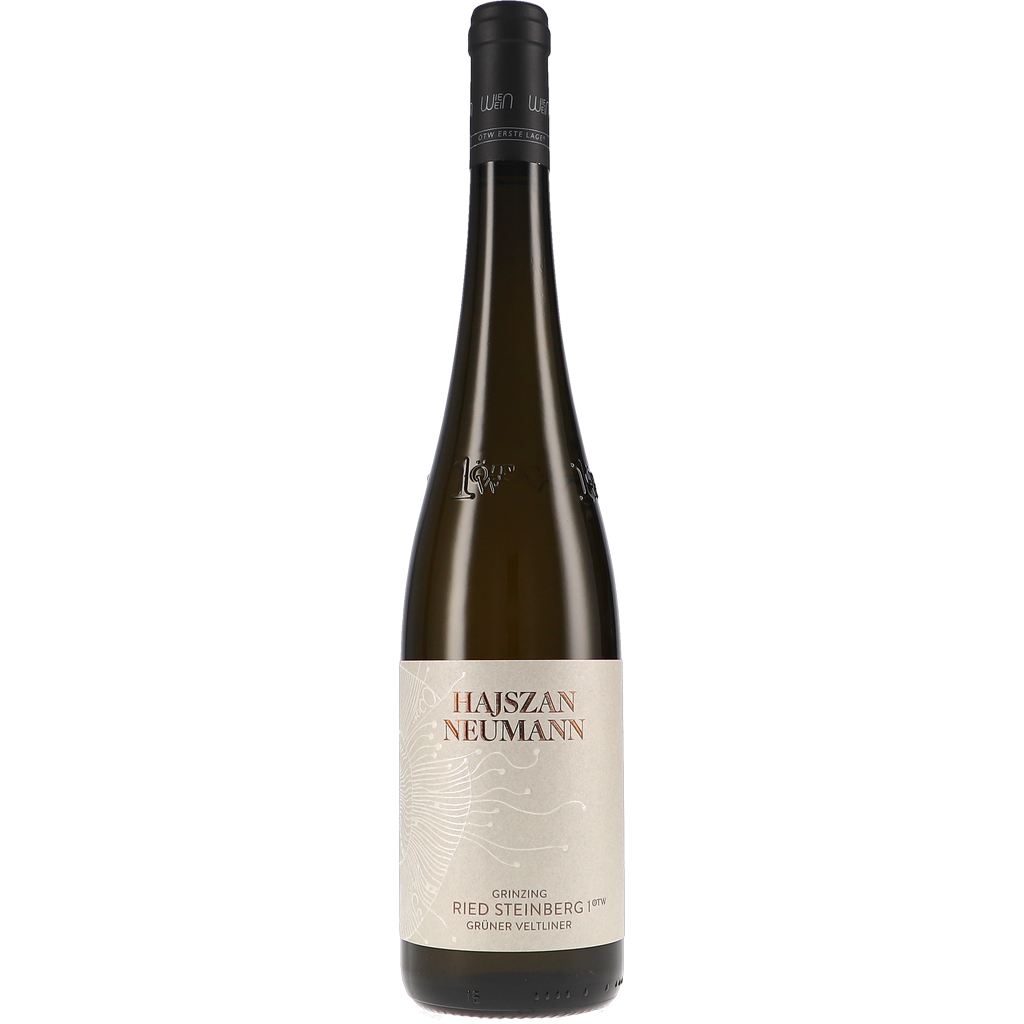
Grüner Veltliner Ried Steinberg 1.ÖTW 2024
Grüner Veltliner from the Ried Steinberg, an Erste Lage (premier site) in the heart of Vienna, with bright paprika spice, apple and crunchy freshness. Farmed biodynamically and precise in expression. With raclette, silverskin onions and freshly ground pepper it brings the spicy acidity that picks up the sour accompaniments rather than shying away from them.

Ried Grillenparz Stein Riesling trocken 2021
Dry Riesling from Nikolaihof’s Ried Grillenparz with several years of bottle age: citrus, stone fruit and behind them a cool, almost salty minerality from the gneiss. With raclette made from mature, powerful cheese this developed depth carries the intensity of the cheese, while the acidity resets the palate with every bite. It is explicitly recommended with mountain cheese.
With meat: beef, bacon & sausages in the pan
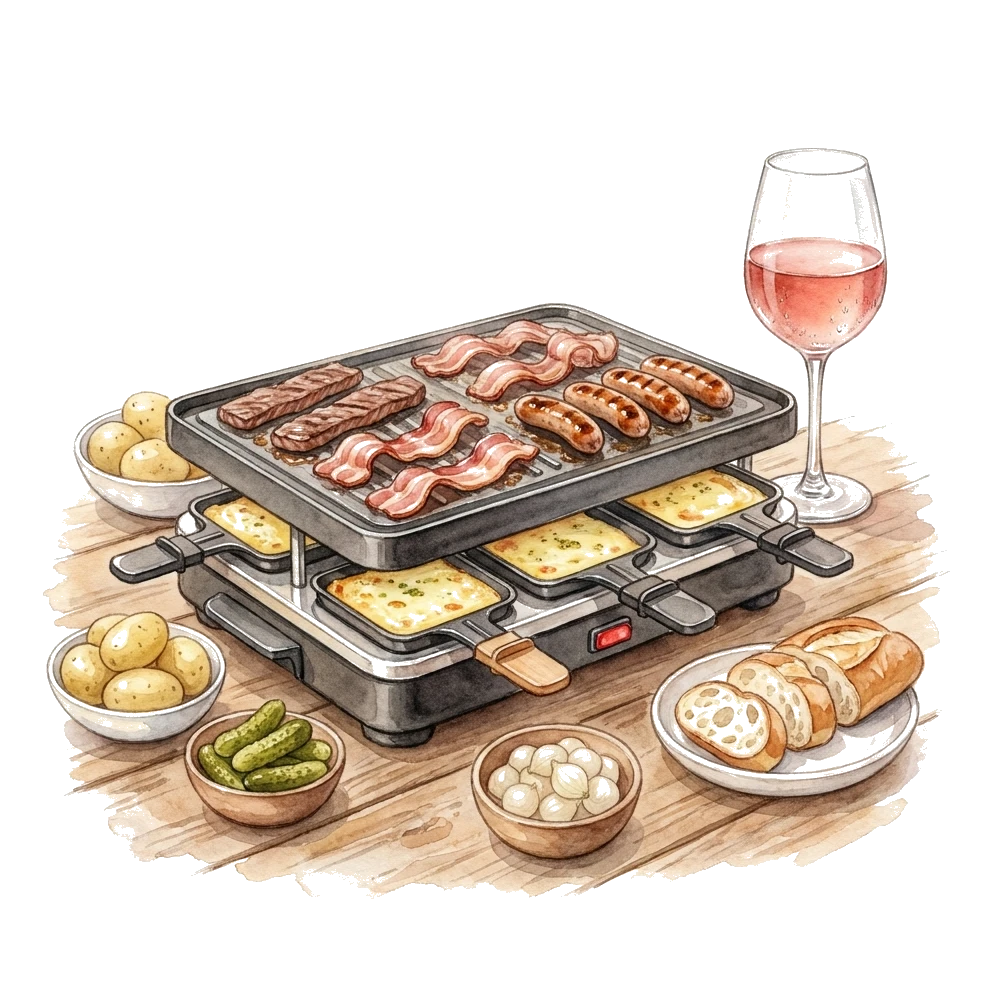
As soon as the tabletop grill is searing meat on top while the cheese melts below, the wine question tips towards red. Beef, bacon, ham and sausages bring roasted flavours and protein that can carry a red – but only a light one. Tannin turns bitter and metallic against melted cheese, so the rule here is: fruity, cool, soft.
Grenache blends from Roussillon, Mondeuse from Savoie and Sankt Laurent from Baden are the wines for this round. They come with moderate alcohol, lively acidity and tannin that caresses rather than grips. Served slightly chilled at fourteen to sixteen degrees, they are the red answer to a raclette evening with everything the grill has to offer.
Majas Rouge IGP 2024
Grenache and Carignan from Roussillon, translucent ruby with bright berry fruit and a Mediterranean herbal note, soft and free of heavy tannin. Raclette is named word for word in the pairing recommendation for this wine. With raclette, beef and bacon from the tabletop grill it is the uncomplicated red companion you can pour without a second thought.

Quintessence de Mondeuse AOP Vin de Savoie 2019
Mondeuse Noire from steep vineyards in Haute-Savoie overlooking Mont Blanc, grown between 350 and 450 metres: dark berries, violets, a hint of pepper and a cool, fresh structure. With raclette, sausages and ham the circle of Alpine cooking closes, for this variety is attuned to the cheese of its homeland like hardly any other.

Sankt Laurent Village Badischer Landwein 2022
Sankt Laurent from Baden, deep cherry red with sour cherry, cassis, blueberry and sweet wild raspberries, soft in tannin and juicy to drink. With raclette, beef strips and smoked bacon its dark fruit stands up to the roasted flavours, while the gentle tannic structure respects the melted cheese.
New Year’s Eve: Sekt, Pét-Nat & Champagne with raclette
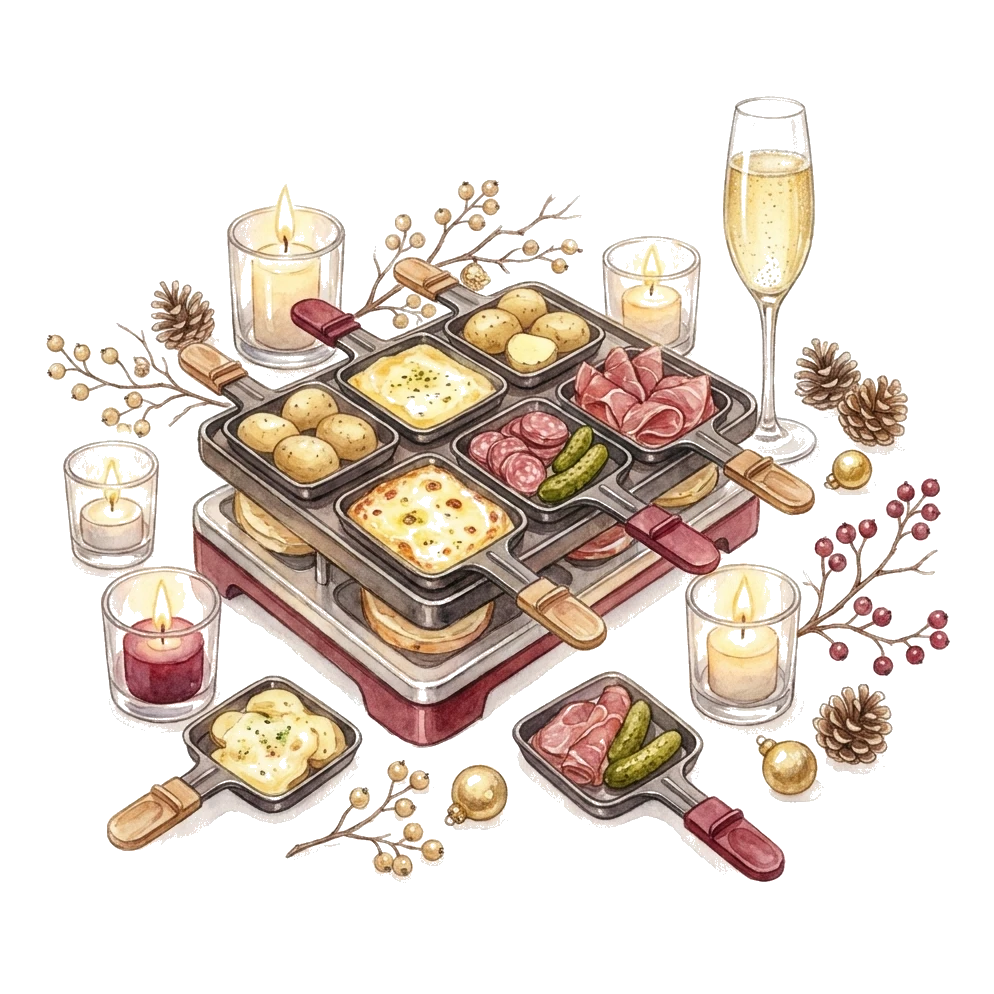
Raclette and New Year’s Eve belong together like cheese and potatoes, and the sparkling wine question is the easiest one to answer. Carbonation and acidity are the two weapons against cheese fat: the bubbles literally clear the palate, and the acidity provides the reset between pans. Extra Brut and Brut Nature are the right dosages, because residual sugar quickly feels heavy against salty cheese.
It doesn’t have to be Champagne, but it may be. A Crémant de Loire from Chenin Blanc brings apple and drive, a rosé Sekt from the Kamptal brings red berries to match the bacon, and a Champagne with yeasty notes mirrors the toasty rind of the cheese. Anyone who has eaten raclette with sparkling wine once no longer asks whether the two go together.

Bulles de Liv Crémant de Loire Gold Extra Brut AOP 2023
Crémant de Loire from Chenin Blanc, pale yellow with fine bubbles and notes of apple, citrus and white blossom in an Extra Brut style. With raclette on New Year’s Eve it is the light, lively sparkling answer, its acidity lifting the cheese fat from the palate sip by sip.

Brut Rosé Reserve
Brut Rosé from Spätburgunder and Zweigelt by Loimer in the Kamptal, salmon-pink with redcurrants, wild strawberries and sour cherries, cool and taut in build. With raclette, bacon and ham in the pan it combines the cleansing power of the bubbles with enough red fruit for the smoky notes of the meat.

La Pouillote Extra Brut 2022
Extra Brut Champagne from Jérôme Blin, made from Chardonnay and Meunier, straw yellow with lively bubbles, brioche, citrus and a nutty note of maturity. It is recommended with a croque madame made with Comté. With raclette on New Year’s Eve this yeasty note mirrors the roasted aromas of the cheese, and the taut acidity keeps the evening awake until midnight.
Vegetarian: vegetables, mushrooms & pear in the pan
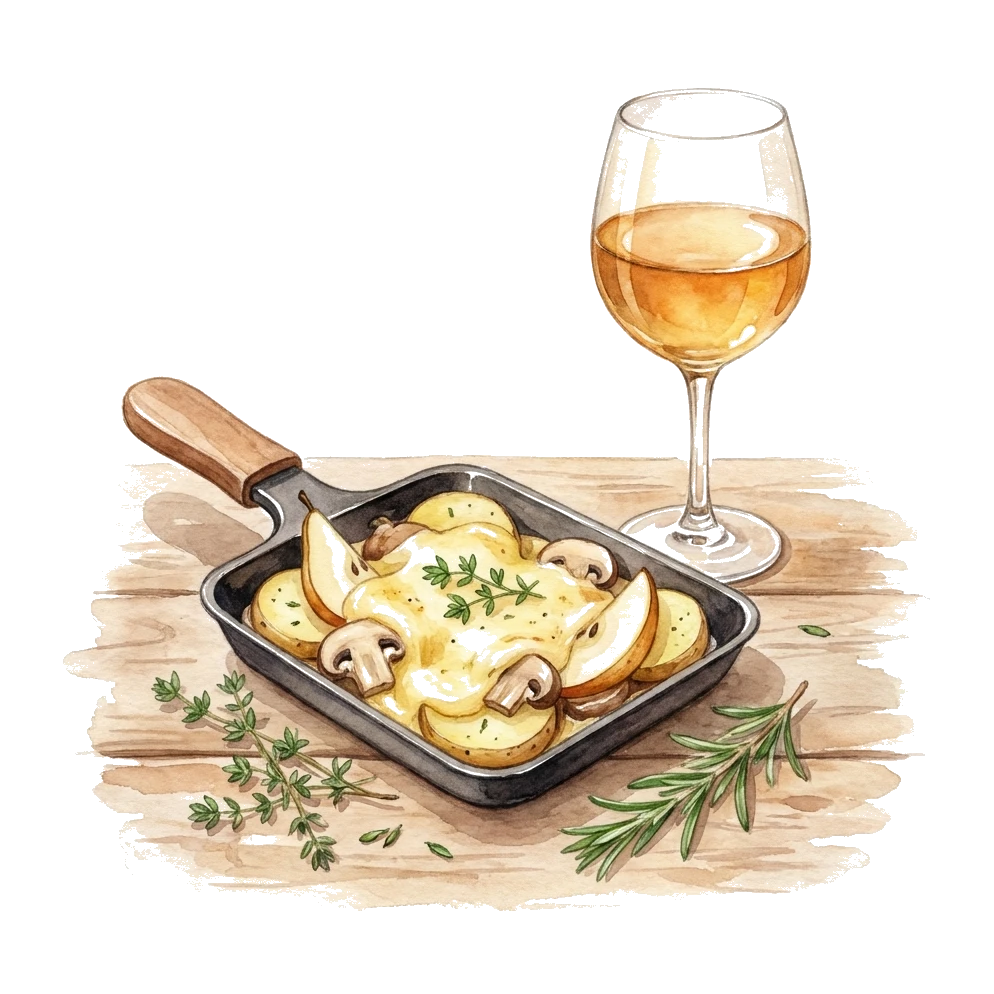
The vegetarian raclette round is the most aromatic. Button mushrooms and king oyster mushrooms bring earthy tones, peppers and courgettes a roasted sweetness, pear and pineapple a fruity sweetness that pushes the cheese in an entirely different direction. The slender, acid-driven white of the classic round soon seems thin here.
Now aromatic whites can step up: Pinot Gris with its ripe pear fruit and gentle richness, skin-fermented Gewürztraminer setting rose and orange peel against the herbs, or an orange wine whose light tannic grip catches the mushrooms and roasted vegetables. The rule stays the same, only the register changes: freshness, yes, but with perfume and grip.

Pierre qui Rolle VdF 2023
Orange wine from Grenache Blanc and Vermentino by Flo Busch in the Languedoc, intensely coloured, with stone fruit, herbs and a fine grip from skin fermentation. With raclette, mushrooms and roasted vegetables its light tannic structure catches the earthy tones of the mushrooms, which would overwhelm a purely fruit-driven wine.

"GT" Vino Bianco 2024
Gewürztraminer from Pranzegg in South Tyrol, fermented on its skins, amber-coloured with rose petals, orange peel and green pepper over an earthy, smoky undertone. With raclette, herbs, pineapple and pungent mountain cheese it answers with an aromatic richness of its own instead of disappearing beneath the aromas of the pan.

Pinot Gris Rotenberg 2014
Pinot Gris from the Rotenberg by Zind-Humbrecht in Alsace, deep golden yellow with ripe apricot, Charentais melon, blood-orange zest and candied hints; the pairing recommendation for this wine names cheese fondue. With raclette, pear and melted cheese its fruit mirrors the sweetness of the pear, while its substance carries the cheese with ease.
The raclette compass
For the questions that don’t need a section of their own, here are the short answers. All of them follow the same rule: fat seeks acidity.
Wine with cheese fondue
Its close relative plays by its own rules. In fondue the cheese is melted with white wine and kirsch, so the mixture is more liquid and more acid-driven, and bread is milder than jacket potato. If you are planning both on the same evening, it helps to know that the fondue wine can be drier and higher in acidity. The full reasoning and the bottles to match are on our page Wine with cheese fondue.
Swiss wines and their equivalents
In Switzerland, raclette is served with Fendant, the Chasselas wines of the Valais, or with Heida or Johannisberg. Fendant is deliberately neutral: slender, fridge-cold, with gentle acidity. In our range this role is taken by Aligoté from Burgundy, Silvaner from Franconia and the whites of Savoie, where the cheese comes from. If you prefer something more alpine, reach for whites from the Jura, the home of Comté.
Red or white with raclette
The most common question has a surprisingly clear answer: with the classic pan of potatoes and cheese, white is the safe bet, because its acidity cuts the fat. Red only becomes interesting once meat goes on the grill, and then only light, cool and low in tannin. Pinot Noir, Gamay and Mondeuse are the varieties that deliver this. A tannic red marked by barrique is the only real mistake at the raclette table.
Valais, mountain cheese, smoked, goat’s cheese
The raclette cheese itself has a say. Mild Valais cheese asks only for freshness, and a neutral white is enough. Mature mountain cheese with more salt and depth can take mature whites with substance. Smoked raclette cheese loves a light touch of oak or skin contact in the wine, so an orange wine or a Pinot Gris is the right call here. Goat’s cheese in the pan, on the other hand, calls for the herbal acidity of Sauvignon or Chenin Blanc.
Raclette with fish and seafood
Salmon, prawns or tuna in the pan are lighter than meat and shift the wine back to white. Here the taut, mineral whites of the classic round fit even better, as maritime notes cannot cope with heavy fruit. A dry Riesling or a Chablis-style white with a cool chalky note is the right choice, and a rosé Sekt carries the salmon round with particular elegance.
Raclette and fondue on the same evening
The double-cheese evening is a stress test for the palate, and sparkling wine is built for exactly that: carbonation and acidity work equally well against both rounds of fat. If you would rather stay with still wine, choose a dry white with high acidity and restrained aromatics, one that is troubled neither by the kirsch in the fondue nor by the pepper on the raclette. Everything else about the fondue half is on our page Wine with cheese fondue.
Frequently asked questions: wine with raclette
Which wine goes with raclette?
Dry white wines with clear acidity and little oak work best, because they cut the cheese fat from the palate: Aligoté, Grüner Veltliner, dry Riesling or whites from Savoie and the Jura. If meat from the tabletop grill joins in, light, cool reds with little tannin such as Gamay, Mondeuse or Sankt Laurent are a good match. On New Year’s Eve, sparkling wine with Extra Brut dosage is an equally safe choice.
Red or white wine with raclette?
With classic raclette, jacket potatoes, silverskin onions and cornichons, white wine is the right answer, because its acidity works against the fat. Red wine fits as soon as beef, bacon or sausages land in the pan, but only if it is light and low in tannin, since tannin turns bitter against melted cheese. The red is best served slightly chilled.
Which white wine with raclette?
Dry, high in acidity, unoaked: those are the three conditions. Aligoté is Burgundy’s answer to Swiss Fendant, Grüner Veltliner brings spicy freshness, and dry Riesling can carry even mature, powerful cheese. Neutral whites in the spirit of Chasselas work better than aromatic loudspeakers, because the sour accompaniments take the lead.
Which red wine with raclette?
A light, fruity red with soft tannin and good acidity: Gamay from Beaujolais, Mondeuse from Savoie, Pinot Noir or Sankt Laurent. These wines come with moderate alcohol and cool fruit that carries the bacon and beef from the grill without overwhelming the cheese. Heavy oak and firm tannin are the two traits that fail at the raclette table.
Does Sekt or Champagne go with raclette?
Yes, superbly, especially on New Year’s Eve. Carbonation and acidity are the two most effective counterweights to cheese fat, and the bubbles cleanse the palate between pans. Extra Brut or Brut Nature are the right styles, because residual sugar feels heavy against salty cheese. Crémant and Pét-Nat do the job too.
Which Swiss wine goes with raclette, and what is the alternative?
In Switzerland the traditional choice is Fendant, made from the Chasselas grape, a slender, neutral white from the Valais with gentle acidity, or alternatively Heida or Johannisberg. As Swiss wines are hard to find outside Switzerland, Aligoté from Burgundy, Silvaner from Franconia and whites from Savoie and the Jura take on the same role with a comparable profile.
Does the same wine work with raclette and cheese fondue?
Broadly yes, as both dishes call for dry whites with acidity. Thanks to the white wine in the cheese mixture and the milder bread, fondue is a little more acid-friendly, while raclette, with its potatoes and accompaniments, is a little earthier. A neutral, dry white carries both, and on a double evening sparkling wine is the easiest solution for both halves.
Which wine with raclette and meat?
With beef, bacon, ham and sausages from the tabletop grill, a light red with little tannin, served slightly chilled, is the right match: Gamay, Mondeuse, Sankt Laurent or a slender Pinot Noir. The roasted flavours of the meat need red fruit, but melted cheese fat forgives no tannin. If you would rather stick with white, reach for a fuller white such as Pinot Gris.
How cold should the wine be for raclette?
White wine at eight to ten degrees, sparkling wine at six to eight degrees, light red at fourteen to sixteen degrees, so noticeably cooler than usual. Ten to twenty minutes in the fridge before the meal is enough. The chill emphasises the acidity, and that is exactly what works best against hot cheese.
Discover all raclette wines
These twelve are just the start: our search understands raclette, from the classic pan to the tabletop grill, and shows the matching wines currently in stock.
All wines for raclette