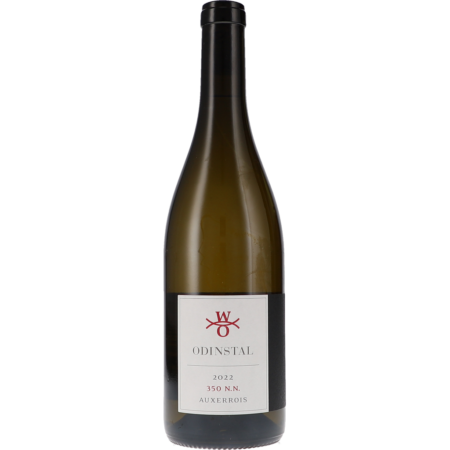
Walnut, salted caramel and blood orange, with flint and white-fleshed peach in the background.
Palate
Lean and dry with 11.5% alcohol, 2 g/l residual sugar and 5.8 g/l acidity; taut, precise, with a stony length.
Character
A Pinot Blanc without creaminess or oak influence, cool in style, drawing its energy from the high-altitude site.
Pairing
Pike-perch in butter, roasted cauliflower, ripe Comté with nut bread.
Notes
The main parcel, planted in the 1980s, sits on heavy Keuper marl, while two younger parcels from 2004 are rooted in Buntsandstein sandstone and basalt. Spontaneously fermented in stainless steel with five per cent whole bunches, aged on full lees for seven months, lightly filtered. James Suckling 93, Antonio Galloni 93, Parker 92.
Tasting note
Character
A lean, dry Pinot Blanc with 11.5% alcohol, which speaks more of nuts and spice than of opulent fruit. With 2 g/l residual sugar and 5.8 g/l acidity, it remains taut and precise. James Suckling and Antonio Galloni each awarded it 93 points, whilst Wine Advocate gave it 92.
Terroir & Origin
The grapes grow in the monopole vineyard site of Odinstal above Wachenheim, in a forest-encircled clearing at around 350 metres, to which the name 350 N.N. refers. The main parcel was planted in the 1980s on heavy Keuper; according to the estate, it provides power and minerality. Two younger parcels from 2004 are situated on Buntsandstein sandstone and basalt, contributing freshness. The estate has been farmed biodynamically since 2006 and has been Demeter-certified since 2013.
Grape Variety & Vinification
Harvesting took place from 21 to 28 September 2023. The Pinot Blanc ferments in stainless steel, with approximately five per cent whole bunches included in the fermentation. Afterwards, the wine remains on its full lees for seven months and is only lightly filtered before bottling.
Nose & Palate
In the glass, notes of walnut, salted caramel and blood orange emerge, according to Vinaturel’s tasting note. Lobenberg finds flint and white-fleshed peach, whilst Suckling detects pear. On the palate, it feels light at 11.5% alcohol and is carried by acidity rather than sweetness.
Food Pairings
With trout in brown butter and toasted hazelnuts, with chicory salad featuring blood orange and walnuts, or with veal escalope with sage. A young mountain cheese also pairs well, as it echoes the nutty side of the wine.

 EN
 DE
 FR
 IT