EN
 DE
 FR
 IT

Tasting note
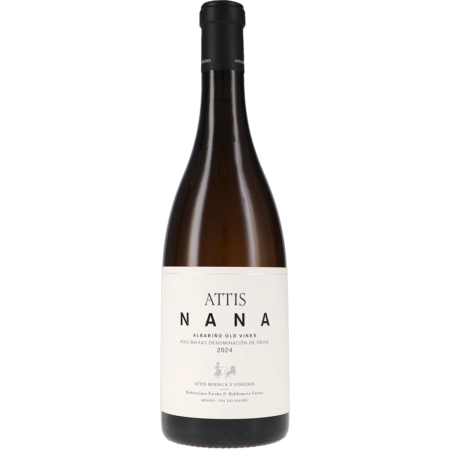
The ambassador truly lives up to its name: the TEXSOM Awards 2025 bestowed upon it one of only 56 Platinum medals – and a single sip from the glass explains why. Here, Albariño does not present itself as a cheerful terrace wine, but as a wine of seriousness and depth, shaped by ancient granite and the Atlantic air of Val do Salnés.
- Colour & appearance
- Rich, luminous golden yellow with radiant brilliance – a glass that visually announces from the outset: this is more than a fresh young wine.
- Nose
- Profound and multi-layered. Ripe peach, nectarine, mandarin and mirabelle plum form the yellow-fruited foundation, topped by zest of bergamot and grapefruit. Then the maritime notes: sea spray, oyster shell, preserved lemon. Fresh herbs – chervil, lemongrass, mint – alongside delicately algal nuances that, with aeration, reveal ever new layers together with pea shoots and cress.
- Palate
- The fruit steps forward briefly, before a taut, razor-sharp line takes over: preserved lemon, grapefruit zest, pronounced salty minerality, cool and stony. Fine yeasty creaminess and a hint of cold smoke lend depth, while herbs and saline tension shape the mid-palate. Astonishingly light on its feet despite all the concentration – a wine that convinces through texture and origin rather than fruit.
- Finish
- Enormously long, precise and clearly guided, with a lingering interplay of salt and herbs. The finish remains cool and linear – as if a final wave of sea spray were sweeping across the palate.
- Terroir & origin
- A single vineyard site of just 0.5 hectares in Val do Salnés, the heart of Rías Baixas. Vines averaging 60 years old, deeply rooted in soils of granitic origin with a clayey character. West-facing towards the Atlantic: cool afternoon breezes, slow ripening, crisp acidity. The traditional pergola training protects the grapes from intense sunlight and ensures ventilation in rainy Galicia.
- Grape variety & vinification
- Pure Albariño, dry. Manual harvest with selection on the sorting table, complete destemming and cold maceration. Fermentation at a controlled 12–15 °C, followed by two years of ageing on the lees with regular stirring – one year in a granite tank, the second in stainless steel. A rare technique that gives the wine its creamy texture and smokiness.
- Food recommendations
- A master by the coast: oysters, grilled scallops, cockles or pulpo a la gallega. Also well worth the journey alongside tuna tartare, glazed langoustines or a simple goat’s cheese with herbs.
- Special features
- The artist’s label “Cabeza de Serpe” by Francisco Leiro turns every bottle into a collector’s item. Behind it lies an Albariño of the highest class: less fruit, more rock, salt and patience – perhaps the most characterful interpretation of the variety that the Fariña brothers draw from their old parcels.