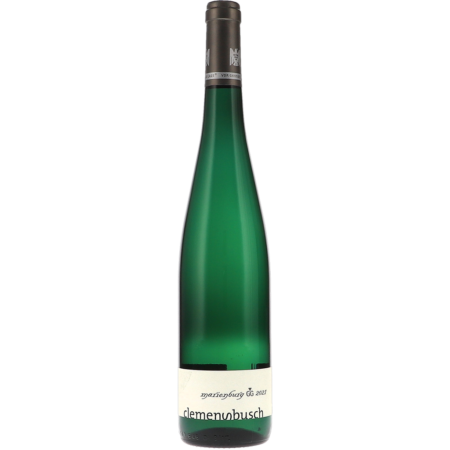
A dry Mosel Riesling from the rare red slate of the Pünderich steep vineyard – profound, smoky-mineral and with tremendous tension. A wine for lovers of powerful, terroir-driven white wines.
39,00 €52,00 € / l
Incl. VAT where applicable
In stock.Fast shipping via DHL or DHL Express. Securely packed and insured against breakage and loss.
Bottler: Winery Clemens Busch, Kirchstrasse 37, 56862 Pünderich / Germany
In the glass
Colour
Brilliant pale yellow with greenish reflections, clear and luminous in the glass.
Nose
Yellow apple, ripe quince and citrus, accompanied by the typically smoky-spicy depth of red slate with hints of herbs and wet stone.
Palate
Dry, taut and powerful at once – dense fruit, a fine thread of acidity and a seismic minerality that speaks of the deep-rooted vines of the Marienburg; long, saline finish.
Character
A monumental, cool grand vin character with volcanic spice – age-worthy, complex and of impressive stature.
Pairing
Char with herb butter, veal in a light sauce or matured hard cheese.
Notes
From the legendary Pündericher Marienburg, where vines root up to eight metres deep into red slate; biodynamic viticulture since 1986 (Demeter-certified since 2015), spontaneous fermentation in centuries-old foudres and awarded the Robert Parker Green Emblem in 2023.
Tasting note
Character
A dry Grosses Gewächs Riesling of almost seismic minerality: cool, dense and marked by a profound, smoky spice imparted by the vineyard’s rare red slate. Citrus notes, yellow apple and a fine, almost volcanic smokiness join the palate. Despite its concentration, the wine remains taut and linear – a Riesling that deserves time in the glass (and in the cellar), expressing its site’s greatness with restraint rather than opulence.
Terroir & Origin
The Rothenpfad is a parcel within the legendary Pündericher Marienburg, that steep Mosel vineyard where Clemens Busch cultivates eleven of his twenty hectares. The name reveals the soil: here red slate dominates, one of three slate types that Busch consistently distinguishes by coloured capsule – red, grey, blue. The ungrafted vines plunge up to eight metres deep into the rock, accessing mineral strata that shallow-rooted vines can never reach. This deep rooting also acts as a natural buffer against heat and drought – an invaluable advantage in warmer vintages.
Grape Variety & Vinification
Riesling in its most terroir-driven expression. As early as 1976, the then 19-year-old Clemens Busch banned herbicides from his vineyards – ridiculed at the time, yet visionary today. The estate has been certified biodynamic since 1986 and has carried the Demeter seal since 2015. In the cellar, patience and restraint prevail: the majority of the wines undergo spontaneous fermentation in centuries-old 1,000-litre foudres, without cultured yeasts, enzymes or fining; some fermentations last over a year. Extended maturation on the fine lees lends additional depth and structure. Recognition came late but decisively: 98 Parker points for the Marienburg Raffes, the Robert Parker Green Emblem in 2023 for outstanding sustainability, and placements on the wine lists of five three-star restaurants.
Food Pairings
The Rothenpfad’s dry structure and smoky depth effortlessly complement robust cuisine: cured salmon with fennel salad, langoustines in lemon butter, sole meunière or guinea fowl with root vegetables. It is equally assured alongside smoked trout, mature hard cheese or finely spiced Asian dishes – such as Thai curry with lemongrass. Opening the bottle a few hours in advance will reward you with significantly greater detail and nuance.

 EN
 DE
 FR
 IT