
 EN
EN  DE
DE  FR
FR  IT
IT 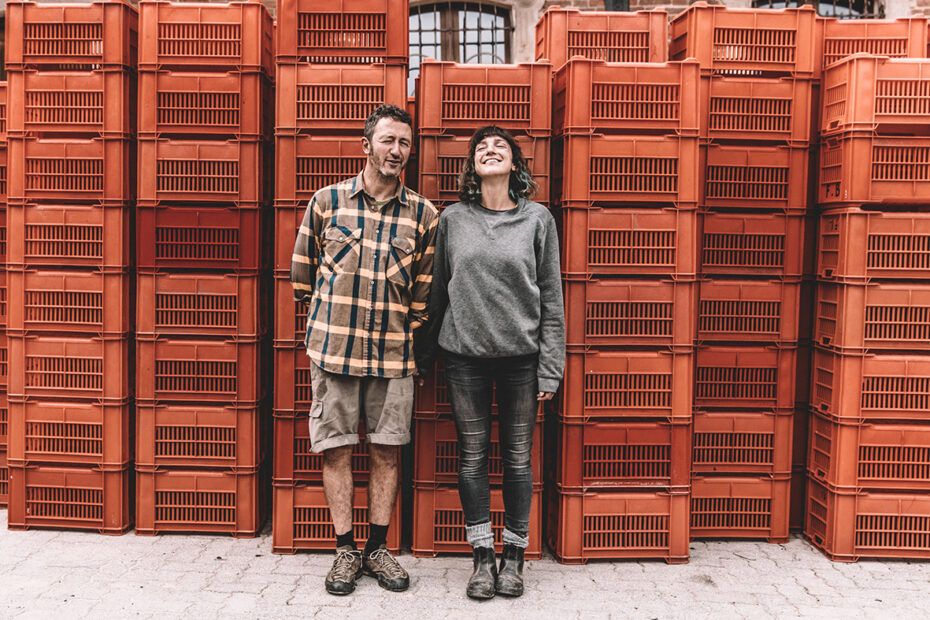
First, I must admit that I didn’t know much about Roero. Perhaps I had also underestimated the region due to earlier experiences. But when I tasted the wines from Valfaccenda, I was surprised by their richness and bewildered by their complexity. That was more than enough to pique my curiosity.
I began researching the land and soil, and through a very pleasant interview with Luca Faccenda, I discovered a unique approach to winemaking.
To learn more about the region, I had to take a few steps back into the past:
The first took me to the Pleistocene, when a vast body of water flowed into the Adriatic and thus de facto created the Po Valley (Pianura Padana), to which Roero belongs. This dramatic event left behind an incredibly rich soil, once the floor of the sea and now the gentle landscape in which the grapes grow. I must admit that reading about it was a bit like returning to school, as this is a milestone in the geological shaping of Northern Italy.
Roero.
Rocche del Roero
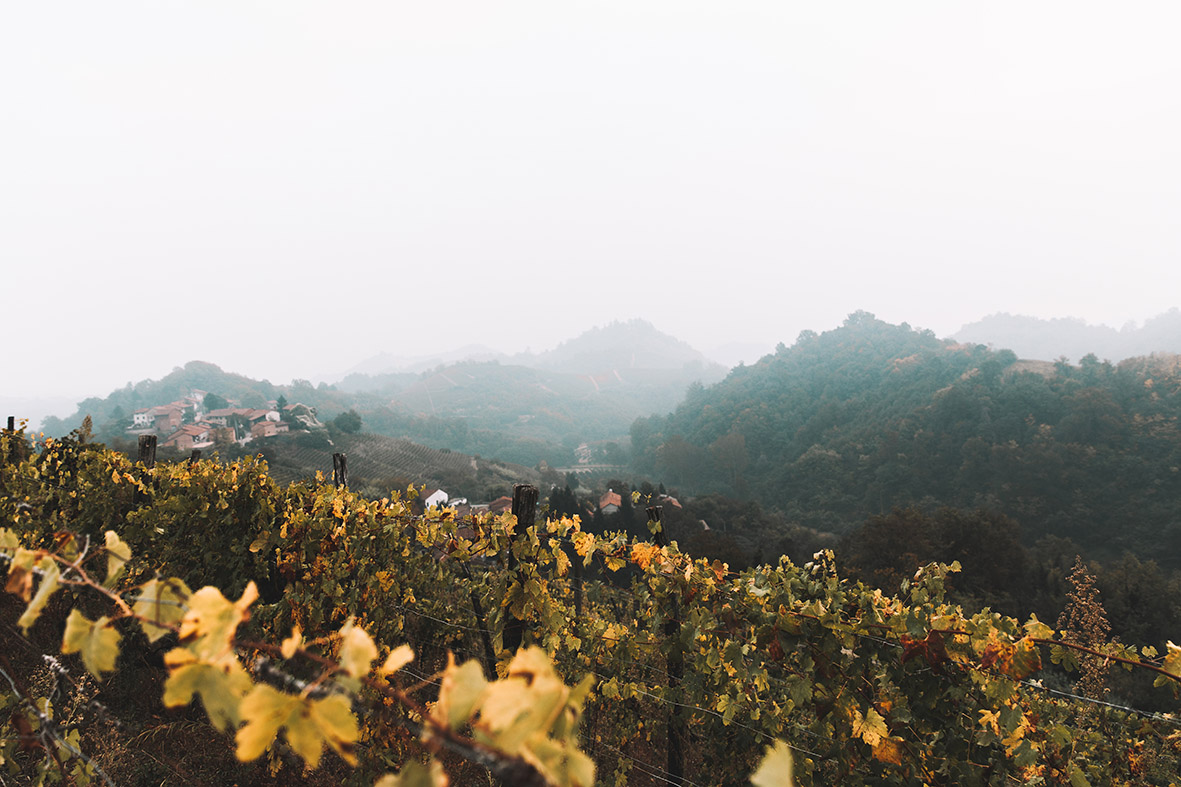
The second step, however, led me to something unknown to me, but also connected to major water movements, albeit of more recent date and local in nature. Two hundred and fifty thousand years ago, the Tanaro river began to shift from its Palaeo-Tanaro riverbed to its present position – at the border between Roero and Langhe – which led to major erosion phenomena and gave rise to the hills known as the Rocche del Roero.
Having now gained a general understanding of the soil richness of Roero, which is reflected in Valfaccenda’s wine, and formed a picture of the “Rocche del Roero”, which are located near the winery, I was ready to approach the estate. So I asked for an interview with Luca Faccenda – oenologist and co-founder of the winery, together with his wife Carolina.
After a long conversation with Luca, two key words resonated in my mind: “sensitivity” and “patience”. I let my thoughts wander over the Rocche, these dramatic hills, and imagined them as a kind of display on which one can read the passage of geological time, like counting the rings of a felled tree.
Perhaps the sense of time emanating from these rocks helped Luca and Carolina understand the position of mankind and the extent of his interventions in relation to natural processes.
I let my thoughts wander over the Rocche, these dramatic hills, and imagined them as a kind of display on which one can read the passage of geological time, like counting the rings of a felled tree.
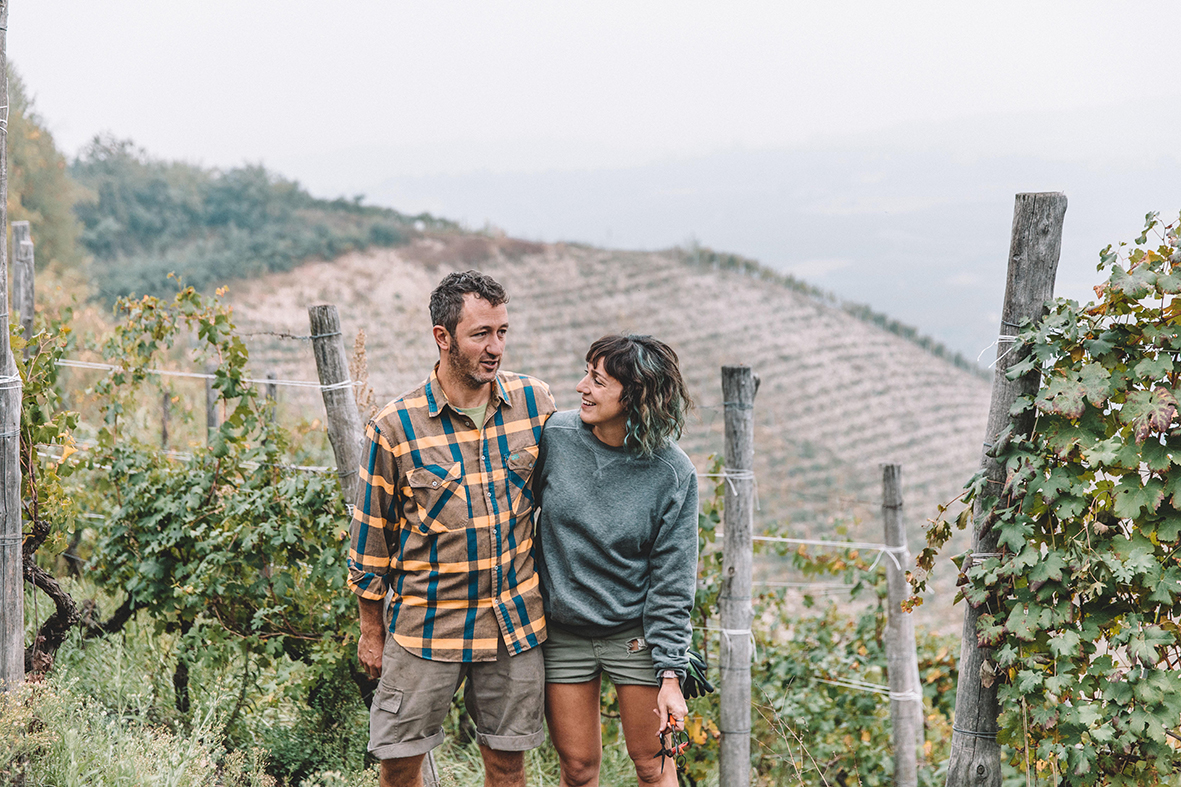
Valfaccenda – that’s Carolina and Luca in Roero
They began in 2010, and they were the young, the colourful, the natural winemakers in a Roero that was sometimes still too much overshadowed by the more famous and lucrative Langhe.
They decided to grow only Arneis and Nebbiolo, grapes typical of the region. Even then, it was clear to them that they could only listen and wait to develop the right sensitivity for handling the plants. All this sensitivity and all this waiting builds on the most important moment in Valfaccenda’s winemaking process: the harvest of the grapes. From Luca’s perspective, this is the only step in the process that is entirely dependent on human decisions. Choosing the right time for the harvest is the decisive act of a vintage. An act full of respect for the processes of nature.

I asked about the next step, the work in the cellar, and Luca answered me with the same candour he maintained throughout our conversation: “Everything is already in the grape, all we have to do is preserve it. It’s harder to know when not to act than when to act.”
His words were full of sensitivity and a sense of time, but also of the experience gathered over these 10 years at Valfaccenda.
Being able to listen does not mean leaving everything to chance. On the contrary, it requires full presence at every stage of production. This is only possible because they work on a small scale, well below the market’s demand for their wine. But they are not there for the market. Valfaccenda, as it says on their website, is Carolina + Luca in Roero. By the way: Carolina is also the author of the wonderful labels.
Everything is already in the grape, all we have to do is preserve it. It’s harder to know when not to act than when to act.
– Luca Faccenda
By the end of the conversation, I had the impression that they will always remain the young, the colourful, the natural winemakers, but their wines will transcend that. Because they tell stories.
Some of them are very old, from the time when fish still swam there, others are of more recent date and have to do with the clever artisanal work of farmers in the fields. You cannot tell stories if you don’t have the right sensitivity, if you cannot bear the pauses between the words.
Tasting Notes
ROERO ARNEIS 2016
Golden yellow to the eye, initial nose of ripe apple, honey and wet hay, followed by apricot jam and a warm, pleasant note of Marsala that brings raisins, cinnamon and orange. Finishing with hints of chalk and hydrocarbons.
The palate opens onto baked apple, strawberry jam with a very long, saline chalky finish that plays nicely with notes of black pepper, nutmeg and caramelised orange zest. Complex and perfectly balanced between sweet, warm aromas and a long, refreshing juiciness.
Reminiscences from the past, beginning with the old golden yellow and transitioning into some Marsala notes that bring raisins, honey and orange. Grandmother’s house, with yellow apples overripe on the counter, apricot jam and the smell of wet hay drifting in through the window. The palate is perfectly balanced between baked apples, nutmeg, caramelised orange zest – conveying sweet family memories – and some mineral, saline notes that give us a hint of times gone by.
ROERO BIANCO 2019
Straw yellow in the glass, the nose picks up notes of stable and hay, almost immediately followed by a delicate, fresh composition of elderflower, pear, nectarine, orange zest, white pepper and paprika stem. On the palate there is good correspondence with the nose: we find hay again, nectarine, pear and orange peel with an unexpected finish of flint.
In the “simplest” wine from Valfaccenda we nonetheless find the fingerprint of the estate: the noblesse of the landscape. The initial nose of stable and hay reminds us where this wine is rooted, but it is immediately followed by elegant, fresh notes of elderflower, pear, nectarine, orange peel and a herbal hint of paprika stem that reveals an unripe sharpness. The palate almost righteously confirms the impressions of the nose: hay, nectarine, pear, orange zest. An unexpected finish of flint lets us sense a rebellious soul.
LORETO ROERO RISERVA 2018
Delicate straw yellow, the initial nose is struck by animal notes, stable and hydrocarbon, reminiscent of some Mosel wines. After a few minutes, an orchestra of aromas from the summer landscape emerges: peach, honeydew melon, white lilac, strawberry blossoms, nettle and grass. On the palate again a juicy flavour of peach and honeydew melon, together with pear, lemon peel, elderflower and a hint of wildflower honey.
The abundance of aromas is held together by a very long, refreshing acidity that invites another sip.
The label already conveys to us the impression of a landscape division made by the ancient wisdom of farmworkers, and in the bottle one can perceive all the scents and flavours of a summer in the countryside, ready to be brought to the table of the nobility that manages the land. Warm notes of stable and hay are quickly followed by white lilac, strawberry blossoms, fresh grass, nettle, peach and honeydew melon. On the palate an endless children’s game in the summer holidays, with the juicy notes of peach and honeydew melon carried by a long, refreshing acidity.
VALFACCENDA
ROERO NEBBIOLO 2014
The wine presents itself with a pomegranate red colour and a very deep nose that leads from black cherries, blueberries and red roses to ash, essential oils, beeswax, wet musk and hazelnut. On the palate again black cherries and ash with dried plums, pomegranate, oregano and flint. A present, though velvety tannin is well paired with an exciting acidity.
A farmhouse in autumn, where freshly picked black cherries and blueberries lie on the table and their aromas mingle with the ash from the fireplace, beeswax, essential oils and roses. The upright bearing of this wine, perceived on the palate through the present tannins and taut acidity, is softened by careful cellar work, perceived in the perfectly clean, long finish.
VALMAGGIORE
ROERO ROSSO 2017
In the glass it reveals a very elegant garnet red, whilst the nose slowly discovers a balanced complexity composed of notes of dark fruits (black cherries, blackberry jam, plum), but also hazelnut butter, dried chamomile, violets, Virginia tobacco, chalk and a peculiar briny hint. On the palate: black cherry preserve, chestnut blossom, anise, tobacco and white pepper. Rich in tannins, without being aggressive, it displays perfectly integrated acidity.
The first image this wine conveys is that you are sitting on a hillside eating bread, butter and dark fruit jam, whilst the scent of flowers hovers around you. Joy, a simple, satisfying joy. It is hard not to smile whilst you bury your nose in the glass. But already on the second, perhaps third time, your mind begins to wonder at the complexity you have sitting there. Tobacco, dried flowers, chalk, a briny smell, they all bring forth the primordial composition of this hillside, when fish still swam there and everything was covered by water.
Text: Jonathan Gobbi
Photo: Letizia Cigliutti
Editing: Mitya Taits