
 EN
EN  DE
DE  FR
FR  IT
IT 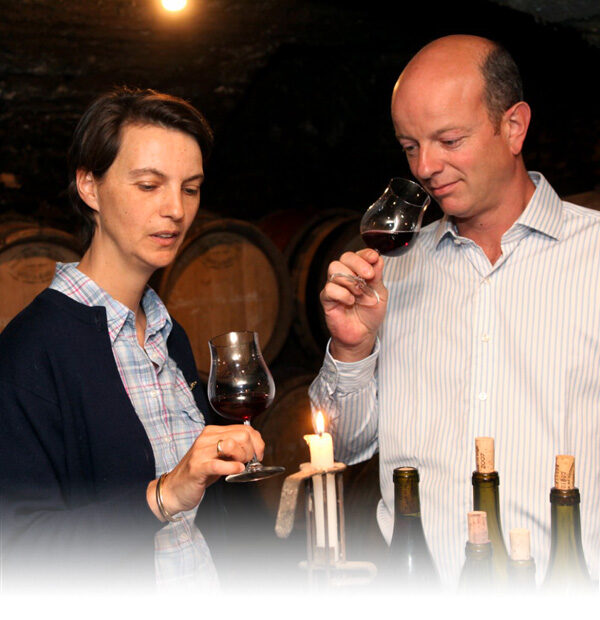
With the 2019 vintage, Burgundy and thus the Côte de Beaune sees the second extraordinary year that, in the sum of all events, clearly participated in global climate change. They are not the first, but they are vintages with the most obvious changes – from the “summer in winter”, as some winemakers have called it, to the canicules, the dog days, that is, the heat waves in summer with the large number of sunshine hours. But it is also a vintage in which winemakers and vines have already adapted somewhat more strongly to these changes, and for the Côte de Beaune one can now – where one can taste it – definitely say that it has become a distinctly more balanced vintage, especially for Pinot Noir. For the winemakers, including François de Nicolay and his sister Claude Jousset, however, the challenges remain enormous.
The Characteristics of the Vintage
The 2019 vintage had everything – except rot. The winter was warm, which led to early flowering and early budbreak, and thus to the danger of frosts. Chardonnay flowering occurred on 2 April, frost came on the night of 5 to 6 April, but was not as devastating for Chandon de Briailles as feared. Saint-Aubin and Chassagne-Montrachet were particularly affected. In May it was so cool and at times so damp that there was fear of oidium, which remained within limits.
July and August became warm, indeed hot, with peaks of up to 42 °C in the shade, but fortunately not over too long a period. However, the dryness led to water stress in some parcels, which delayed ripening.
Finally, the de Nicolays and their team harvested the Chardonnay and Pinot Blanc from 6 to 10 September and the Pinot Noir from 15 to 20 September.
The grapes had to be sorted very precisely; for there were not a few dried or sunburned berries. The potential alcohol content was between 13.2 and 13.7 % for Pinot and between 13 and 13.2 % for Chardonnay, which is a very good value for such a year. However, the yields were far from being called satisfactory, which was also due to the fact that whilst the berries had firm and thick skins, they often contained little juice. Thus the yield for Pinot was between 15 and 25 hl/ha and for Chardonnay between 20 and 25 hl/ha. “We had half a harvest,” François de Nicolay stated.
»Chandon de Briailles is in terrific shape«
— William Kelley, Robert Parker’s The Wine Advocate
Work in the Cellar
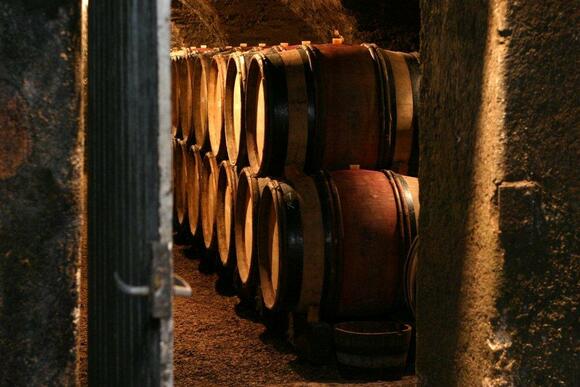
Chardonnay and Pinot Noir are barely destemmed anymore. The Chardonnay is pressed slowly as whole bunches into barrels and tonneaux, where it ferments and is aged on full lees. The red grapes are fermented in wooden vats, and the juice runs by gravity into the barrels and tonneaux.
The proportion of stems in the Pinot Noir in 2019 was around 80 %. The proportion of new oak in the barrels was barely above 15 %. The wines are bottled without filtration with minimal sulphiting and in some cases entirely without sulphur – often directly from the barrel.
The Vineyard Sites
Chandon de Briailles currently ranks among the finest producers in Savigny-lès-Beaune.
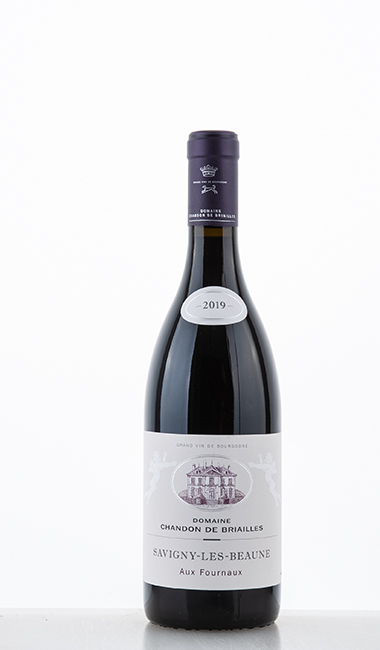
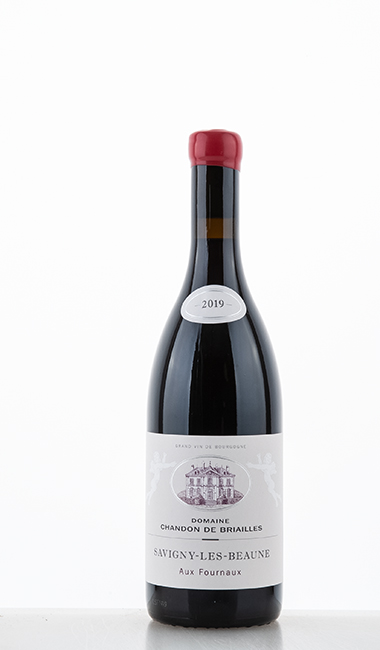
Particularly fascinating here is the comparison between the vineyard site Aux Fourneaux, which was formerly classified as Premier Cru and was subsequently downgraded.
Aux Fourneaux – The Duo
The wines, which are true value-for-money winners, differ through varying sulphite levels of around 32 mg/l free sulphur in the classic version and around 10 mg/l in the wine without added sulphur. The effects are clearly noticeable on the palate, and both wines are delightful in their own way.
Île des Vergelesses & Les Saucours
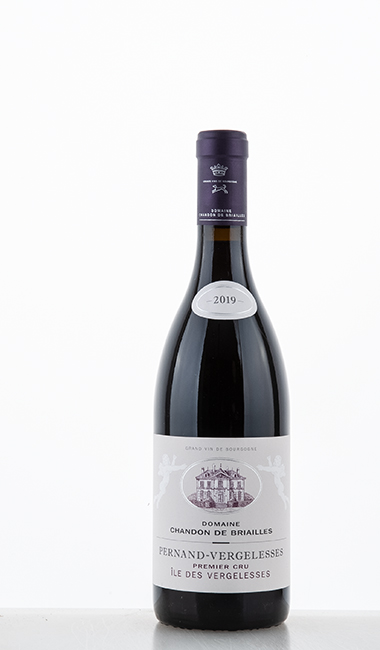
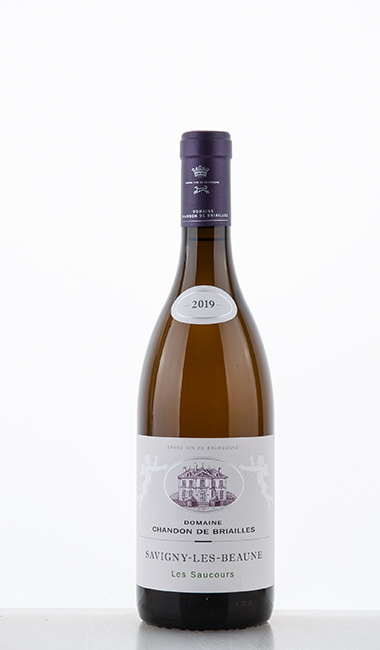
It is similar with the Île des Vergelesses. The vineyard site with a view of the Corton hill is something of a flagship site – even though the estate's greatest wines are produced in the Grand Cru sites at Corton. The red Île is an elegant, self-assured wine with inner tension. The white Île is still in barrel. Instead, there is a young Savigny-lès-Beaune »Les Saucours« that delights with plenty of energy, drive and bright aromatics.
The range of Cortons begins with the Premier Cru »Les Valozières« and ends with the Grand Cru Corton »Le Clos du Roi« and the white Corton Grand Cru blanc from Bressandes. These wines still require some cellaring time. For Neal Martin, however, it was already clear at the winery that the »Corton-Bressandes is the finest I have ever tasted from the barrel at this address«. Accordingly, he awarded it 94–96 points. William Kelley sees Le Clos du Roi as the strongest and awards 93–95 points in Robert Parker’s The Wine Advocate.
What particularly delights in 2019 is the frequently almost creamy fruit, which often stands entirely on its own at first, until the vibrant acidity becomes increasingly present, bringing freshness and radiance. The Grand Crus in particular possess a fantastically elegant tannin structure and considerable softness.
Text and wine expertise: Christoph Raffelt
Tasting Package 2019
Chandon de Briailles 1er Cru rouge
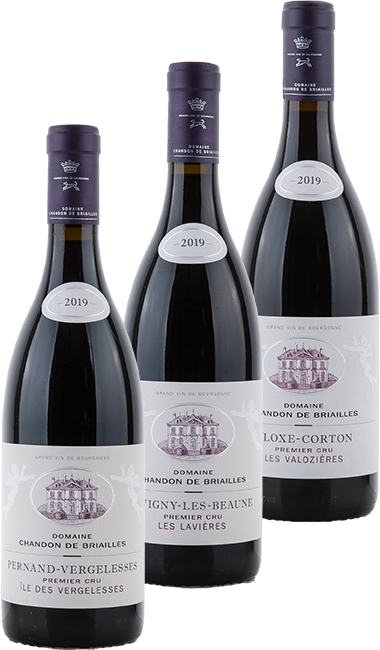
With the three 1er Cru from Chandon de Briailles, it becomes very clear how different the terroirs of Les Lavières, Île de Vergelesses and Les Valozières are. They are depicted with great precision and clarity. The same applies to their complexity and depth. What unites them is the fine, elegant softness and the ripe yet vibrant acidity structure.
- 2019 Savigny-lès-Beaune 1er Cru “Les Lavières”
- 2019 Pernand-Vergelesses Rouge 1er Cru “Île des Vergelesses”
- 2019 Aloxe-Corton Rouge 1er cru “Les Valozières”