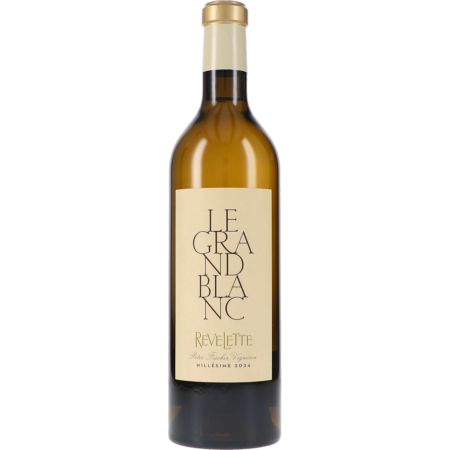
A dry, biodynamically produced Sauvignon Blanc from 55-year-old vines on Oxford limestone – cool, steely and deeply mineral, what the winemaker calls "l'eau de roche": rock water.
Bottler: Matthias Planchon, Route de Bourges, 18300 Sancerre / France
In the glass
Colour
Intense straw yellow.
Nose
Cool, refined nose with jasmine and broom, white and blackcurrants, greengages, lemon, lime and lemon balm; alongside hints of lichen on stone and a touch of wood – some reduction, decanting recommended.
Palate
Lively, intense and linear on the palate; unadorned, restrained fruit meets impressive structural depth, saline minerality and great length.
Character
Steely, cool Sancerre with a silky texture from extended lees ageing – Burgundian finesse rather than overt Sauvignon aromatics, clear and uncompromisingly dry.
Pairing
Goat's cheese (e.g. Crottin de Chavignol), steamed or poached fish with citrus-herb notes, oysters and shellfish.
Notes
From 55-year-old vines across just 0.9 hectares of the Le Paradis limestone vineyard site; spontaneously fermented (70% stainless steel, 30% 500-litre cask), aged on fine lees for ten to twelve months and bottled according to the lunar cycle; organic and biodynamic certified (AB/EU Organic) – artisanal quantity from one of the appellation's smallest estates.
Tasting note
Colour & Appearance
Intense straw yellow, dense and glossy in the glass.
Nose
Cool and firm, rather reserved than inviting – with a hint of reduction that dissipates after some time in a decanter. Then notes of jasmine and broom, white and blackcurrants, greengages, lemon, lime and lemon balm emerge. Beneath them lies a mineral tone of lichen on stone and a subtle touch of wood.
Palate
Vibrant, powerful and linear. An unadorned Sauvignon Blanc – where the variety often presents itself as loud and opulent, this wine remains cool and disciplined. Instead, it impresses with structural depth, intensity and a saline, almost steely coolness that Matthias Planchon himself describes as “l’eau de roche” – rock water.
Finish
Long, clear and distinctly mineral, with fine salinity and a taut, persistent finish.
Terroir & Origin
The lieu-dit Le Paradis covers around 14 hectares of Oxfordian limestone with a clay topsoil in Sancerre. Planchon owns just 0.9 hectares here, south-facing, planted with approximately 55-year-old vines at a high density of 7,700 vines per hectare. The Planchon family has been cultivating vineyards in Sancerre since 1573 – an ancestor, Jules Émile Planchon, discovered phylloxera in 1868 and saved European viticulture through grafting onto American rootstocks.
Grape Variety & Vinification
Pure Sauvignon Blanc. After hand harvesting, the grapes are slowly pneumatically pressed and settled for about 36 hours at below 10 °C. Spontaneous fermentation takes place 70% in stainless steel and 30% in 500-litre casks; ageing on the fine lees lasts around ten to twelve months in the same vessels. Bottling follows the lunar cycle. The estate farms organically and biodynamically – certified AB/EU Organic and presumably Biodyvin.
Food Pairings
An ideal partner for goat’s cheese (such as the local Crottin de Chavignol), pan-fried sole fillet, seafood or asparagus with hollandaise sauce. Also a reliable choice with sushi and delicate fish dishes with citrus notes.
Special Features
Rather than relying on aromatic volume, this Sancerre focuses on structure: extended lees ageing lends a silky texture, while the wine simultaneously remains steely and cool. With an annual production of just 22,000 bottles, Planchon is among the smallest producers in the appellation – and with his site-specific approach, one of those who regard Sancerre as a “little Burgundy”. Anyone who appreciates the mineral clarity of Claude Riffault will find much to enjoy here.