
 EN
 DE
 FR
 IT

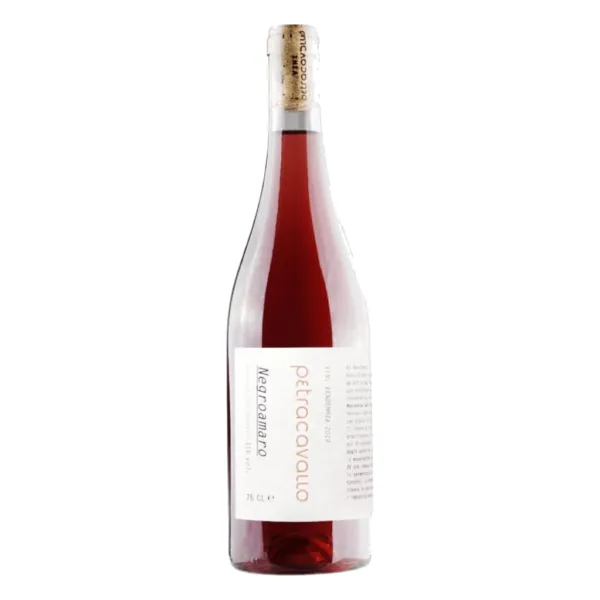
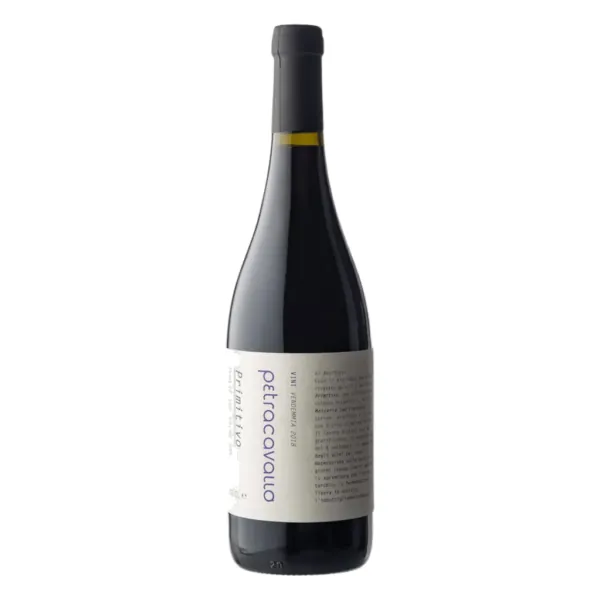
A red wine with eleven per cent alcohol is tongue-in-cheek called "my rosé" by its winemaker – referring to a luminous, ruby-red Negroamaro that belongs served chilled. Behind Petracavallo are Vito D'Onghia and his father Peppino, who have been bottling themselves at Masseria San Francesco near Mottola since 2015, after generations of the family selling their grapes. Their vineyards sit at well over 300 metres in the Terra delle Gravine, where red topsoil rests over pale limestone and the nights are noticeably cooler than down on the Ionian coast. Certified organic methods are used alongside the strict guidelines of the VinNatur winemakers' association: spontaneous fermentation in stainless steel, neither fining nor filtration, and just a touch of sulphur added at bottling. The result is juicy, surprisingly nimble red wines made from Primitivo and Negroamaro, showing Puglia at its most light-footed.
More about Petracavallo
Grandfather's Wine Press
Vito D'Onghia had already left Apulia and was working abroad when homesickness for the family vineyards pulled him back. Returning to Mottola, he put into words the idea that remains the estate's programme to this day: he wanted to drink a wine like the one his grandfather had let him taste as a child. In 2015 father and son bottled their own wine for the first time, almost as a wager between the two, for Peppino D'Onghia had spent his whole life growing and selling grapes, never making wine of his own. Some of the pressing is still done on the old vertical family wine press that belonged to his grandfather, and the conviction behind it is serious: no herbicides and no pesticides, green manure between the rows, hand harvesting into small crates. The estate is EU-certified organic and, like Cinque Campi from Emilia, belongs to the growers' association VinNatur, which requires its members to submit to residue analyses and vineyard inspections.

Red Earth over Limestone: the Terra delle Gravine
Mottola sits on a ridge high above the Ionian Sea, and locals call the town the "Balcony of Apulia". Here, where the Murgia plateau is cut by deep karst gorges known as gravine, the Petracavallo vineyards lie at around 300 metres: red earth over pale limestone, calcareous clay soils, with nights that cool down noticeably. It is precisely this altitude that explains why the wines keep so much freshness despite all the southern Italian sun. The masseria itself carries history in its name: in 1220 Saint Francis is said to have stayed the night here on his way back from Egypt, which is why a baron renamed the estate "San Francesco" in the 19th century and endowed a chapel. For his wines, Vito chose not the saint but the older field name: Petra Cavallo.

Picked Early, Served Cool
The Negroamaro Puglia IGP 2024 is the textbook example of the house style: picked early, eleven per cent alcohol, zero grams of residual sugar, with wild berries, amarena cherry and Mediterranean herbs on the nose. On the label Vito jokingly calls it "my rosé"; in the glass it is a bright red, best drunk lightly chilled, for long evenings. The Primitivo Puglia IGP 2024 shows how much elegance Primitivo holds when it is allowed to: twelve days on the skins, spontaneous fermentation with its own yeasts in stainless steel, six months in steel and a year of bottle ageing yield blackberry, plum and a hint of rosemary at thirteen per cent, carried by fine, cool tannins. Neither wine is fined or filtered, and sulphur is added only minimally and only at bottling.
Art on the Label, Craft in the Bottle
Alongside the purist varietal wines, the estate allows itself a playful side: since 2019 the Mottola artist Luigi Notarnicola has painted labels for the "Linea Pop", on which a giant foot ("Big Foot") or farewell letters ("Bye Bye") set the tone, and with the almost vanished Fiano Minutolo the D'Onghias are bringing an old Apulian white variety back into the vineyard. Anyone wanting to understand why Apulia's natural wine scene in particular is attracting so much attention would do best to start with these two bottles.