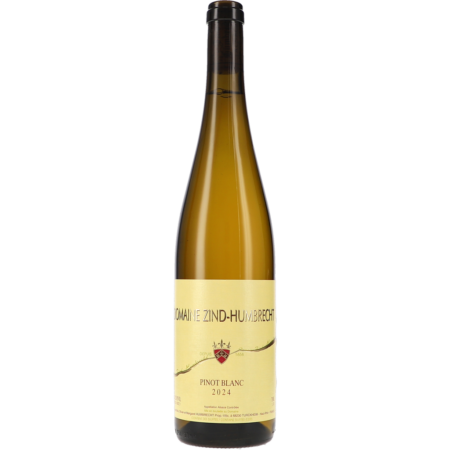
Umami-rich nose with wine lees, almonds, soy sauce and freshly baked baguette with salted butter, alongside sea air and stone; with air, firm pear and melon rind join in.
Palate
Incredibly fresh yet creamy and charming, with saline notes and pronounced minerality that lingers long on the palate.
Character
Finessed, clear and taut – a cool, precise white wine with depth and drinkability.
Pairing
Crustaceans, fish dishes and food with intense sauces.
Notes
The vines, over 50 years old, grow in a sheltered, east-facing vineyard at 250 m altitude on deep, cold limestone-marl soils from the early Jurassic – vinified using a gentle Champagne pressing method and spontaneous fermentation in old Burgundy barrels.
Tasting note
Colour & appearance
Bright, radiant golden yellow – clear and of great purity.
Nose
Umami in its purest form: wine lees, almonds, soy sauce and freshly baked baguette with salted butter meet sea air and stone. With air, firm pear and the rind of Cavaillon melon join in. Fine, precise, of great clarity.
Palate
Incredible freshness meets a creamy, charming fullness – a tension that carries the wine. Salty notes and a pronounced minerality linger long on the palate. Compact, linear, ascetic in the best sense.
Finish
Long, salty-mineral, with impressions of iodine and crushed seashells – cool and straight-lined to the very last moment.
Terroir & origin
A tiny, sheltered vineyard just outside Zellenberg, almost entirely enclosed by trees and hedges – a green oasis with its own spring. Until the late 1960s a local vegetable garden (“Brunnelgärten”), it is now home to the first vines ever planted here, today over 50 years old. The east-facing aspect catches the morning sun, while the shadow of the village protects the site from the afternoon heat. Deep, cold, fertile calcareous marl soils from the early Jurassic at 250 metres’ altitude shape the cool elegance of this wine – a terroir reminiscent of the Sud Revermont in the Jura.
Grape variety & vinification
100% Pinot Blanc from vines tended entirely by hand. As with all wines from Hunter|McKirdy, the harvest begins with pH rather than potential alcohol – the result is a low 12.0 per cent alcohol by volume with razor-sharp acidity precision. Gently pressed in the wooden hydraulic press, spontaneously fermented and slowly aged in old Burgundy casks, unfined and unfiltered; sulphur is added only at bottling, in a small dose. Declared as Vin de France and bottled in Burgundy bottles rather than the Alsatian flute.
Food recommendations
Ideal with crustaceans – such as langoustines or scampi –, with fine fish and generally with dishes featuring intense sauces. Oysters or a simple sole fillet in beurre blanc also match its salty precision.
Special features
Behind the label stand Paul McKirdy, for many years chef de cave at Domaine Zind-Humbrecht, and the South African Jolene Hunter, who managed exports there. Since 2023, they have been vinifying a maximum of 25,000 bottles a year across 3.5 hectares between Riquewihr and Ribeauvillé – Champagne pressing expertise applied to Alsatian calcareous marl. “Le Jardin de la Source” tells the story of the vegetable garden with the spring – and tastes exactly like it: cool, salty-mineral, with the depth of old vines and a patience that is rewarded. Give it time in the glass; it opens slowly, layer by layer.