

He starred in “Inferno” alongside Tom Hanks, studied at Rome’s film academy – and yet returned to the vines. Today, Robin Mugnaini runs Fattoria Le Masse in Barberino Val d'Elsa, a biodynamic family estate in the heart of Chianti Classico. His mother is a Berlin-based painter, his sister an artist, and he himself a former actor: this is where wines are born that tell stories. Twenty hectares of old Sangiovese vines, some dating back to 1974, fermented without temperature control and aged in amphorae crafted by the sculptor Lorenzo Vignoli. “If we don't celebrate this kind of work, what are we doing?” asks Robin – turning the harvest into a celebration.
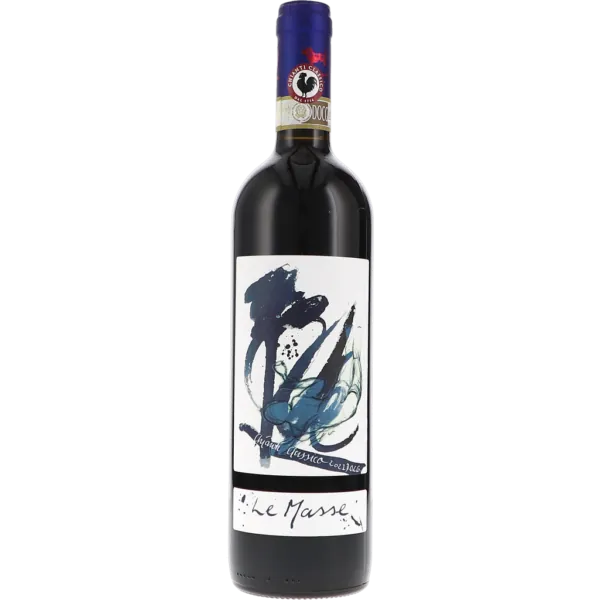
More about Le Masse
From the film set to the vineyard
When Robin’s father Alberto died in 2006, his son was just twenty and dreaming of an acting career. Nevertheless, he made his first 300 bottles of wine – out of a sense of duty, out of love for the land. In the years that followed, he commuted between film sets and the grape harvest, worked with Ron Howard and stood in front of the camera. Yet every autumn he was drawn back to Barberino. In 2018 he finally made up his mind: Chianti Classico needed him more than Hollywood did.

Berlin art meets Tuscan soil
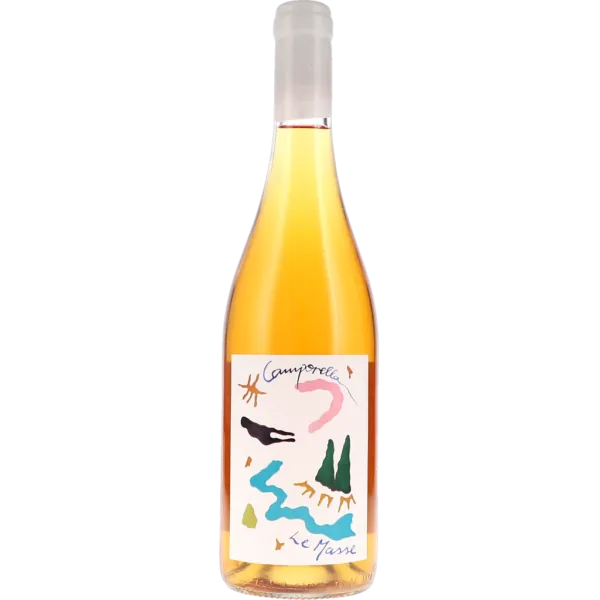
The story of Le Masse begins in the 1950s, when Paolo Mugnaini bought the estate. His son Alberto married Christiane, a painter from Berlin – she still designs the labels to this day. Their daughter Lea, also an artist, founded an artist residency on the estate. Robin himself works with the sculptor Lorenzo Vignoli, who crafts his terracotta amphorae. Art here is not marketing, but DNA. The Camporella Orange – Trebbiano and Malvasia, two weeks on the skins, without sulphur – is made in precisely these amphorae.
Biodynamics as a way of life
Robin has been farming biodynamically since 2015, and the estate has been organically certified since 2020. Preparation 500 in the vineyard, the lunar calendar in the cellar – yet pragmatic rather than dogmatic. He deliberately chose not to pursue Demeter certification. “Through biodynamics I met really beautiful producers”, he says. The 20 hectares in Barberino and Tavarnelle are home to Sangiovese vines planted in 1974 and 1986, along with 6,000 olive trees. In the cellar: large wooden casks, concrete vats and the amphorae. No temperature control, no pumps, no compromises – exactly as at Tenuta di Carleone, the neighbouring estate run by British winemaker Sean O’Callaghan.

The wines: Sangiovese with soul
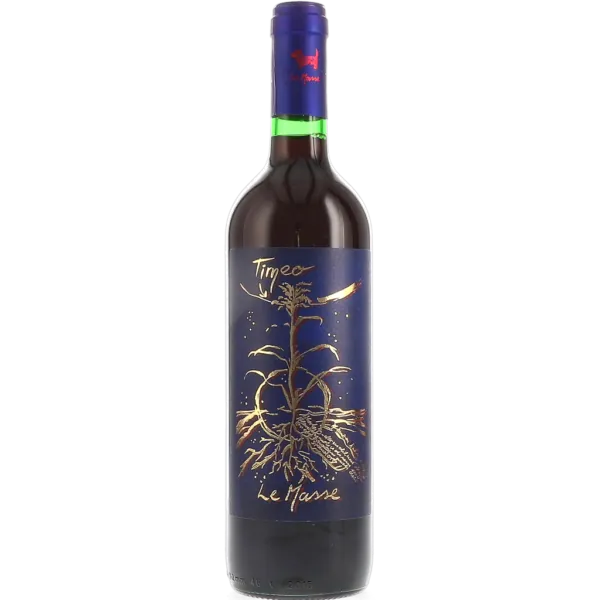
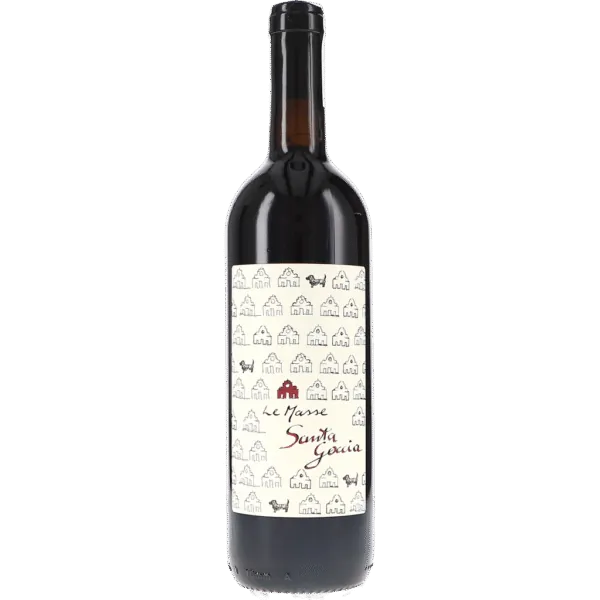
Santa Goccia is Robin’s entry-level wine: Sangiovese with Canaiolo and a little Trebbiano, juicy and lively. The Chianti Classico matures in a 2,000-litre wooden cask, while the 2022 vintage spent 70% in concrete – “it’s the wine that gives me more pleasure”. And then there is Timeo, named after his son: pure Sangiovese, the estate’s flagship wine. Only 18,000 to 25,000 bottles are produced each year – artisanal quantities for an estate that sees itself as an “artisan”. Here the harvest is not merely processed, it is celebrated.