
 EN
EN  DE
DE  FR
FR  IT
IT In a class of its own …
Domaine Huet, situated in Vouvray on the Loire, is one of France’s most significant wine estates. It was founded in 1928 when Victor Huet and his wife Anna-Constance discovered the building while searching for a new home and a new livelihood. They acquired the house together with the Le Haut-Lieu vineyard site, which lies directly beside it. It was their son Gaston who made the estate famous – for instance with the 1945 and 1947 vintages from precisely this vineyard. In 1953 he additionally acquired the Clos du Bourg vineyard, which has existed since the 8th century. In 1957 he added the Le Mont vineyard. That’s it.
There are these three vineyards, all of which are monopoles and planted exclusively with Chenin Blanc. As Gaston’s son Jean had no interest in the life of a winemaker, Noël Pinguet, Gaston’s son-in-law, took over the management of the estate in 1976. He steered the domaine towards biodynamics and produced great vintages. When Gaston died in 2002, his four children could not agree on the future of the estate. Eventually they sold it to the Filipino-American Hwang family, with Noël Pinguet retaining a minority stake. Since 2012, the year Pinguet stepped down, Sarah Hwang, vineyard manager Jean-Bernard Berthomé and oenologist Benjamin Joliveau – the son of one of Noël’s closest friends, who practically grew up at the estate – have been running this Biodyvin-certified domaine.
2022: A vintage of abundance
In Vouvray, six categories of Chenin Blanc are traditionally produced – though only if the vintage allows. These are sparkling Pétillants naturel (Pet Nats), dry wines (Sec), off-dry wines (Demi-sec), sweet wines (Moelleux), selections with a slight proportion of botrytis (Première Trie) and berry selections (Cuvée Constance). After the weather in 2021 permitted only three Secs, almost the entire range was produced in 2022.
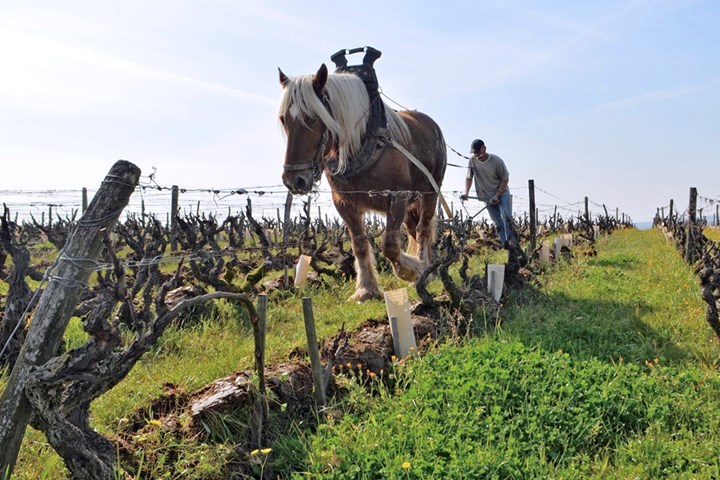
The year began with a winter that was hardly a winter at all. There was scarcely any frost or snow, and in February it became so mild in the Vouvrillon, as the landscape around Vouvray is known, that the plants already anticipated spring and emerged from their winter dormancy. Every winemaker on the Loire knows only too well how dangerous this can be, as the region has suffered from late frosts in almost every recent year. Budburst began at the end of March – and Vouvray was spared any frost. Instead, it became unusually hot as early as 9 May; fortunately only briefly, so flowering progressed quite normally and concluded on 14 June. I was on the Loire at that time; temperatures reached up to 40 °C, and in places the river carried barely any water. And summer had not even properly begun. Three further heatwaves followed in July and August. Fortunately, the often old vines are rooted in the region’s typical Tuffeau, a porous limestone that stored the water from winter and spring so effectively that the vines experienced no stress and did not halt their growth. The drought did, however, have one positive effect: there was no fungal pressure. Harvesting could therefore begin on 8 September. Ripening was so uneven, though, that numerous passes through the vineyards were required, which led the team to set a new record. The 24 pickers worked in the vineyards for six weeks. During the first pass, the vines were leaf-plucked so that the grapes could bask in the sun, which they needed for their late ripening and Oechsle levels. As the crop had not been thinned too heavily beforehand, the quantity of grapes meant that the sugar was well distributed, and ultimately all the wines typical of Huet could be produced.
The style of the vintage is classic Huet – Chenin Blanc from Demi-Sec to Moelleux
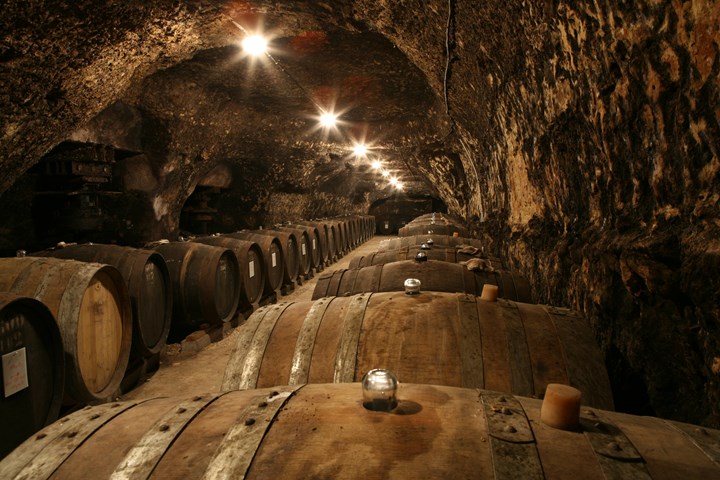
At Domaine Huet, the ageing of the wines has always followed the course of the vintage. “It is important that the wines remain pure, energetic and balanced, and that we view our terroirs through the lens of each unique growing season,” summarises Sarah Hwang. Accordingly, together with oenologist Jean-Bernard Berthomé, she decided to produce all the different styles.
In 2022, the Le Haut-Lieu from Huet’s oldest vineyard site – with its roughly four-metre-thick brown clay and loam soil (Aubuis) over Tuffeau – presents itself as dancing, sensual, silky and dense. The Demi-Sec is already a great seducer. As a Moelleux, it appears denser, while in the Première Trie version, perfectly selected, clean botrytis is added to the mix. This wine, too, already seems open and inviting. I served it with pasta alle vongole, a little chilli and coconut milk, which harmonised superbly.
The Clos du Bourg vineyard site proves outstandingly harmonious, deep and complex, its wines coming across as somewhat more austere, smokier and spicier. Here, too, you will want to drink even the Première Trie (available: 2020 vintage) in generous gulps right now.
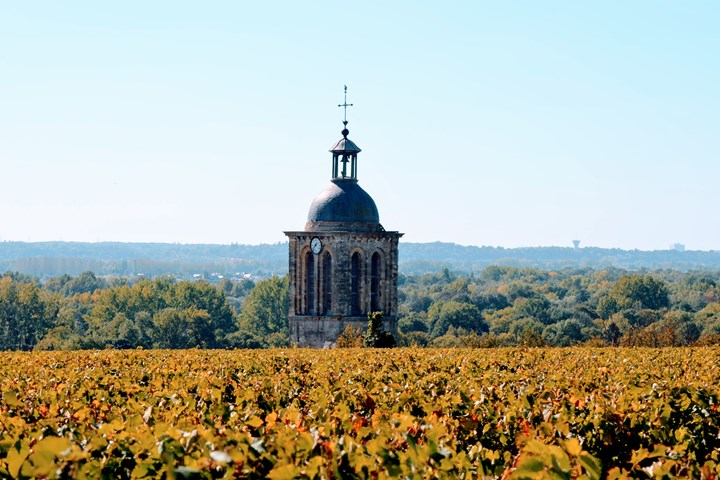
With Le Mont, the typicity of the vineyard defined by perruches (clay and flint) shows through absolutely clearly and precisely across all versions. The wines possess great energy and density, presenting themselves as spicy and always slightly smoky, tobacco-like and earthy.
Across the entire range, the wines are consistently full of finesse, elegant, charming and brimming with energy. The ripe acidity is complemented by fantastic minerality. This is as classically Vouvray as one could wish for. Moreover – if you cast your eye over to Burgundy for comparison – they are impressively affordable considering that some truly great, age-worthy wines are produced here.

Ah yes, one more thing should be mentioned: with the 1993 Le Haut-Lieu Première Trie, released 30 years after the harvest, Huet has brought out something truly exceptional. The 1993 was the last wine made from partly ungrafted vines that produced legends such as the 1945 and 1947 vintages. Equally deep, complex and beautiful are the Le Haut-Lieu 2003 Moelleux and Première Trie – two twenty-year-old late releases.
Text and wine expertise: Christoph Raffelt