

In 1883 Émile Marguet grafted all his vines onto American rootstocks, years before phylloxera reached Champagne. People thought he was mad and forced him to pull them out. Bankruptcy followed. When phylloxera did arrive in 1890, it was too late for him to be rehabilitated. Today, five generations later, Champagne Marguet is back: Benoît farms 10 hectares of Grand Cru in Ambonnay and Bouzy, biodynamically, with horses instead of tractors, and Demeter-certified since 2013.
No wine from Marguet is available at the moment.
Discover wines from Montagne de ReimsBack soon?
Leave your email and we will let you know as soon as wines are available here again.
We have sent you an email. Please confirm your subscription with the link inside; only then will we write to you. Please also check your spam folder.
More about Marguet
A teenager’s experiment
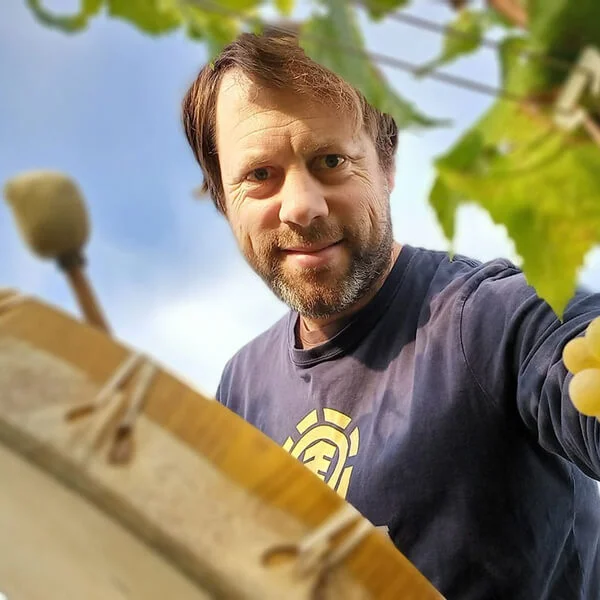
While Benoît was still at school, he secretly diluted his father’s pesticides to half strength. He wanted to see what they actually did. The vines survived, and the insight stuck: you don’t need that stuff. In 2005 he took over the estate, in 2008 came organic certification and in 2009 the complete conversion to biodynamics with phytotherapy and aromatherapy. Nettle teas instead of fungicides, horsetail sprays instead of copper. Since 2013 the estate has carried the Demeter seal, like only a handful of houses in Champagne, among them Lacourte-Godbillon in nearby Écueil. What sets Benoît apart is that he experimented not as a winemaker but as a child. The rebellion came before the responsibility.
Titan and Urban
Since 2010 tractors have had no place in Ambonnay. Two draught horses, Titan and Urban, plough the vineyards and loosen the soil without compacting it. The vines repay this with roots that dig deeper and grapes that ripen with more concentration. What sounds romantic is in fact hard-nosed conviction: machines destroy soil structure, horses preserve it. Since 2006 Benoît has worked with Hervé Jestin, the former cellar master of Duval-Leroy, a consultant who has also brought homeopathic methods into the cellar. The combination of horses in the vineyard and homeopathy in the cellar sounds esoteric, but it shows results: the wines have a vitality that comes from deep within.
Grand Cru from six sites
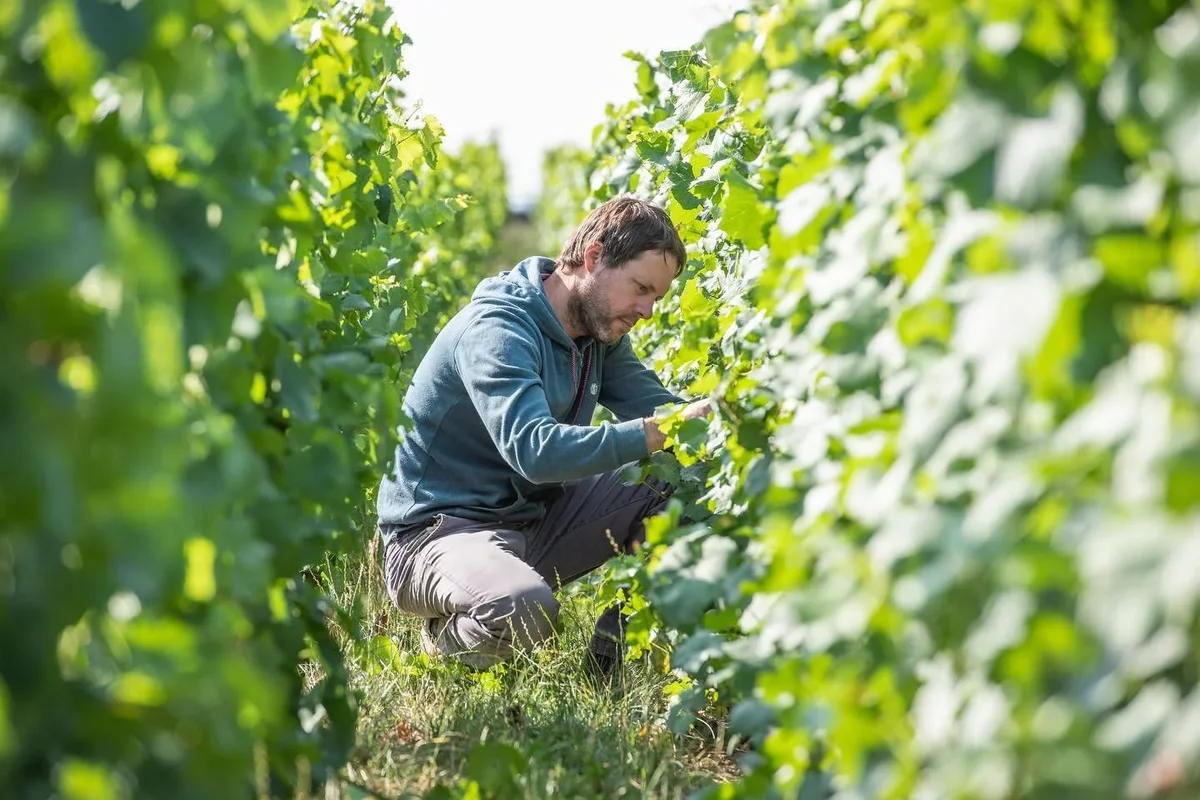
Of the 10 hectares, 8 hectares are Grand Cru: 7.3 in Ambonnay and 0.7 in Bouzy. The sites have names such as Les Beurys, Les Crayères, Le Parc, Les Bermonts and Les Saints Rémys, each with its own character and each vinified separately. The plantings are 58 per cent Pinot Noir and 42 per cent Chardonnay, with an average vine age of over 40 years. The soils are pure chalk, with ideal south and south-east exposures. In Bouzy there are also the sites Les Loges and Les Hannepes, small parcels that Benoît leases from family members. Anyone with a glass of Shaman or Sapience tastes not just Ambonnay but the individual parcel.
Brut Nature as a principle
Dosage? Only in an emergency. Most of Marguet’s cuvées are Brut Nature: zero grams of sugar, zero compromise. The Shaman, as the entry point, already shows the signature: precise and taut, with a minerality reminiscent of wet limestone. The Sapience, Benoît’s philosophical statement, was the very first certified organic Champagne and spends years ageing on its lees. The single-vineyard Champagnes are terroir manifestos: each parcel is vinified separately, fermented spontaneously and bottled without dosage. Benoît does not make Champagne for a quick gulp; he makes Champagne you can study.