← All wine letters  ·  Visit the shop  ·  Subscribe to the wine letter

Wine letter ·

The Disloyal Grape

Prices and availability as of August 16, 2026

In 1395, a Duke of Burgundy ordered this grape variety to be uprooted. Six bottles in its footsteps, best served lightly chilled.  ‌ ‌ ‌ ‌ ‌ ‌ ‌ ‌

Hello,

in July 1395, Philip the Bold, Duke of Burgundy, signed a decree against a grape variety. Gamay was a “very bad and very disloyal” plant, it declared, and every vine in the duchy was to be uprooted.

The real offence was stated plainly in the same decree. Gamay yielded too much. It produced more, and more reliably, than the temperamental Pinot Noir; the farmers preferred it, and the Duke feared for the reputation of his wines. Yet the uprooting could only be enforced where the Duke held sway. The rolling hills between Mâcon and Lyon were not his, and Gamay had long been established there, where it became everything Burgundy had never allowed it to be: pale, fragrant, and featherlight.

Some six hundred years on, the story has turned full circle. In the Hautes-Côtes de Beaune, Boris Champy is once again making single-varietal Gamay; in Meursault, a Passe-tout-grains is being produced without a milligram of added sulphur; on the fringes of Chablis, Gamay is being blended with white Aligoté; and in Vosne-Romanée it sits in the cellar of a family that also bottles Grands Échézeaux. Burgundy is reclaiming the variety it once cast out. Six bottles trace that journey.

Juliénas · Saint-Amour · Hautes-Côtes · Meursault · Chablis · Vosne-Romanée

One click adds all six bottles to your basket at once. There you can swap, remove, or add individual bottles. It is a suggestion, not a fixed set.

Romanesca

Twin brothers Antoine and Olivier Chastel took over the family domaine and converted to organic farming immediately. From Fleurie, they farm parcels in four crus together with Olivier's wife Lucrèce, blending none of them. Each parcel is harvested and vinified separately, so that you can taste precisely where it lies.

Les Fouillouses sits to the north-west of the village centre of Juliénas, on the dark rock known locally as pierre bleue. The vines there are around seventy years old and trained as free-standing gobelet bushes.

Romanesca Juliénas Les Fouillouses 2020

Juliénas “Les Fouillouses” 2020

Gamay · Beaujolais · approx. €21

Violet and lilac over sweet cherry and raspberry, with damp earth and moss beneath, all in a transparent garnet red. The palate is clear and driven, with liquorice, fine tannin, and a saline thread on the finish.

View wine →

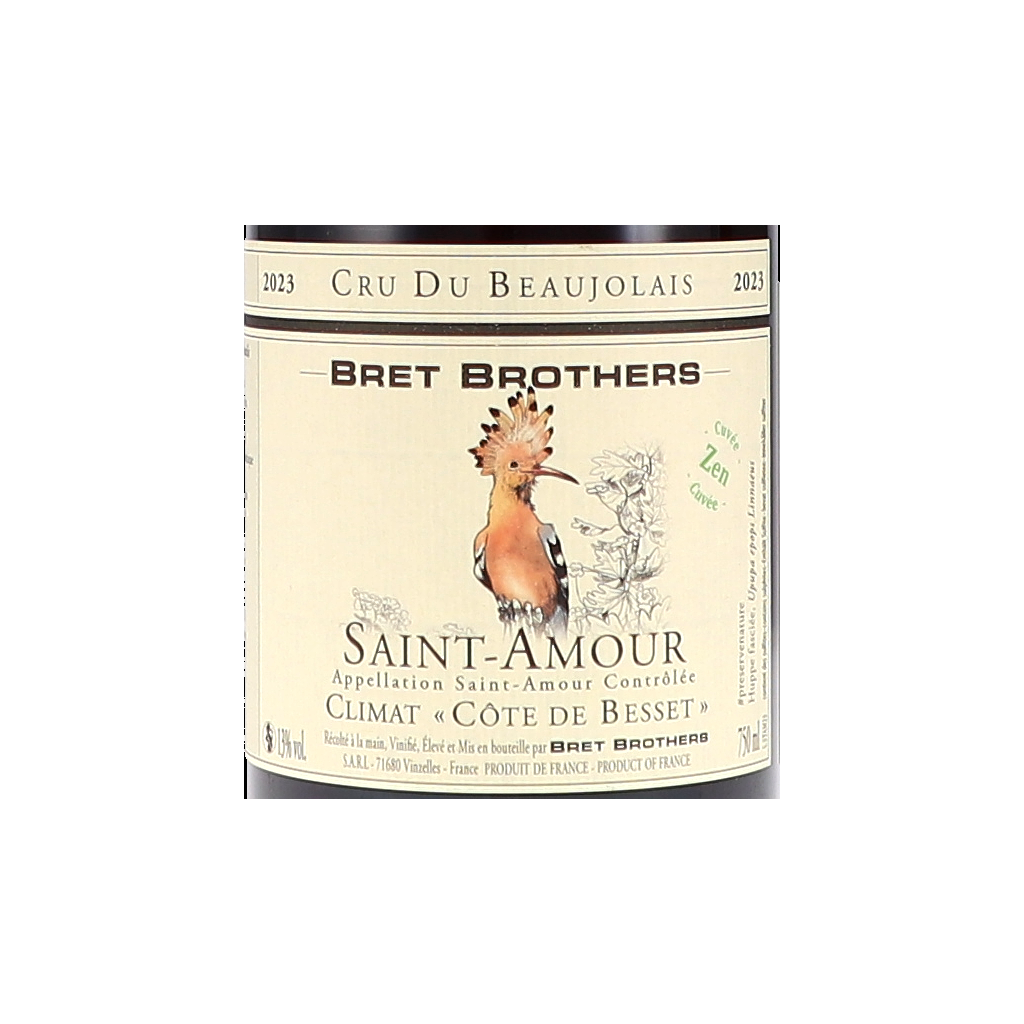
Bret Brothers

Jean-Philippe and Jean-Guillaume Bret are, strictly speaking, white-wine growers at their domaine in the Mâconnais. Since 2001 they have been sourcing grapes under the Bret Brothers label, exclusively from certified organic producers or those in conversion. In the Zen range, they apply the same philosophy in the cellar: no fining, no filtration, as little sulphur as possible.

Their Saint-Amour grows on the Côte de Besset slope, the highest point of the northernmost cru village in Beaujolais, at 380 metres, right on the border with Juliénas. The harvest took place on 7 September 2023, as whole bunches, followed by ten months in used barriques. The finished wine contains fewer than ten milligrams of sulphur per litre, a tenth of what the EU permits even in organic red wine. Saint-Amour is, incidentally, the only cru lying entirely within Saône-et-Loire, and Saint-Véran already grows in the neighbouring communes. The vineyards of Burgundy begin directly beyond the village boundary.

Bret Brothers Saint-Amour Côte de Besset Zen 2023

Saint-Amour “Côte de Besset” Zen 2023

Gamay · Beaujolais · approx. €35

Very pale, almost translucent crimson. Lavender and blood orange first, then red berries, cherry, and a hint of cinnamon. The tannin is silky, the acidity lively, with liquorice at the back and a red fruit core that lingers.

View wine →

Boris Champy

Behind the Côte de Beaune, a good hundred metres higher, the Hautes-Côtes begin. Boris Champy arrived here via the Napa Valley and the Camino de Santiago, taking over a domaine that has been farming biodynamically since 1984, the first in Burgundy to hold a Demeter certificate, according to the estate. The altitude means his grapes ripen a week later than those on the Côte below, which serves the wines well in warm years.

Gamay never entirely left Burgundy, of course. For centuries its refuge was the field blend with Pinot; since 1937 this pairing has carried its own appellation, Bourgogne Passe-tout-grains: over 30 per cent Pinot Noir, at least 15 per cent Gamay. Champy's label, however, reads Coteaux Bourguignons, where Gamay is the principal variety. He bottles it unblended, from very old vines, many of them propagated from his own stock.

Boris Champy Coteaux Bourguignons Gamay Fin 2023

Coteaux Bourguignons “Gamay Fin” 2023

Gamay · Hautes-Côtes de Beaune · approx. €27

Juicy cherry, wild strawberry, and damson, with pepper, undergrowth, and a suggestion of saddle leather. Crisp and precise on the palate, salt and pepper on the finish, with the cool elevation of the Hautes-Côtes behind it all.

View wine →

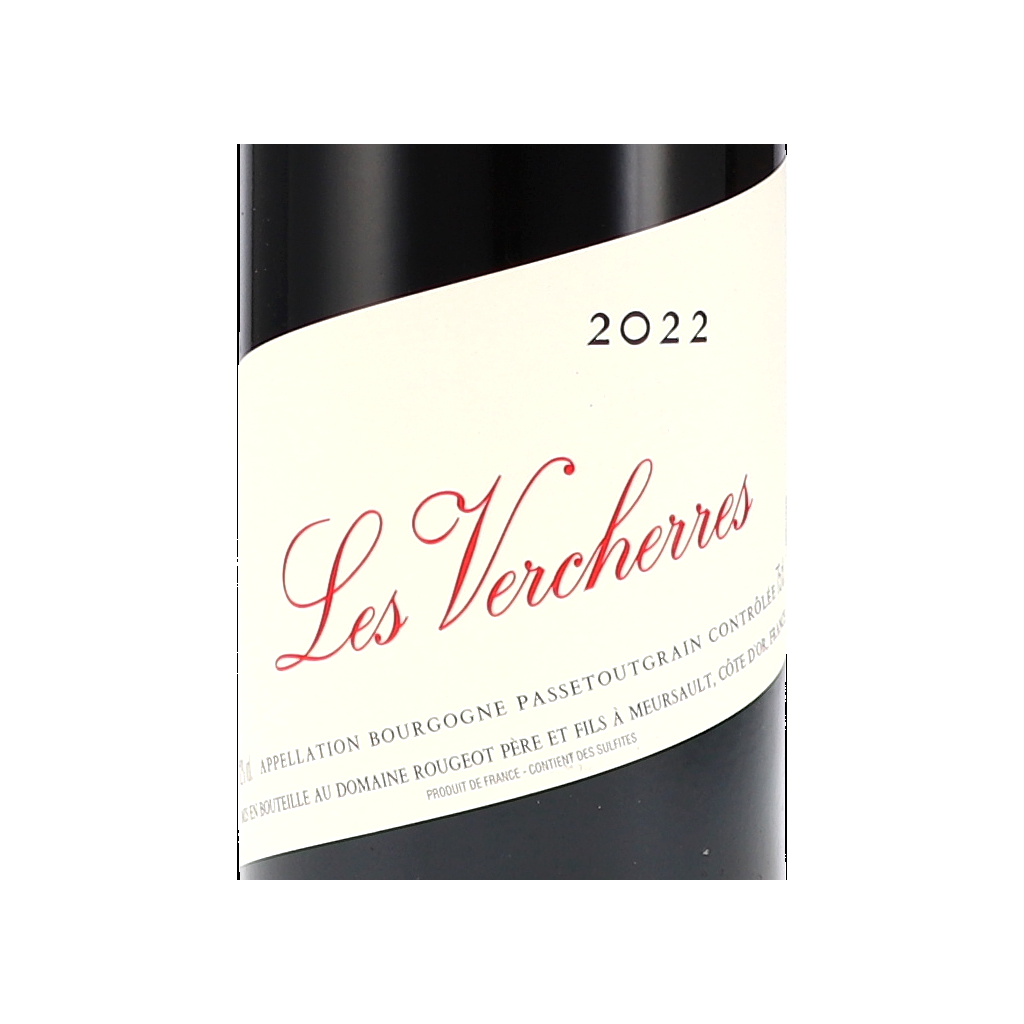
Rougeot Père & Fils

On to Meursault. In 2016, Pierre-Henri Rougeot wound up the supermarket business that had kept his father's domaine going. Today he farms around 13 hectares organically, vinifying everything without added sulphur and deciding cask by cask at bottling: whatever is stable enough goes under a diagonally striped label with no sulphur added at all. His estate once belonged to the Hospices de Beaune; his great-grandfather bought it from them. The house Passe-tout-grains grows in the climat Les Vercherres in the Côte de Beaune.

Rougeot Père & Fils Passetoutgrain Les Vercherres Sans Sulfite Ajouté 2022

Passetoutgrain “Les Vercherres” Sans Sulfite Ajouté 2022

Pinot Noir & Gamay · Côte de Beaune · approx. €33

From the warm 2022 vintage, yet a slender 12 % abv. Crystal clear and unadorned: juicy cherry and raspberry, a thread of violet and pepper, silky tannin. Bottled without sulphur, and nothing wavers.

View wine →

Château de Béru

A long leap from Meursault, up to the northern edge of Burgundy. On the fringes of Chablis, where white wine reigns supreme, Athénaïs de Béru runs her family's estate biodynamically, at around 300 metres above Kimmeridgian limestone, including the monopole Clos Béru. Her red wine is called AmalGamay, and the name reveals the blend: Gamay, blended with white Aligoté. It fits no appellation, so it is classified as Vin de France.

Château de Béru Athénaïs AmalGamay

Athénaïs “AmalGamay” VdF 2023

Gamay & Aligoté · Chablis · approx. €28.50

Juicy red berry fruit over a fine mineral tension from the cool limestone of the region. Fermented spontaneously and handled as little as possible in the cellar, with a silky grip and 13.5 % abv. Best served alongside a plate of charcuterie, the wine lightly chilled.

View wine →

AS Sirugue-Noëllat

Back south, into the Côte de Nuits. The final stop is Vosne-Romanée. Arnaud Sirugue is the fifth generation of Domaine Robert Sirugue, Sophie Noëllat the sixth of Michel Noëllat. Together they farm around eleven hectares, including a slender strip of Grands Échézeaux, 0.12 hectares, the smallest share among the fourteen owners of that climat. And their parcel Les Barreaux borders directly on Cros Parantoux, the vineyard Henri Jayer made famous.

And yet it is here that the two bottle a Passe-tout-grains, the wine Burgundy's growers once made to quench their own thirst, crafted with the same care as their finest wines. Philip the Bold would have tipped the barrel out himself.

AS Sirugue-Noëllat Bourgogne Passetoutgrains rouge 2023

Bourgogne Passetoutgrains rouge 2023

Pinot Noir & Gamay · Vosne-Romanée · approx. €23

The Pinot gives this wine its structure, the Gamay its juice, and together they hold at a slender 12.5 % abv. An everyday Burgundy from a cellar where Grand Cru otherwise matures. You will not get closer to Vosne-Romanée for 23 euros.

View wine →

The Gamay Route in a Case

Six bottles, six stops, best enjoyed over an evening with friends, with bread, cheese, charcuterie, and cornichons. Half an hour in the fridge beforehand does all six a favour.

1× Romanesca Juliénas Les Fouillouses → seventy-year-old vines
1× Bret Brothers Saint-Amour Zen → the northern tip of Beaujolais
1× Boris Champy Gamay Fin → Hautes-Côtes
1× Rougeot Les Vercherres → no added sulphur, from Meursault
1× Château de Béru AmalGamay → from the fringes of Chablis
1× Sirugue-Noëllat Passetoutgrains → the finale in Vosne-Romanée

We stock well over two dozen Gamay, from the ten-euro bottle to a magnum from Moulin-à-Vent.

View all Gamay →

Warm regards from Berlin,

Lisa and the team at
Living Wines

P.S.: The Moulin-à-Vent “Champ de Cour” 2020 from Romanesca is also available from us in magnum. One and a half litres from vines of around fifty years old, 14.5 % abv, more suited to a Sunday roast than an aperitif. One for the autumn, when the tables grow larger again. Approx. €42.