← All wine letters  ·  Visit the shop  ·  Subscribe to the wine letter

Wine letter ·

Six Great Sekts. No Dosage.

Prices and availability as of September 6, 2026

Around one per cent of the German harvest becomes Winzersekt. Six bottles from Germany and Austria, three to seven and a half years on the lees, not a gram of sugar. Approx. €238.  ‌ ‌ ‌ ‌ ‌ ‌ ‌ ‌

Dear,

roughly one per cent of Germany's grape must harvest becomes Winzersekt. The grapes come from the estate's own vineyards, the second fermentation takes place in precisely the bottle you will later open, and after that nothing happens for years. The youngest of these six Sekts has spent three years on the lees, the oldest seven and a half.

The base wine is Riesling, in the Wachau Grüner Veltliner, in the Rheingau Spätburgunder from cool slopes. Young, such Sekts are austere. Over the years the lees lay bread crust beneath the apple, and the freshness stays. A Sekt like this can accompany a whole meal.

For the Grosse Reserve, Austria requires the label to name the village where the grapes were harvested and pressed, which is why Loimer's Kamptal bottle reads Gumpoldskirchen. In Germany no one requires that. Notable houses print the village all the same.

We have put together six bottles, three from Austria, three from Germany.

Gimmeldingen · Mittelheim · Pünderich · Mautern · Gumpoldskirchen · Langenlois

One click adds all six to your basket.
You can leave out or swap individual bottles there.

Christmann & Kauffmann, Gimmeldingen

Mathieu Kauffmann ran the cellars at Bollinger for thirteen years before starting afresh in Gimmeldingen in 2019 with Steffen Christmann, biodynamic from the first harvest on. Two thirds of the vines are Riesling. Between picking crate and press, no more than thirteen minutes may elapse, because the route the grapes take decides the quality.

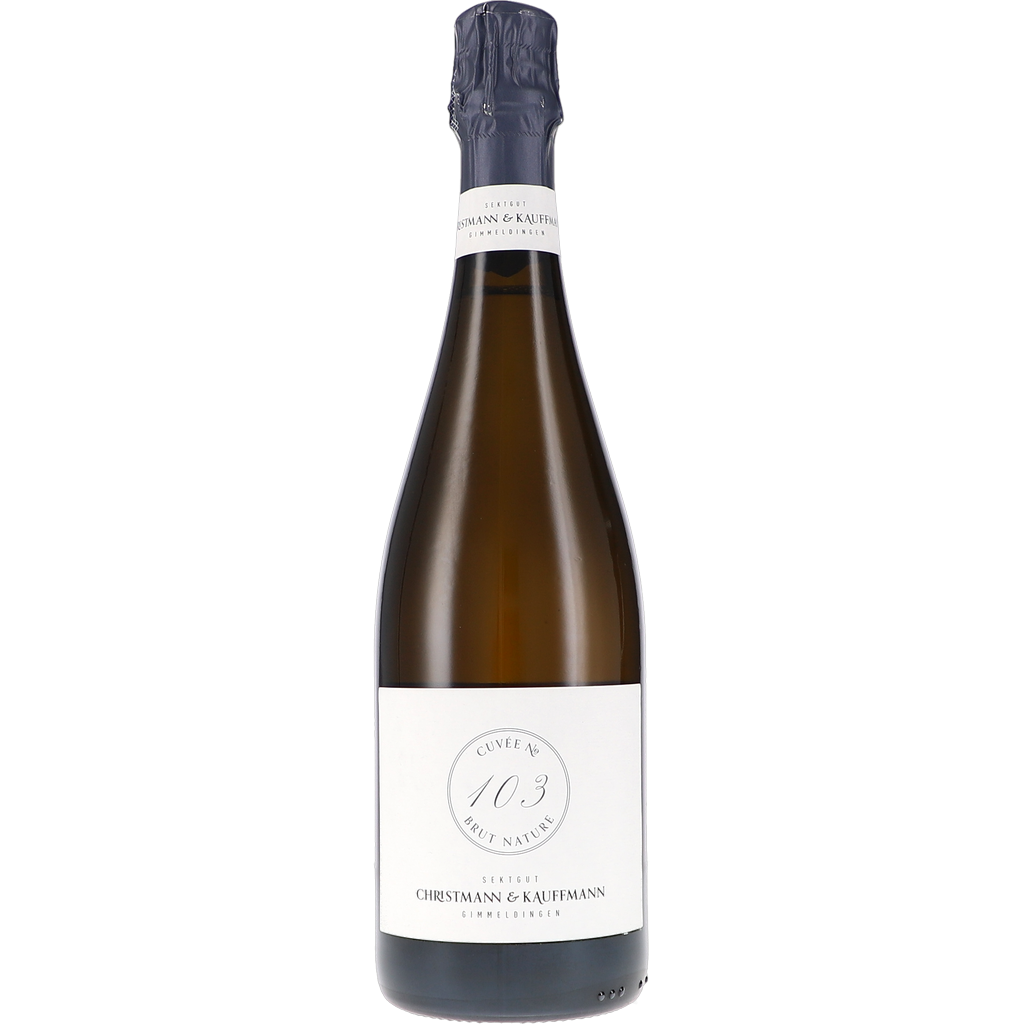
Christmann & Kauffmann Cuvée No. 103 Sekt Brut Nature

Cuvée No. 103 Sekt Brut Nature

Riesling · Pfalz · approx. €38

Of the 2020 base wine, two thirds lay in Fuder (large oak cask). On the nose the Riesling is still holding back, on the palate it turns juicy and assertive, the acidity sits firm, the mousse is still restless. Open it while you lay the table.

View this Sekt →

Peter Jakob Kühn, Mittelheim

In the Rheingau, Peter Jakob Kühn makes his Sekt from Spätburgunder of all things, harvested in Mittelheim and the higher sites of Hallgarten. The estate works biodynamically, and the bottle spends four years on the lees.

Peter Jakob Kühn Blanc de Noirs Sekt Brut Nature 2020

Blanc de Noirs Sekt Brut Nature 2020

Spätburgunder · Rheingau · approx. €29

It starts out yeasty, then comes the spice of the red grape and a peppery thread, taut and long. 94 Falstaff points. No one at the table would guess Spätburgunder.

View this Sekt →

Clemens Busch, Pünderich

On the Mosel, Clemens Busch first leaves the base wine two years in oak before the bottle fermentation begins. He has worked biodynamically since 2005, with most of his vines in the Pündericher Marienburg. The 2013 is the most mature German bottle in our range.

Clemens Busch Riesling Sekt Brut Nature Reserve 2013

Riesling Sekt Brut Nature Reserve 2013

Riesling · Mosel · approx. €35

It smells of ripe apple and orange, and beneath that lie bread crust and salt. The acidity sits exactly right, the finish stays long and savoury. Serve with oysters or aged Comté.

View this Sekt →

Nikolaihof, Mautern

Nikolaihof in Mautern has worked biodynamically since 1971, one of the very first estates to do so. Its Sekt went into bottle in June 2021 and was not disgorged until November 2024, after 41 months on the lees.

Nikolaihof Brut Nature

Brut Nature

Grüner Veltliner, Chardonnay, Zweigelt · Wachau · approx. €31

Ripe apple and apricot over bread crust, with air come red fruits and wild herbs. On the palate it remains juicy, the perlage lively. Pair with roasted carrots or prawns with pesto.

View this Sekt →

Loimer, two addresses

Fred Loimer converted Langenlois to biodynamics in 2006 and was a founding member of respekt-BIODYN. In Gumpoldskirchen, eighty kilometres further south at the foot of the Anninger, his vines are rooted in marine sediment with alpine limestone gravel. The Grosse Reserve 2014 from Langenlois was bottled in December 2015 and not disgorged until May 2023, after ninety months on the lees.

Loimer Gumpoldskirchen Grosse Reserve Blanc de Noirs Brut Nature

Gumpoldskirchen Grosse Reserve Blanc de Noirs Brut Nature

Pinot Noir, St. Laurent, Zweigelt · Thermenregion · approx. €43

Oat biscuit and fruit loaf rise from the glass. On the palate come apple compote and dried date, with lime and a salty finish. Pair with beef tartare or a mushroom risotto.

View this Sekt →

Loimer Langenlois Grosse Reserve Blanc de Blancs Brut Nature 2014

Langenlois Grosse Reserve Blanc de Blancs Brut Nature 2014

Chardonnay, Weißburgunder, Grauburgunder · Kamptal · approx. €62

First you smell brioche and Bienenstich, then come orange jelly and nougat over a piquant acidity, and the finish stays lemony and salty for a long time. Save it for an evening when the food is beside the point.

View this Sekt →

Where do you start?

All six go into a white-wine glass at eight to ten degrees, the two oldest take a little air. Of the Grosse Reserve 2014 we have fifty-one bottles in stock.

1× Christmann & Kauffmann No. 103 → Gimmeldingen, Riesling
1× Kühn Blanc de Noirs 2020 → Mittelheim, Spätburgunder
1× Busch Reserve 2013 → Pünderich, the oldest
1× Nikolaihof Brut Nature → Mautern, 41 months
1× Loimer Gumpoldskirchen → Thermenregion, limestone gravel
1× Loimer Langenlois 2014 → the finale, ninety months

Smaller works too, with Nikolaihof, Christmann & Kauffmann No. 103 and Loimer Gumpoldskirchen, three Sekts for approx. €112.

We stock nearly forty German and Austrian Sekts, the least expensive without dosage is a Pinot Rosé from Andres & Mugler for approx. €20.

See all Sekts →

Warm regards from Berlin,

Lisa and the team at
Living Wines

P.S.: We have a seventh glass as well. The Gimmeldinger Meerspinne 2020 from Christmann & Kauffmann comes from Chardonnay vines planted in 1995, with 54 months on the lees. It smells of flint and oyster shell, and with air lime blossom and white tea come too. Approx. €79, 102 bottles.