
Hello,
Sometime after midnight, a woman creeps through her vineyard rows in Piedmont. She cuts off green grapes – secretly, so the neighbours won't see. In Sicily, a 22-year-old buys her first hectare of abandoned vines. On the Nahe, a young oenologist learns in the cellars of Romanée-Conti. In Trentino, a 19-year-old takes over an estate she refuses to abandon. And in Priorat, a Parisian invests her entire savings in 17 slate terraces.
Five women. Five regions. Five top estates.

Elisabetta Foradori
The Teroldego Saviour
Nineteen, in the middle of her studies. Eight years after the death of her father, Elisabetta Foradori faced a choice in 1984: abandon the estate in Campo Rotaliano or stake everything on a single card. She stayed. Whilst all of Italy was switching to Cabernet, she bet everything on Teroldego – a grape variety served at the Council of Trent that then nearly disappeared.
Today: 28 hectares under Demeter certification, over 30 Tre Bicchieri awards from Gambero Rosso. The wines mature in Spanish clay amphorae. Son Emilio has directed vinification since 2013. Daughter Myrtha runs the biodynamic farm with Tyrolean Grey cattle amongst the vines. Elisabetta herself? Works in the estate's own cheese dairy – and founded Ampeleia in the Maremma with friends on the side.

Lezèr 2024
Teroldego · Trentino · ca. 19 €
Leggero – the light one. A Teroldego that doesn't arrive dark and powerful, but rather shows bright cherry red and smells of bilberry and elderflower. The perfect introduction to the Foradori world: drinkable, cool, with a hint of wild herbs in the finish. Ideal at 14 degrees on a Berlin terrace.

Granato Teroldego 2021
Teroldego · Trentino · ca. 61 €
The flagship. Vinified since 1986, awarded Tre Bicchieri numerous times. Dark violets, wild blackberries, an almost saline minerality that tastes of wet Dolomite rock. Matures in clay amphorae rather than barrique – because Elisabetta recognised that wood overwhelms the Teroldego. This wine can age for 20 years.

Chiara Boschis – E.Pira & Figli
The Grande Dame of Barolo
When Gigi Pira died in 1980 without heirs, Chiara persuaded her parents to mortgage their house to buy the estate. In 1990 she took over management – as the first woman to own and run an estate in the Langhe. Then came the nocturnal green harvests, because the neighbours would have declared her mad. The first vintage won Tre Bicchieri straight away.
As the only woman amongst the legendary Barolo Boys, she revolutionised the wine alongside Elio Altare and Domenico Clerico: shorter maceration, French barriques, earlier accessibility. 0.7 hectares in Cannubi, 300 cases per year – no more. Completely organic since 2014. She convinced 80 per cent of Cannubi growers to convert to organic as well.

Dolcetto d'Alba DOC 2023
Dolcetto · Piedmont · ca. 19 €
The Langhe's lunch wine: juicy, dark-fruited, immediately accessible. Blackberry, almond, a hint of dark chocolate in the finish. Not a wine that demands attention – one that quietly empties the bottle. From the same cellar as the Cannubi Barolo, at a fraction of the price.

Barolo Cannubi DOCG 2021
Nebbiolo · Piedmont · ca. 135 €
Cannubi: Barolo's most famous vineyard. Michet, Lampia and Rosé clones, planted in 1982 on 0.7 hectares. Rose petals, tar, dried cherries – monumental power with silky tannins. A wine that will tell stories in 10 years that nobody knows yet. 300 cases. When it's gone, it's gone.
Arianna Occhipinti
The Face of Sicilian Natural Wine
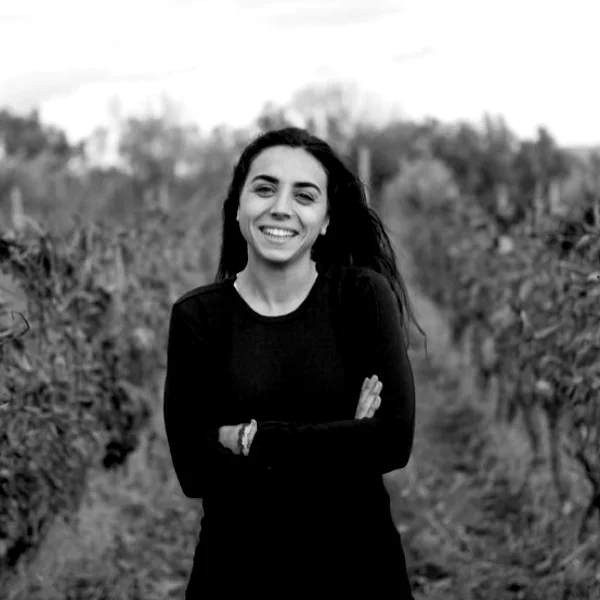
At 22, she bought her first hectare of abandoned vines near Vittoria. Today, Arianna Occhipinti farms 42 hectares across nine contrade – and not a drop of irrigation water has ever reached these vineyards. A radical decision in the Sicilian heat.
Whilst other Sicilian winemakers were betting on international varieties, she staked everything on Frappato – an indigenous grape variety documented in Vittoria since 1760. Her most famous wine, SP68, takes its name from the dusty country road by the estate: the same route along which Sicilian wine has been transported to the ports for millennia. Biodynamic since 2009. Spontaneous fermentation. No fining, no filtration.

SP68 Rosso 2024
Frappato, Nero d'Avola · Sicily · ca. 20 €
70 per cent Frappato, 30 per cent Nero d'Avola. 30 days' maceration, indigenous yeasts, cement tanks. Unfiltered, unfined, unadorned. The result tastes of red cherries, wild herbs and Mediterranean macchia. Serve lightly chilled – this wine loves spring.

Il Frappato 2023
Frappato · Sicily · ca. 33 €
Pure Frappato from bush vines (alberello). No wood, no makeup – just the grape variety and its soil of sand and limestone. Pomegranate, rose petals, a pinch of black pepper. The elegance of a Pinot Noir, the joie de vivre of Sicily. Arianna has given this almost forgotten variety a voice.

Caroline Diel – Schlossgut Diel
Winemaker of the Year, Nahe
Seventh generation at Burg Layen, in family ownership since 1802. Studied oenology in Geisenheim. Then Bordeaux, at Château Pichon Longueville. Then Burgundy, at Domaine de la Romanée-Conti. She took over the cellar in 2006. Since then: Winemaker of the Year from Falstaff, Feinschmecker and FAZ.
Three Grosse Lagen, three geological worlds: Devonian slate in Pittermännchen, siliceous clay in Goldloch, iron-rich clay in Burgberg. 26 hectares, 65 per cent Riesling. Selective hand-harvesting, spontaneous fermentation. Plus the Pinot de Diel – winegrower's Sekt from Pinot varieties, aged for years on the lees. All three vineyards were documented as first-class as early as 1901 – long before the VDP system existed.

Nahesteiner Riesling Kabinett 2024
Riesling · Nahe · ca. 12 €
Twelve euros for a Riesling from a VDP five-star estate. Peach, lime, delicate residual sweetness – light-footed with low alcohol. The perfect bottle for the first warm evening on the balcony. Anyone who dismisses this wine as "just Kabinett" hasn't understood Kabinett.

Riesling Burgberg Grosses Gewächs 2022
Riesling · Nahe · ca. 60 €
The Burgberg: a bowl-shaped site with iron-rich clay. Saline minerality, smoky depth, aromas of wet flint and ripe citrus fruits. Not a wine to please – one that shows conviction. The spontaneous fermentation gives it a texture reminiscent of the finest Burgundies. No wonder Caroline trained at DRC.

Daphne Glorian – Clos i Terrasses
The 100-Point Woman from Priorat
In 1989, Álvaro Palacios and René Barbier persuaded their friend Daphne Glorian to embark on an adventure: invest all her savings in old Garnacha vines on 17 terraces near Gratallops. The first ten vintages were made in Barbier's cellar. The result was Clos Erasmus – the first Priorat wine to receive 100 Parker points. Multiple times.
1.7 hectares on pure llicorella slate, some vines over 80 years old. A maximum of twelve barrels per vintage. Biodynamic since 2004. The name Laurel – her second wine – is the English translation of her Greek first name Daphne: laurel.

Laurel 2022
Garnacha, Syrah, Cabernet Sauvignon · Priorat · ca. 54 €
The "little" brother of Clos Erasmus – which is anything but little. Dark fruit, black olives, a minerality that tastes of the slate dust from these 17 terraces. More accessible than its big brother, but no less fascinating. Priorat in perfection.

Clos Erasmus 2022
Garnacha, Syrah · Priorat · ca. 335 €
The monument. Multiple 100 Parker points. Old Garnacha on llicorella slate, biodynamic, twelve barrels per year. Dark, spicy, yet silky and of cool elegance – a wine one doesn't drink, but experiences. For collectors and for special moments.
What connects them
One doesn't drink any of these wines because a woman made them. One drinks them because they're extraordinary. But it's worth asking why five of the most uncompromising estates in our range are run by women who at some point decided to stake everything on a single card – one grape variety, one vineyard, one conviction.
From Trentino to Sicily, from the Nahe to Priorat: what remains are wines that taste of their place. Not of a fashion, not of a consultant, not of a points system. But of what happens when someone mortgages their house, cuts grapes at night and doesn't give up.
Discover all wines from these winemakers
Warm regards from Berlin,
David and the team at
Living Wines
P.S.: Whether Teroldego, Frappato or Riesling – the Zalto Universal brings them all to life. Mouth-blown, thin-walled, dishwasher-safe. The only glass you need.
P.P.S.: Have you received this email as a forward? Here you can subscribe to the wine newsletter and receive a voucher for your first purchase.
Questions, requests, advice? Simply reply to this email. The boss reads personally.